When a plant is unlabeled, the real challenge is connecting the correct identity to cat-specific veterinary information. This guide shows how to separate routine identification from a possible exposure and reach a more informed decision.
Unknown Plant or Known Exposure? Choose the Right Path
The first decision is not whether a plant looks harmful. It is whether your cat may already have been exposed. A missing leaf, tooth marks, disturbed potting mix, pollen on the coat, plant fragments near the mouth, or witnessed chewing changes the situation from research to veterinary triage.
Urgent-exposure panel: If chewing, swallowing, pollen grooming, or vase-water drinking may have occurred, separate your cat from the plant without delaying a call. Contact your veterinarian, an emergency veterinary clinic, or ASPCA Animal Poison Control at 888-426-4435. Keep the plant, label, bouquet sleeve, or clear photographs available. Do not induce vomiting or give a home treatment unless a veterinary professional specifically instructs you to do so.
If the plant is unknown but no exposure is suspected
Place it in a room your cat cannot enter while you work on the identification. A tall shelf is not a dependable barrier for a climbing cat, and fallen leaves, pollen, or trimmed pieces may remain accessible below.
If ingestion or contact with the mouth may have occurred
Call first rather than spending time comparing photographs. Symptoms and their timing vary with the plant, amount, plant part, and the cat’s health. An absence of immediate vomiting or drooling does not rule out a significant exposure.
Take Photographs That Can Support a Plant Identification
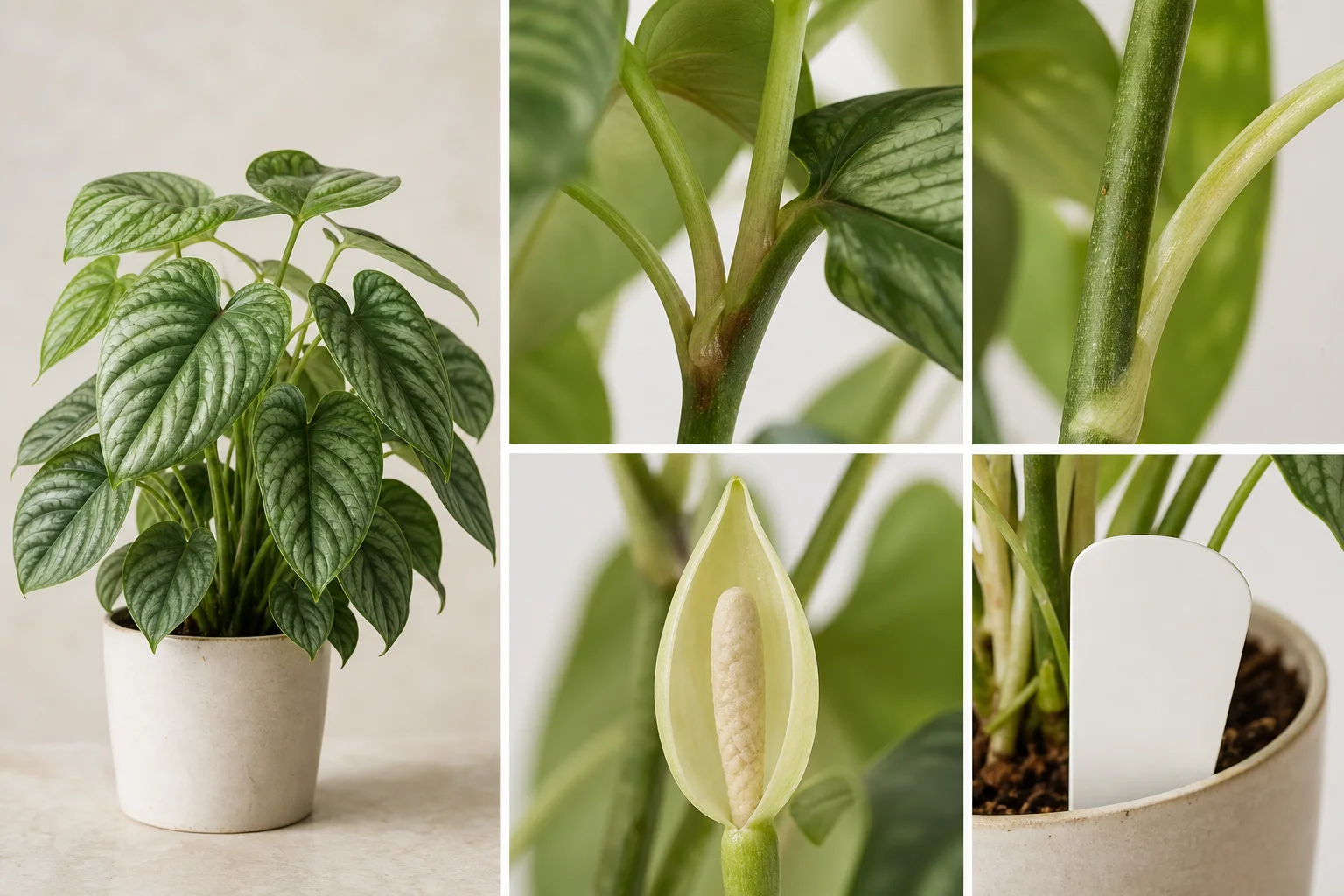
A single close-up of one leaf may produce several plausible matches. Collect a short photo set that shows how the parts connect, not just their color or decorative pattern.
- Whole plant: Photograph the overall shape, including whether it trails, climbs, forms a rosette, grows from canes, or has a woody trunk.
- Leaf attachment: Show where several leaves join the stem. Opposite, alternating, whorled, or basal leaves can separate similar-looking plants.
- Leaf details: Capture the upper and lower surfaces, edge, tip label
Step 2: Find a likely name, then verify it on a cat-specific list
An identification tool can narrow the possibilities, but its result should be treated as a candidate rather than a veterinary conclusion. You can submit your clearest images to the JJDigit plant identification tool, then compare the suggested plant with its growth habit, leaf arrangement, stem, flowers, and label.
Record more than the display name
- The common name used by the seller or identification result
- The genus, such as Philodendron or Spathiphyllum
- The species, when it can be established with reasonable confidence
- Any cultivar name printed on the tag
- Alternative names shown by reputable botanical references
Next, search the ASPCA Toxic and Non-Toxic Plants database and select the cat-specific information. Compare the scientific name, family, alternative common names, toxic principle, and listed clinical signs. The ASPCA notes that its database is not exhaustive and that plants can differ from reference photographs, so an absent result should not be interpreted as evidence of low risk.
If the identification remains uncertain and your cat may have had contact, tell the veterinarian or poison-control professional that the plant is unknown. Share the photographs and possible matches rather than choosing one name to sound more certain.
Why matching only the common name can mislead you
Common plant names are regional and inconsistent. One species may be sold under several names, while the same nickname may be attached to unrelated species. Botanical names help determine which plant a veterinary entry actually describes.
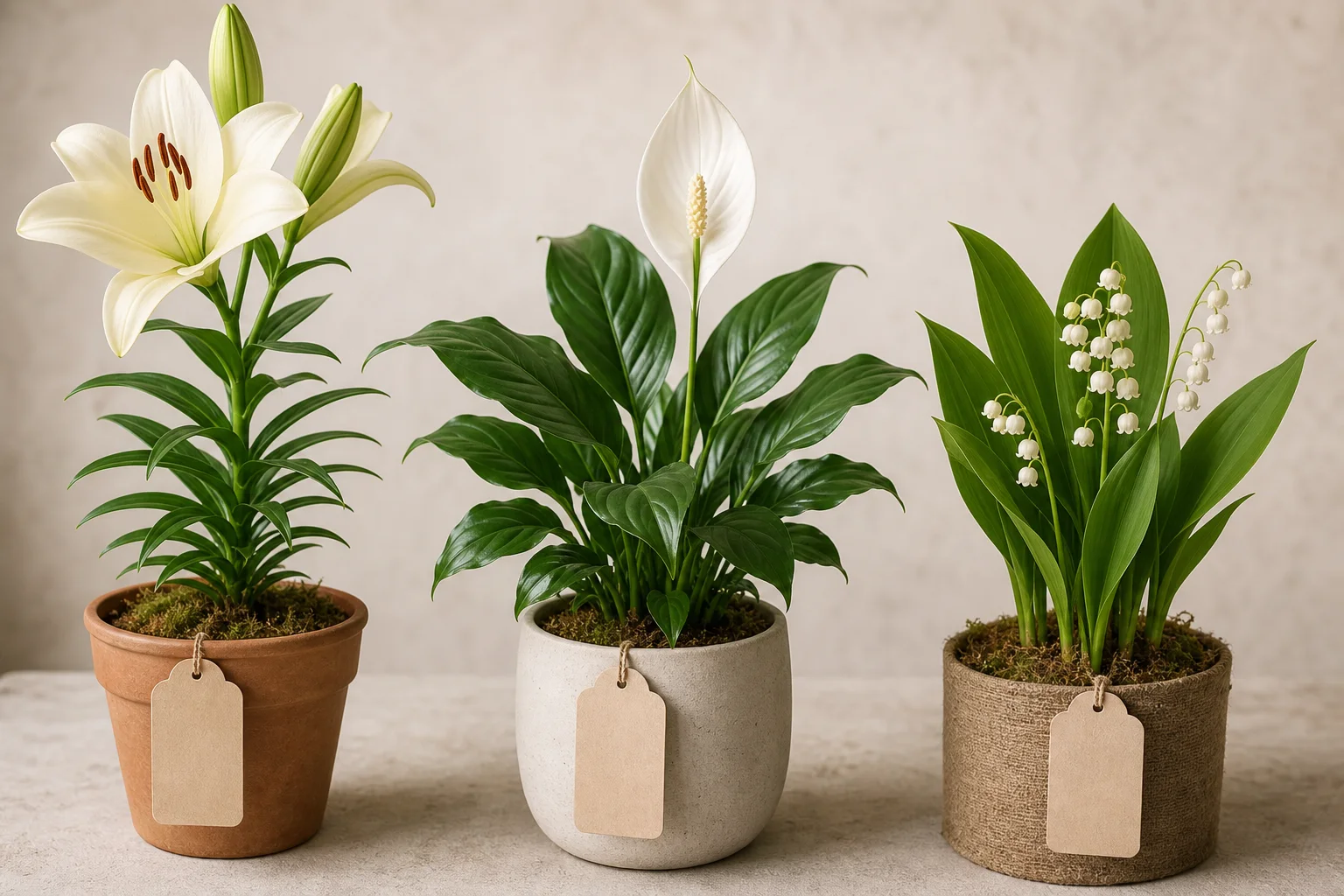
The word “lily” shows why this matters
- True lilies and daylilies: Species in Lilium and Hemerocallis are a veterinary emergency for cats. Exposure can include chewing plant material, grooming pollen from the coat, or drinking vase water.
- Peace lily: Spathiphyllum species contain insoluble calcium oxalate crystals and are associated primarily with immediate oral irritation, drooling, vomiting, and difficulty swallowing. They are not true lilies and do not present the same kidney risk described for Lilium and Hemerocallis.
- Lily of the valley: Convallaria majalis is also not a true lily, but it contains cardiac glycosides and can cause a different serious poisoning pattern.
The shared word does not establish a shared toxin or level of urgency. Conversely, a reassuring-sounding nickname does not establish that a plant is suitable around cats.
Use this comparison before accepting a match
- Common name only: Useful as a search clue, but it may refer to multiple plants.
- Photo resemblance: Useful for generating candidates, but lighting, maturity, hybrids, and variegation can obscure key traits.
- Scientific name plus matching features: More dependable for connecting the physical plant to a veterinary database entry.
- Label plus botanical confirmation: Stronger evidence when the label is complete and the plant's visible traits agree with it.
Read the safety entry for the type of harm, not just “toxic”
The word toxic covers effects that range from localized mouth irritation to organ injury. The name of the plant, the part contacted, the likely amount, the cat's health, and the time since exposure all affect the response.
Localized irritation
Pothos, peace lily, Dieffenbachia, many philodendrons, and several related aroids contain insoluble calcium oxalate crystals. Chewing commonly produces rapid mouth pain, drooling, pawing at the face, vomiting, or difficulty swallowing. Breathing difficulty or marked swelling requires urgent veterinary attention. These effects should not be described as equivalent to true-lily kidney toxicity.
Gastrointestinal or neurologic effects
Some plants are associated mainly with vomiting or diarrhea, while others may also cause weakness, loss of coordination, tremors, abnormal heart rhythms, or seizures. A symptom does not identify the plant by itself because many toxins and illnesses can produce similar signs.
Potential organ injury
True lilies and daylilies may cause acute kidney injury in cats, while cycads such as sago palm can cause severe liver and clotting problems. These exposures warrant rapid professional assessment even when the cat appears normal at first.
An ASPCA “non-toxic” designation means the plant is not expected to produce the specific serious effects covered by that listing; it does not make plant material suitable as food. Chewing unfamiliar foliage may still lead to stomach upset, choking, exposure to pesticide residues, or injury from sharp plant parts.
Urgent exposure: contact veterinary help rather than treating at home
Seek immediate veterinary or poison-control guidance if:
Your cat may have contacted any part of a true lily or daylily, including pollen or vase water; may have chewed a sago palm or another plant associated with organ injury; is drooling heavily, vomiting repeatedly, weak, unsteady, having seizures, struggling to swallow, or having difficulty breathing; or swallowed an unknown plant and you cannot promptly establish its identity.
What to do while making the call
- Separate the cat from the plant and prevent other pets from entering the area.
- Call your veterinarian or the nearest emergency veterinary clinic. The ASPCA Animal Poison Control Center is available at 888-426-4435; a consultation fee may apply.
- Provide the plant's possible common and scientific names, photographs, label, part involved, estimated amount, time of contact, symptoms, and your cat's age, weight, and relevant medical conditions.
- Follow the professional's instructions. Do not induce vomiting or give food, oils, milk, medication, or another home remedy unless the veterinarian or poison-control professional specifically directs you to do so.
For possible lily exposure, the U.S. Food and Drug Administration advises immediate contact with a veterinarian or pet poison-control center. Waiting for visible illness can lose valuable assessment and treatment time.
Use the same workflow before buying or accepting another plant
Pre-purchase verification is easier than managing an unidentified plant after it enters the home. Search the exact botanical name before buying, and ask the retailer or florist to identify every species in mixed planters and bouquets.
A short household checklist
- Keep photographs of plant labels and store each botanical name in a phone note.
- Check bouquets for lilies before bringing them inside, including arrangements received as gifts.
- Do not rely on shelf height alone. Cats may climb, falling leaves can become accessible, and pollen may spread beyond the pot or vase.
- Use a closed room or cabinet-style plant case when access must be prevented.
- Recheck identification when a plant was sold under a vague label such as “tropical foliage,” “assorted succulent,” or “mini palm.”
- When replacing a plant, verify the candidate in a cat-specific source rather than relying on a social-media list or store sign.
The practical goal is not to memorize hundreds of plants. It is to keep a repeatable record: clear photographs, a defensible botanical name, a veterinary safety entry, and a plan for obtaining help if exposure occurs.
Identify the plant before checking its cat-safety entry
Upload clear views of the whole plant, leaves, stem, flowers, and label to find likely identification matches. Use the result as a starting point, then confirm the botanical name with a veterinary safety authority.
Identify My PlantFrequently Asked Questions
Can I rely on a plant identification app to decide whether a plant is toxic to cats?
Use the app to generate a likely name, then verify that result using the plant's label, growth habit, leaf attachment, stem, and flowers. Check the resulting scientific name in a cat-specific veterinary database. If exposure may already have occurred, contact a veterinarian or poison-control service while identification is still underway.
Is a peace lily as dangerous to cats as an Easter lily?
No. Peace lilies are Spathiphyllum species and commonly cause calcium-oxalate irritation of the mouth and digestive tract. Easter lilies are Lilium longiflorum; true lilies and daylilies may cause acute kidney injury in cats. Both require prevention, but their toxic effects and urgency are not interchangeable.
What if my cat only brushed against a lily?
Physical contact matters if pollen may be on the coat or paws because a cat can swallow it while grooming. Prevent grooming if you can do so without causing distress, and contact a veterinarian or animal poison-control service immediately for instructions. Do not delay the call while trying to determine the amount.
Does an ASPCA non-toxic listing mean my cat can chew the plant?
No. The designation indicates that the plant is not expected to cause the serious toxic effects covered by the database entry. Plant material can still contribute to vomiting, diarrhea, choking, mechanical injury, or exposure to fertilizers and pesticide residues.
Can I keep a plant that is toxic to cats on a high shelf?
A high shelf reduces access only if the cat cannot jump or climb to it and no leaves, pollen, seeds, or vase water can fall below. A closed room or secure enclosure is a more dependable barrier for plants that must remain inaccessible. Consider removing high-risk species such as true lilies from a cat household.
What information should I provide when calling about a plant exposure?
Share the plant's label, possible scientific and common names, photographs, the part contacted, estimated amount, time of exposure, and observed symptoms. The professional may also ask about your cat's weight, age, health conditions, and medications. State clearly when any detail is uncertain.
Sources & Further Reading
- Toxic and Non-Toxic Plants ASPCA Animal Poison Control Center
- ASPCA Animal Poison Control Center ASPCA
- Lovely Lilies and Curious Cats: A Dangerous Combination U.S. Food and Drug Administration
- Common Cat Hazards Cornell University College of Veterinary Medicine
- Nomenclature Penn State Extension