Repotting can help a crowded houseplant, but an unnecessary size increase may leave its roots surrounded by more wet mix than they can use. This guide shows you how to inspect the root ball, separate crowding from mix problems, and choose the least disruptive next step.
First decide: more space, fresh mix, or neither
Start with the plant's recent behavior rather than its age or the amount of time since its last repot. Some vigorous plants fill a container quickly, while slow growers and plants that tolerate snug roots may remain in one pot for several years.
More root space is more likely when
- The mix dries much faster than it did under similar light and temperature conditions.
- The plant repeatedly wilts soon after a thorough watering.
- Active-season growth has slowed and new leaves are smaller, despite suitable light and routine care.
- The plant has become unstable or root pressure is distorting or cracking the container.
- Several signs occur together and an inspection reveals tightly circling or densely packed roots.
Fresh mix in the same pot may be enough when
- Water pools on top, runs down a gap at the pot edge, or passes unevenly through compacted mix.
- The mix stays wet much longer than expected, has collapsed in volume, or contains a substantial salt crust.
- The root system is firm and established but still has visible mix and open space between roots.
- You want to maintain the plant at roughly its present size and the species can tolerate careful root management.
Wait when
The root ball holds together but is not wrapped in a thick root mat, moisture behaves normally, and the plant is growing as expected. One root at a drainage hole does not confirm crowding; it may simply have followed a moist path. If the evidence is mixed, describe the roots, moisture pattern, and recent changes in the plant care help chat before disturbing the root ball.
Slide the plant out and read the root pattern
Inspecting the entire root ball is more useful than looking only through a drainage hole. Water a very dry leafy plant lightly several hours beforehand so brittle roots are less likely to break. Skip that step if the mix is already wet or root decay is suspected.
- Support the stems near the mix without pulling on them.
- Tip the pot sideways and squeeze or tap its walls. Run a clean, blunt knife around the inside edge if the root ball remains stuck.
- Slide the root ball out while supporting its weight from below.
- Check the bottom third, the sides, and the center where visible. Note root firmness, color, smell, moisture, and how much mix remains.
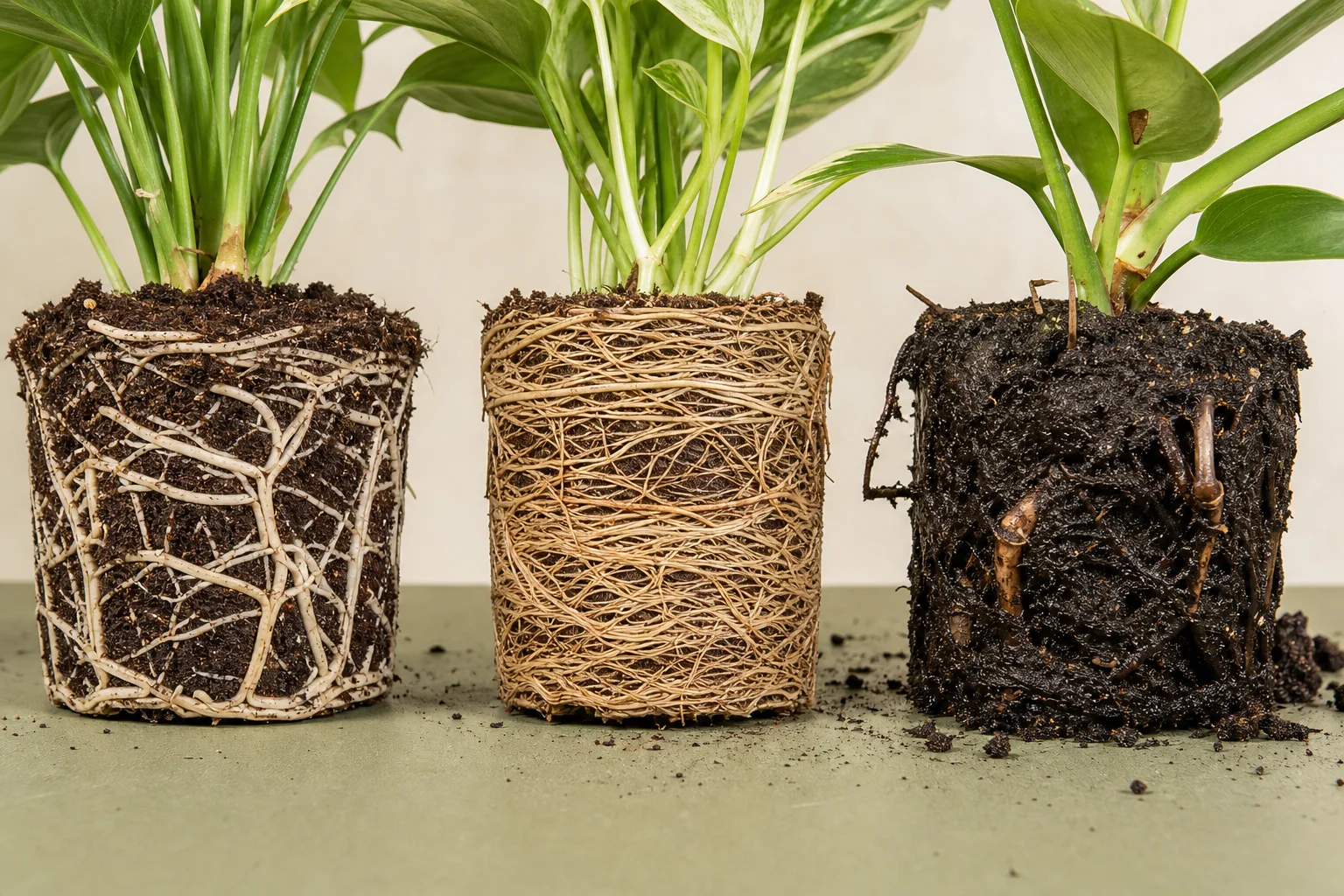
Healthy, dense roots
Firm roots with visible mix between them can indicate a well-established plant rather than a root-bound one. Root color varies by species and potting medium, so color alone is not decisive.
Root-bound roots
Crowding is more convincing when thick layers of roots circle the sides and bottom, little mix can be seen in the lower root ball, or the mass retains the pot's shape after loose mix is removed. Combine this pattern with fast drying, instability, or reduced growth before sizing up.
Possible root decay
Soft, limp, blackened, or easily stripped roots—especially with persistently wet mix and an unpleasant odor—may indicate root loss rather than a need for more space. Remove affected material with clean tools and correct the moisture or drainage problem. A larger pot could keep excess mix wet for longer.
Choose the same pot or go only one size up
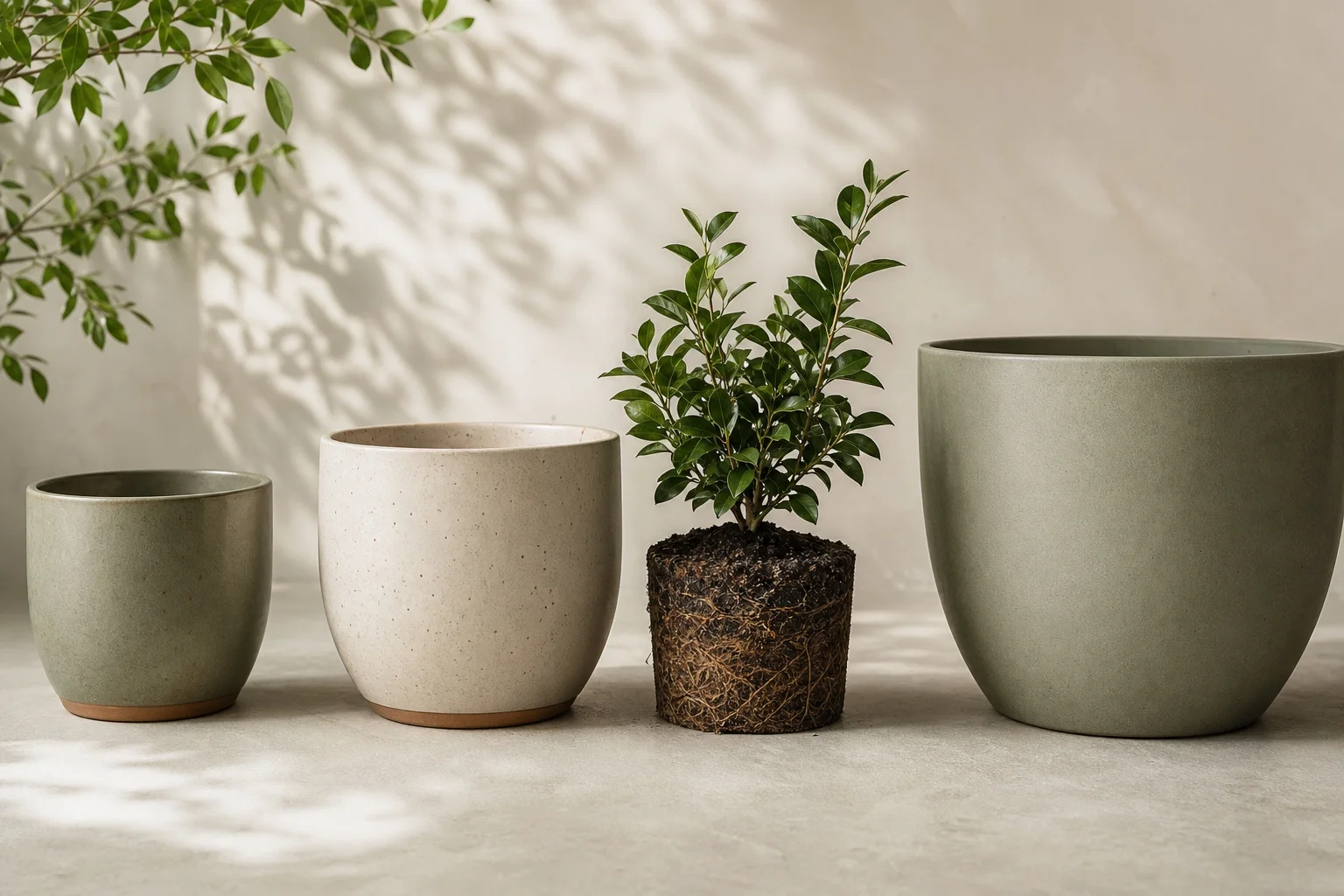
If the plant needs more root space, measure the current pot across its top opening. For most small and medium houseplants, select a new container about 1–2 inches wider in diameter. For a large, vigorous specimen, a 2–3-inch increase may be reasonable, but avoid a dramatic jump or a container more than roughly one-third wider.
- 4-inch current pot: choose approximately 5–6 inches.
- 6-inch current pot: choose approximately 7–8 inches.
- 8-inch current pot: choose approximately 9–10 inches.
- 12-inch current pot: consider approximately 14 inches if the root system is strongly crowded.
Keep the depth similar unless the plant has a naturally deep root system or the old pot was unusually shallow. Succulents and other modest-rooted plants often benefit from containers that fit the root mass closely because a deep reservoir of unused mix can dry slowly.
If the roots are not crowded but the mix has deteriorated, clean the existing container and repot at the same depth with a suitable fresh mix. Every working pot should have unobstructed drainage. A decorative container without holes is better used as an outer cachepot, with drained water emptied after watering.
Choose active growth unless the problem is urgent
Many houseplants cope best with repotting as stronger seasonal light supports active growth, commonly in spring or early summer. Indoor tropical plants growing under stable warmth and supplemental light may have a broader window. Growth rate is a better guide than the calendar alone.
Consider waiting when
- The plant is resting, growing very slowly, or receiving weak winter light.
- It has just been moved, shipped, exposed to cold, or subjected to another major care change.
- It is budding or flowering and the root system remains functional.
- The only evidence is a few visible roots without rapid drying or dense circling inside the pot.
Repot promptly when waiting may add risk
- The container has no functional drainage and the mix remains saturated.
- Roots are soft or deteriorating in wet, poorly aerated mix.
- The pot is breaking, the plant cannot stand securely, or the root ball no longer absorbs water evenly.
- The potting medium is contaminated or has collapsed so severely that moisture cannot be managed.
An urgent repot addresses the immediate root-zone problem; it does not require a larger pot. When roots have been lost, a smaller or same-size container may fit the remaining healthy root system better.
Prepare the container and a plant-appropriate mix
Gather the new or cleaned pot, fresh packaged potting mix, clean pruners, a tray, and gloves before removing the plant. Pre-moisten dry mix until it feels evenly damp but does not release water when squeezed.
Use a container medium rather than garden soil, which may compact in a pot and can introduce pests or disease organisms. Match the mix to how the plant's roots use water:
- Most foliage houseplants: use an airy indoor potting mix that holds some moisture while draining freely.
- Cacti and many succulents: use a faster-draining mix and a container that closely fits the root system.
- Epiphytic orchids: use the coarse orchid medium appropriate for the type rather than standard fine-textured potting mix.
- Moisture-sensitive plants: prioritize drainage, airflow, and a modest pot-size increase.
Do not add a gravel layer beneath the mix. It does not replace a drainage hole and can leave the saturated portion of the mix closer to the roots. If a large hole loses mix, cover it loosely with a small piece of mesh without sealing the opening.
Repot with the least root disturbance needed
- Remove loose old mix. Brush away material that falls freely. Avoid stripping every particle from firm, healthy roots unless you are addressing decay, contamination, or an unsuitable medium.
- Choose how much to loosen. Leave an open, healthy root system largely intact. Gently tease apart roots at the bottom if they are beginning to circle. For a rigid outer mat, make a few shallow vertical cuts with a clean blade or trim only the congested outer layer. Preserve as much firm root tissue as practical.
- Remove damaged roots if present. Cut back soft, hollow, or easily stripped sections to firmer tissue. Clean the blade between plants and after contact with suspect roots.
- Set the planting height. Add mix beneath the root ball so the plant sits at its previous depth. Burying the crown or stem more deeply can encourage moisture problems in susceptible plants.
- Fill around the root ball. Work mix into large gaps with your fingers, then press lightly. Heavy compression reduces the air spaces roots need.
- Leave watering room. Keep the mix below the rim so water can spread across the surface instead of spilling immediately.
- Water according to the plant and root condition. For most leafy houseplants with healthy roots, water thoroughly and let the excess drain. If a succulent or cactus had roots cut, consider allowing the injuries to dry before watering according to that plant's normal care needs.
Do not combine repotting with severe pruning, relocation to harsh light, and a strong fertilizer application unless a specific plant-care plan calls for those changes.
Monitor moisture and growth after repotting
Return the plant to familiar, species-appropriate light and stable temperatures. Protect it from intense new sun, heating vents, and cold drafts while roots settle into the surrounding mix.
- Check moisture with your finger, a wooden skewer, and the pot's weight rather than following the old watering interval.
- Empty drainage water from saucers and cachepots.
- Delay routine fertilizer for roughly two to four weeks, particularly when the new mix contains fertilizer.
- Expect the larger volume of mix to dry differently; it may remain damp longer even when the surface looks dry.
- Watch new growth as well as older leaves. A damaged old leaf may not recover, while stable stems and healthy new growth are more useful progress signals.
Mild temporary drooping can follow root disturbance, but worsening collapse, a persistently heavy pot, spreading yellow leaves, or a sour smell warrants another moisture and root check. Avoid repeatedly unpotting the plant without new evidence, because each inspection can disturb developing roots.
Unsure Whether Your Plant Needs a Bigger Pot?
Describe the root pattern, current pot size, moisture behavior, and recent growth changes. The plant care help chat can help you compare sizing up, refreshing the mix, or waiting.
Ask the Plant Care Help ChatFrequently Asked Questions
Do roots coming through a drainage hole mean I need to repot?
Not by themselves. A root may follow moisture through the hole while much of the pot still contains usable mix. Slide out the root ball and look for dense circling roots, very little visible mix, fast drying, and reduced active-season growth before moving up a size.
How much bigger should the new pot be?
For most small and medium houseplants, choose a container about 1–2 inches wider than the current pot. A large, vigorous plant may use a 2–3-inch increase, but excess unused mix can remain wet longer than the roots can manage.
Should I break up the root ball when repotting?
Only as much as the root pattern requires. Leave firm, open roots mostly intact. Tease apart loose circling roots, and reserve shallow cuts or limited trimming for a tight outer mat. Fragile or fleshy root systems may need gentler handling.
Can I replace the soil without using a larger pot?
Yes. If the mix is compacted or draining poorly but the root system is not crowded, refresh the medium and return the plant to its cleaned container. Keep it at the previous planting depth and confirm that drainage remains open.
Can I repot a houseplant in winter?
You can repot during slow-growth periods when drainage failure, decaying roots, a broken pot, or severely degraded mix makes waiting risky. For a routine size increase, active growth in spring or early summer often supports easier establishment.
Should I water immediately after repotting?
Most leafy houseplants with healthy roots can be watered thoroughly and allowed to drain. Adjust for species and root condition: plants with water-storing tissues or freshly cut roots may benefit from a more cautious schedule. Do not leave the pot standing in collected water.
Sources & Further Reading
- Repotting Houseplants Penn State Extension
- Repotting University of Illinois Extension
- Get Started: Choosing a Houseplant Container University of Illinois Extension
- How to Care for Houseplants Iowa State University Extension and Outreach
- Pest and Disease Problems of Indoor Plants Penn State Extension
- How to Repot a Plant Royal Horticultural Society