The safest way to water houseplants while on vacation depends on two things: how long you will be away and how quickly each pot normally dries. A plant-sitter is the best default for long trips, valuable collections, and plants with very different needs; tested wicks, capillary mats, or built-in reservoirs can serve compatible moisture-loving plants. Do not put every pot in standing water or give every plant a heavy drink just because you are leaving.
Start here: sort plants by trip length and thirst
Do not choose one vacation trick for the entire collection. First, note how many days each pot usually takes to move from freshly watered to ready for water under its current light, temperature, pot, and substrate conditions. That observed drying pattern is more useful than a universal calendar.
Make three plant groups
- Fast-drying or thirsty: plants that regularly need attention within the planned absence, especially lush foliage plants in small pots, porous terracotta, warm rooms, or bright light.
- Moderate: plants whose normal moisture-check point falls near the end of the trip.
- Dry-tolerant: plants that are normally allowed to dry substantially between waterings, including many cacti, succulents, snake plants, ZZ plants, and some hoyas.
Match the plan to the absence
- A weekend or short absence: many established plants need no special system. Water only those that are actually due. Give fast-drying small pots a tested setup or ask someone to check them.
- About one to two weeks: use a plant-sitter for mixed collections or run a tested wick, capillary mat, or built-in reservoir for plants that tolerate consistently moist substrate.
- Longer than two weeks: make human checks the primary plan. Passive systems can fail, empty, clog, lose contact, or keep a pot too wet, so treat them as support rather than a substitute for observation.
Choose a sitter immediately for recent repots, recovering plants, valuable specimens, active pest problems, very small pots, mounted plants, specialized orchids, bonsai, or any plant whose normal behavior you do not yet understand.
Make a one-page watering card for the plant-sitter
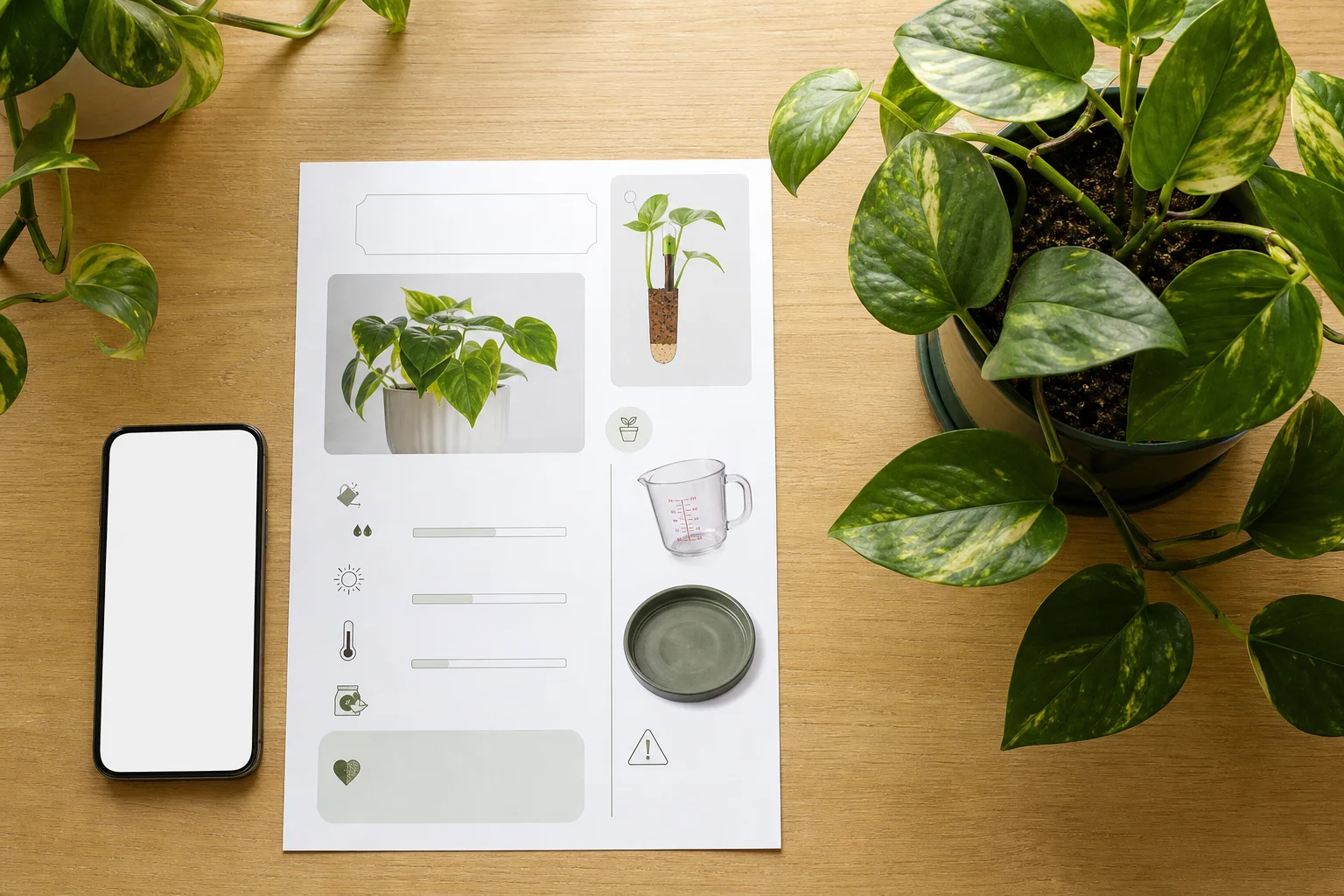
A useful instruction card tells the sitter what to observe, not simply what day to pour water. Group plants with similar needs, attach a clear photo, and keep the directions short enough to follow during one visit.
Include these fields for each plant or group
- Photo and plant name: use a description such as “large pothos beside the bookcase” if the name is uncertain.
- Moisture check: state how deep to feel, whether to lift the pot, or what other sign normally tells you the plant is ready.
- Watering threshold: write “water when the top 1 inch is dry” or “do not water unless the pot feels very light,” rather than “water every Tuesday.”
- Amount and method: give a measured starting amount or instruct the sitter to water slowly until drainage appears. Explain where the plant should drain.
- After-watering action: specify that collected drainage must be emptied from the saucer or cachepot unless the plant is using a tested, purpose-built reservoir.
- Do-not notes: list vulnerable plants with directions such as “do not mist,” “do not refill reservoir,” or “do not water during this trip unless leaves wrinkle and the mix is dry.”
- Contact and backup: provide your preferred contact method and permission to send photos before doing anything uncertain.
Walk through the card with the sitter once. Show them the difference between a removable nursery pot inside an empty decorative cachepot and a reservoir designed to maintain a controlled water level.
Prepare the room and plants without making drastic changes
Light, heat, humidity, pot size, pot material, and substrate all affect how quickly a houseplant uses or loses water. Bright light and warm conditions generally accelerate drying, while small pots and unglazed terracotta store less available moisture than larger plastic or glazed containers.
- Check for pests and blocked drainage. Treating an outbreak or correcting drainage is easier before departure. Keep infested plants separate rather than clustering them with healthy plants.
- Remove dead flowers and badly damaged leaves. Avoid major pruning, repotting, or fertilizing immediately before travel unless needed for plant safety.
- Move heat-sensitive plants back from hot glass. Maintain suitable indirect light; do not put every plant in a dark room. Avoid air-conditioning or heating vents that create extreme temperature changes.
- Group compatible, pest-free plants. This can modestly reduce moisture loss around the foliage and simplifies sitter visits, but leave enough space for air circulation.
- Water according to actual moisture. Thoroughly water and drain plants that are due. Do not saturate a still-wet root zone as an attempt to store extra water.
- Stabilize the environment. Set thermostats, blinds, and grow-light timers before the trial period so the test resembles conditions during the trip.
Do not move all indoor plants outdoors. A sudden shift in sun, temperature, wind, rain, or pests can be more damaging than remaining in a stable indoor location.
Test a wick or capillary mat before relying on it
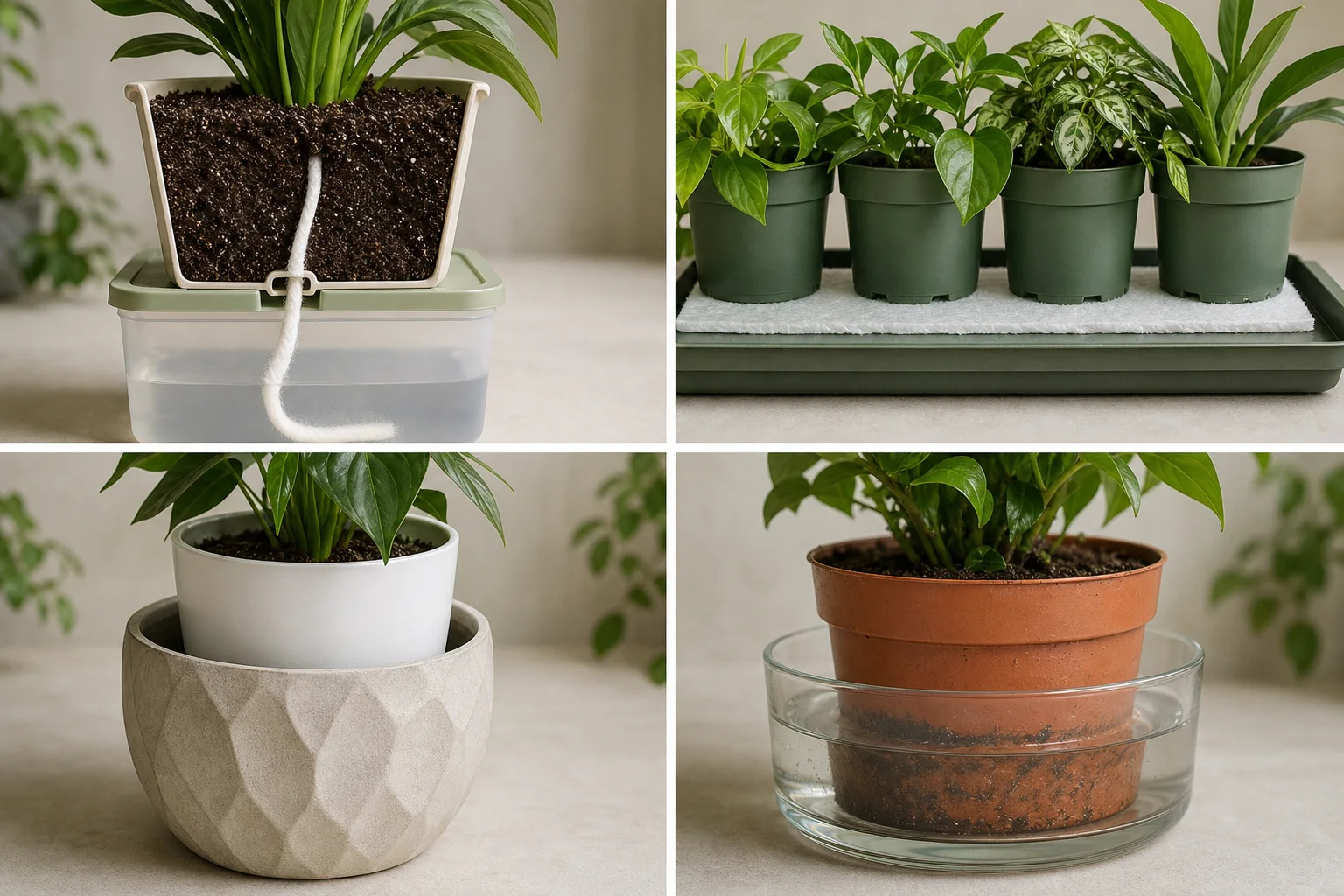
Wicks and capillary mats move moisture through contact between water, the wick or mat, the drainage opening, and the potting mix. They work best with pots that have drainage holes and substrates capable of maintaining that capillary connection. A wick that is too conductive can keep a pot saturated; poor contact can deliver little or no water.
Materials
- A stable, clean water reservoir
- Purpose-made wick or clean synthetic capillary material
- A waterproof tray and capillary mat, if watering several compatible plants
- Pots with unobstructed drainage holes
- A marker or tape for recording reservoir level
Trial workflow
- Choose compatible plants. Use the system only for plants that normally prefer an evenly moist root zone. Keep dry-tolerant plants on their usual wet-dry cycle.
- Wet the system first. Saturate the wick or mat and water the pot normally so dry material does not interrupt the capillary connection.
- Establish firm contact. A mat must touch the potting mix through the drainage holes. A wick must remain in contact with both the reservoir water and the root-zone substrate.
- Mark the water level. Place the reservoir on a stable, waterproof surface where it cannot tip, leak, or block light.
- Run the system through at least one normal drying interval. Start well before departure. Check moisture near the surface and deeper in the pot, lift the pot to compare weight, and record how quickly the reservoir drops.
- Adjust one variable at a time. Reduce wick capacity or remove a plant if its mix stays soggy. Improve contact or wick placement if the root zone remains dry.
- Repeat the test under travel conditions. Use the same plant position, thermostat, blinds, and light timers planned for the absence.
A successful test leaves the root zone within that plant’s usual safe moisture range without a sour smell, persistent saturation, unexpected yellowing, or an empty reservoir long before the test ends. Shared mats can also connect plants through moisture and debris, so do not place pest- or disease-affected pots on the same mat.
Use reservoirs only with a compatible pot and plant
A self-watering planter keeps stored water below the main root zone and transfers it upward through a wick, porous insert, or column of substrate. That is different from placing an ordinary nursery pot in a bowl or cachepot filled with water.
Reservoir trial steps
- Read the planter instructions. Confirm the fill point, overflow opening, maximum level, and how moisture reaches the substrate.
- Check the substrate. The mix must be compatible with the planter and porous enough to retain air while moisture moves upward.
- Start with a plant that likes steady moisture. Do not convert a drought-tolerant plant to constant reservoir watering immediately before travel.
- Observe a full fill-and-use cycle. Record how long the water lasts and check whether the upper and lower root zones remain appropriately moist.
- Inspect for saturation. A foul odor, soft growth, yellowing, persistent fungus gnats, or a mix that never approaches its normal moisture-check point means the setup needs correction.
- Clean and refill shortly before departure. Do not exceed the marked maximum, and leave refill instructions only if the sitter has seen the system work.
Plants that should not be parked in standing water
Do not leave ordinary pots standing in a water-filled bathtub, sink, saucer, bowl, or decorative cachepot. This is especially risky for plants normally grown with substantial drying between waterings, including many cacti, succulents, snake plants, ZZ plants, and plants in coarse orchid-style media. Most container roots require both water and oxygen; prolonged saturation can injure them.
Bottom watering is normally a temporary watering method: the pot absorbs moisture and is then allowed to drain. A purpose-built, successfully tested reservoir controls water contact differently and should not be confused with an improvised standing-water bath.
Complete the departure check and inspect plants on return
The day before or morning of departure
- Feel the substrate and water only plants that have reached their normal watering threshold.
- Let freshly watered pots drain fully, then empty ordinary saucers and cachepots.
- Fill only reservoirs that completed a successful trial.
- Confirm that wicks are wet, secure, and in contact at both ends.
- Check that capillary mats are level, saturated, and protected by a waterproof tray.
- Photograph each setup and send the plant-sitter the final card.
- Place extra water, a measuring container, towels, and cleanup instructions together.
- Ask the sitter to check moisture before watering and send a photo when uncertain.
When you return
Inspect the substrate before automatically watering. Check reservoir levels, pot weight, leaf texture, drainage water, odors, pests, and any yellow or fallen leaves. Remove pots from failed systems, empty standing drainage, and return plants gradually to their normal positions if you reduced their light.
Success check: the plan worked if the root zones stayed within each plant’s normal moisture range and the plants show no substantial drought damage, prolonged saturation, or new pest outbreak. Record which pots dried faster or stayed wetter than expected; those notes make the next trip safer.
Create a one-page vacation watering plan
Generate a concise plant-sitter card with each plant’s photo, moisture check, watering method, measured instructions, and clear do-not notes.
Generate My Watering CardFrequently Asked Questions
Should I water every houseplant before leaving for vacation?
No. Check each plant’s substrate and pot weight first. Thoroughly water plants that have reached their usual watering threshold, then allow them to drain. Watering a root zone that is already wet can create prolonged saturation while you are away.
Can I leave houseplants in a bathtub filled with water?
Do not use a standing-water bath as a universal vacation method. Ordinary pots can remain saturated and oxygen-starved, particularly if they contain drought-tolerant plants or dense substrate. A capillary mat in a waterproof tray is a different system and should still be tested with compatible plants before departure.
Which plants should not use an unattended wick or reservoir?
Avoid untested constant-moisture systems for plants normally allowed to dry substantially, including many cacti, succulents, snake plants, ZZ plants, and some hoyas. Specialized orchids, mounted plants, recent repots, and unhealthy plants are also better assigned to a knowledgeable sitter unless their system has already proved reliable.
How far in advance should I test a vacation watering system?
Begin early enough to observe at least one complete, normal drying interval and make corrections. For many homes, starting seven to ten days ahead provides useful observation time, but plants that dry slowly may require a longer trial. Test under the same light and temperature conditions planned for the trip.
How often should a plant-sitter visit?
Base visits on the fastest-drying plant rather than a universal schedule. The sitter should arrive before that plant normally reaches harmful dryness, check every pot before watering, and contact you about unexpected wilting, persistent wetness, leaks, pests, or an empty reservoir.
Can I move houseplants into lower light so they use less water?
You can move suitable plants away from hot glass or intense direct sun while preserving adequate indirect light. Do not put the entire collection in darkness or make a drastic location change immediately before leaving. Include the new position in your watering-system trial because lower light can also slow substrate drying.
Sources & Further Reading
- Properly Watering Container Houseplants Virginia Cooperative Extension, Virginia Tech
- Chapter 14: Houseplants Washington State University Extension
- Vacation Plant Care University of Florida IFAS Gardening Solutions
- Houseplant Watering Recommendations University of Connecticut Home Garden Education Office