Plant identification tools can turn a picture into a useful shortlist, but similar species, immature growth, and missing features can complicate the result. This guide shows how to create a stronger photo record and evaluate the suggested names.
Check whether the plant is ready to photograph
- Go ahead: The plant is accessible, one individual can dominate the frame, and you can capture its overall form plus at least two detailed views.
- Improve the setup first: The room is dim or the plant is backlit. Use bright, diffuse daylight or a bright lamp while photographing, without changing the plant's permanent growing position.
- Retake the image: Leaf edges look soft, the camera focused on the background, or digital zoom removed fine detail. Steady the phone, tap the plant to focus, and move closer if it is sensible to do so.
- Separate the subjects: Several plants overlap in the picture. Change your angle or place a plain background behind the target without uprooting or damaging it.
- Keep your distance: The unknown plant has irritating sap, sharp spines, or other concerning features. Do not taste, crush, or handle it with bare hands merely to obtain a photograph.
Take this five-view identification sequence
Keep every image focused on the same individual plant. Identification systems can combine visible clues more effectively when the pictures show complementary structures rather than five nearly identical leaves.
- Photograph the entire plant. Show whether it is upright, trailing, climbing, clumping, or forming a rosette. Include the pot or nearby ground when that provides useful scale.
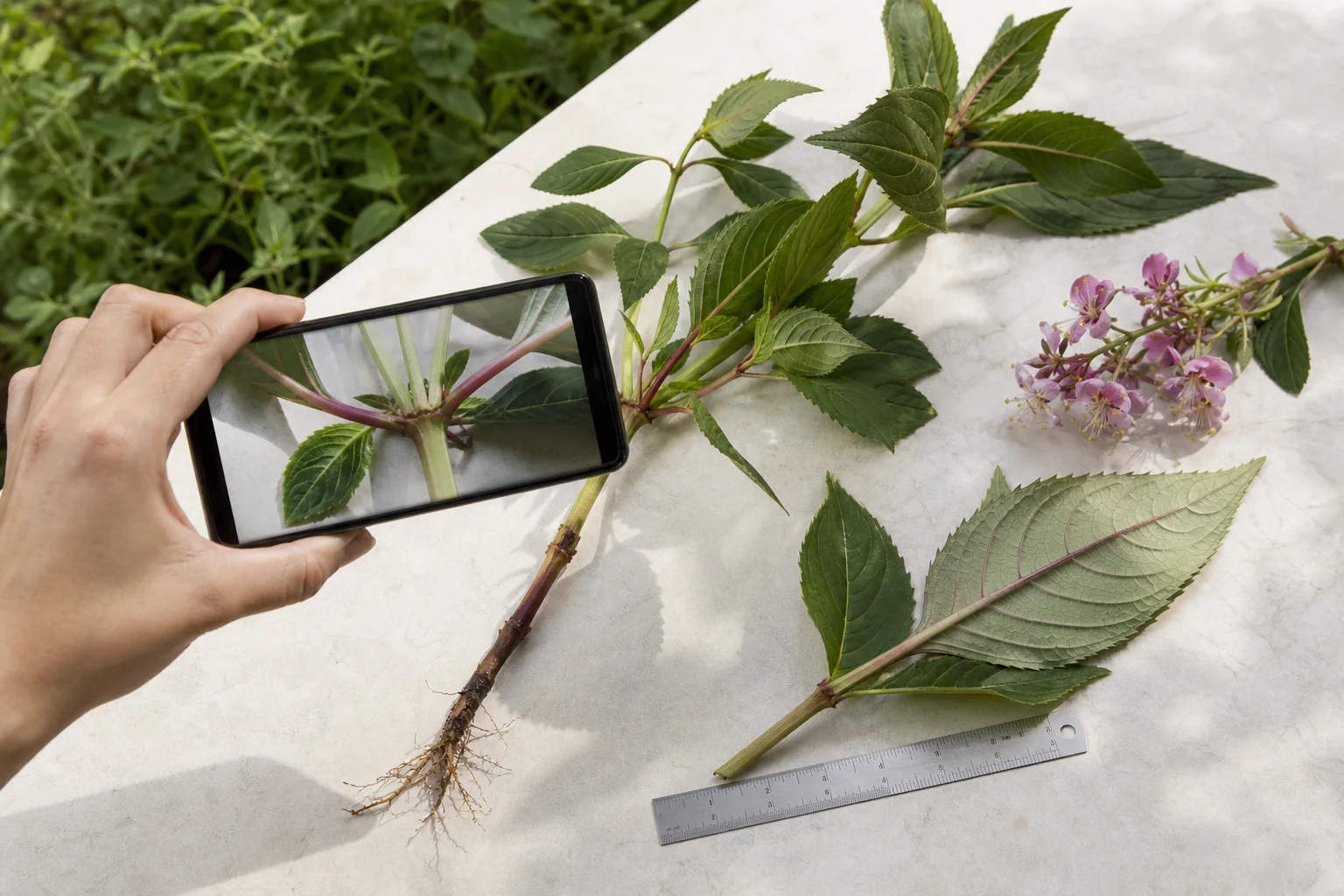
- Show a stem with several leaves attached. This reveals whether leaves occur opposite one another, alternate along the stem, or form a whorl around it.
- Capture both sides of a representative leaf. Include the tip, base, margin, veins, surface texture, and leaf stalk. Place a ruler or coin nearby when size is not obvious.
- Record flowers and fruit when present. Photograph a flower from the front and side, retaining its connection to the plant. Include buds, seed capsules, cones, or berries without removing them.
- Add one plant-specific detail. This might be bark, a thorn, the crown at soil level, an aerial root, a bulb, a fern frond underside, or the point where a branch meets the main stem.
Review the set at full size before leaving the plant. Once the details are visible, submit the clearest complementary views to the plant identifier rather than uploading every blurred or repetitive image.
Adjust the close-ups for the plant's growth type
Succulents and rosette plants: Take one picture from above and another from the side. Show how leaves overlap, whether their edges have teeth or threads, and whether offsets grow from the base. Do not cut a leaf merely to expose its interior.
Vines and aroids: Include a node, leaf stalk, aerial roots, and the transition from stem to leaf. Photograph mature and emerging leaves because juvenile foliage can look different from established growth.
Trees and shrubs: Record the silhouette, branching pattern, bark, buds, and a twig with several leaves still attached. Flowers, fruit, cones, or seed pods may be more diagnostic than a single detached leaf.
Grasses and grass-like plants: Show the whole clump, the stem base, leaf sheaths, and any seedhead. These groups can require minute structural details, so a photo may narrow the possibilities without resolving the species.
Ferns: Photograph an entire frond and its attachment at the crown. Add a clear view of the underside, where the pattern of spore-producing structures called sori can provide an important clue.
Add the clues a camera cannot capture
Record the country and general region, the observation date, and whether the plant is indoors, planted outdoors, or growing wild. Location can help separate look-alike species with different ranges, while the cultivated status tells the identifier to consider ornamental plants that may not occur naturally nearby.
Note the plant's approximate height, growth habit, scent without tasting, and the conditions in which it grows. For a purchased plant, include the store label even when it seems incomplete. A trade name, old botanical name, or partial genus can still help trace the accepted scientific name.
Color can shift with lighting and camera processing, so describe unusual flower, stem, or leaf colors in your notes. Avoid filters and heavy color edits. Cropping and modest brightness adjustment may clarify structure, but the resulting picture should still represent the plant naturally.
Compare candidates by structure, not resemblance alone
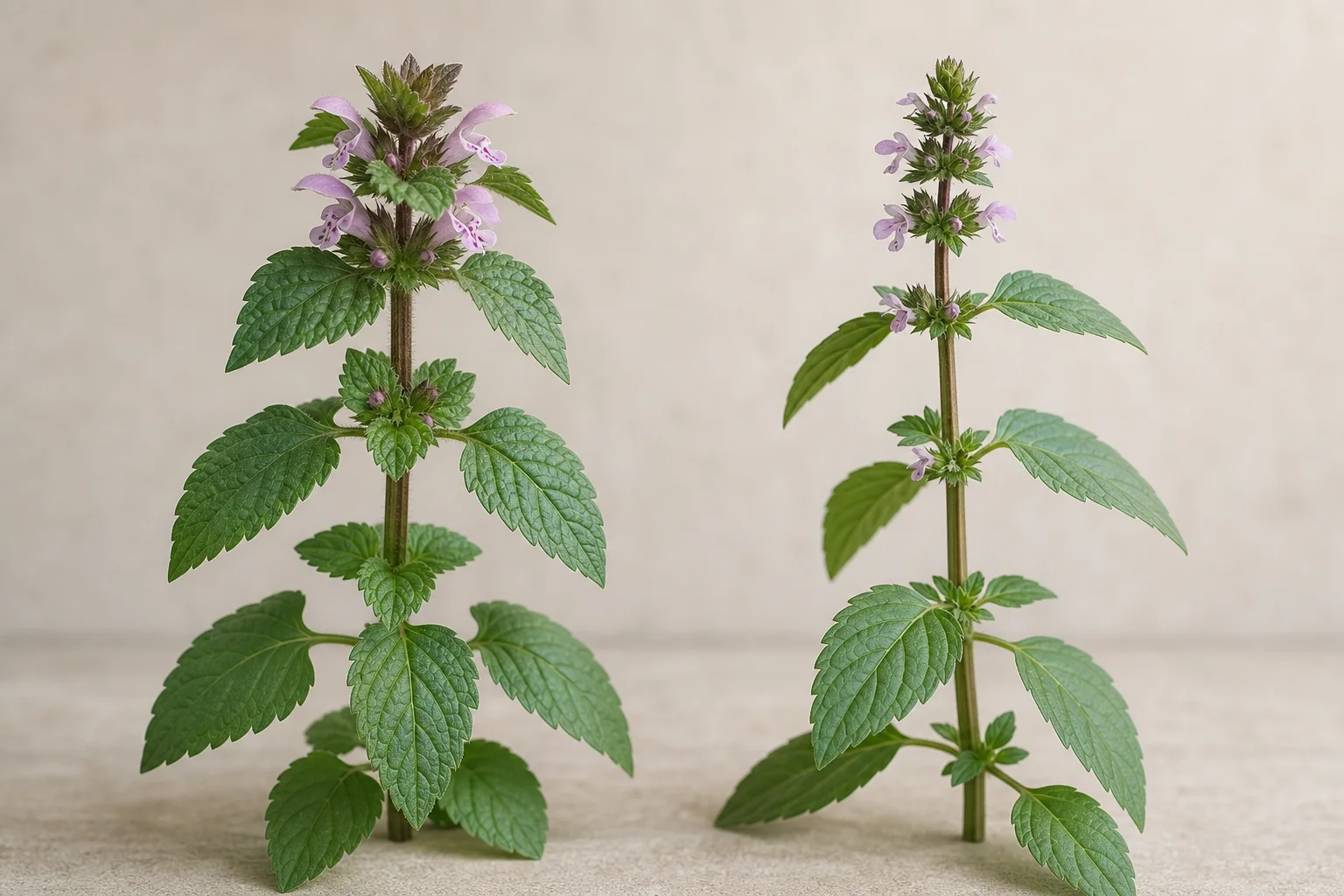
The first suggested name is a starting point. Open several candidates and compare the same structures across reliable reference images: overall habit, leaf arrangement, simple or compound leaves, margins, veins, leaf attachment, stem traits, and reproductive parts. Matching one green leaf shape is weak evidence because unrelated plants can develop similar outlines.
Reject a candidate when it conflicts with a stable structural feature. A plant with opposite leaves, for example, should not be accepted as a species consistently described as having alternate leaves. Flower shape, the number and arrangement of flower parts, fruit type, bark, or the presence of hairs may separate candidates that look similar from a distance.
A genus-level result can be the most supportable outcome when the plant is young, not flowering, damaged, or part of a difficult group. Cultivars within a species may also share most botanical features, making a precise cultivated variety difficult to establish without a label or known provenance.
Compare scientific names as well as common names. One common name may refer to several plants, while references may display accepted scientific names alongside older synonyms. Agreement between the photograph, written description, geographic context, and more than one independent reference increases confidence.
Use stronger verification when the answer affects safety
Do not use a photo suggestion alone to decide whether a wild plant is edible, medicinal, or suitable for homemade remedies. Misidentification can have serious consequences, and some hazardous plants resemble edible species. Seek an experienced local botanist, extension specialist, or another qualified identifier who can evaluate the relevant structures and context.
If a person may have swallowed or been exposed to an unknown plant in the United States, contact Poison Control at 1-800-222-1222 or use its recognized online service. If a pet may have eaten the plant, contact a veterinarian or the ASPCA Animal Poison Control Center at (888) 426-4435. Keep photographs and a sample out of reach if doing so does not create further exposure.
Identification also deserves confirmation before applying herbicide, removing a landscape plant, or changing specialized care. A local extension office, public garden, herbarium, or knowledgeable nursery may be able to review the complete photo set. Avoid making irreversible changes while the result remains a broad or conflicting shortlist.
What to do when the first result is uncertain
- During the first pass: Save two or three plausible candidates rather than selecting the first visual match. Check whether each one fits the plant's region and cultivated or wild status.
- On the same day: Compare the structural features described in the previous section. Write down one supporting feature and one possible conflict for each candidate.
- After reviewing the gaps: Retake only the missing views, such as the leaf attachment, stem base, flower side profile, or underside of a frond. Use diffuse light and check focus at full size.
- At the next growth stage: Add photographs when the plant produces mature leaves, flowers, fruit, seedheads, or winter buds. Seasonal structures may resolve an identification that foliage alone could not.
- Before relying on the name: Look for agreement between several independent features and references. If major structural conflicts remain, keep the identification at genus or family level and request expert review.
A useful success check is not merely that two pictures look alike. The candidate should fit the plant's growth form, attached structures, reproductive features when available, and known context without an unexplained contradiction.
Identify Your Plant from Clear Photos
Upload complementary views of the same plant to receive a focused identification shortlist. You can then compare the suggested names with the structural and contextual checks in this guide.
Identify My PlantFrequently Asked Questions
Can a plant be identified from one leaf photo?
Sometimes a distinctive leaf can support a useful genus or species suggestion, but many plants share similar leaf shapes. A whole-plant view, leaf attachment, stem, and flower or fruit generally provide a stronger basis for comparison.
What if the plant has no flowers yet?
Photograph its mature foliage, stem, buds, growth habit, and base. Record the season and revisit the plant when reproductive structures appear. Some groups can be narrowed from vegetative features, while others may remain unresolved until flowering or fruiting.
Can a photo identify the exact cultivar?
It may identify a distinctive cultivar, but many cultivated varieties differ only subtly or change appearance with age and growing conditions. A nursery label, purchase history, breeder description, or documented provenance may be needed to support the cultivar name.
Why do plant identification tools suggest different names?
Tools may use different image collections, geographic filters, taxonomies, and ranking methods. The photographed life stage also matters. Compare the candidates' written botanical features rather than treating agreement between two automated suggestions as sufficient verification.
How can I share location without revealing my home address?
For a cultivated houseplant, a country, state, or broad region is often more appropriate than an exact address. Wild observations may benefit from greater geographic precision, but sensitive species and private-property locations should be shared according to the platform's privacy controls.
Should damaged leaves be included in an identification photo?
Include damage as a separate supporting image, but lead with healthy, representative growth when available. Pests, nutrient problems, sun injury, and physical damage can alter a leaf's shape or color and obscure the features used for botanical identification.
Sources & Further Reading
- Plant Identification Guide for Natural Systems North Dakota State University Extension
- Identify a Plant Pl@ntNet Documentation
- Plant Nomenclature and Identification Washington State University Extension
- Developing Technology for Nature iNaturalist
- Guidelines for Plant Identification Oklahoma State University Extension
- Poisonous and Non-Poisonous Plants: An Illustrated List Poison Control
- ASPCA Poison Control American Society for the Prevention of Cruelty to Animals