Seed-starting dates vary by location, crop, and whether the seedlings begin indoors or in the garden. This guide turns those variables into a practical schedule for spring, summer, and fall sowing.
Choose your starting route in under a minute
- The packet says “start indoors”: Find the recommended outdoor transplant point, then count backward by the stated number of weeks. Use that result as your indoor sowing week.
- The packet says “direct sow before the last frost”: Wait until the bed is workable rather than frozen, saturated, or heavily compacted, then follow the crop-specific timing.
- The packet says “after danger of frost”: Delay outdoor sowing until the local frost window has passed, the forecast is suitable, and the soil has warmed for that crop.
- The crop dislikes root disturbance: Favor direct sowing for carrots, radishes, peas, beans, and similar crops unless the variety instructions recommend another method.
- You are planting for fall: Count backward from the average first fall frost using days to maturity, any indoor seedling time, and roughly two additional weeks for slower autumn growth.
- You cannot confirm the crop or instructions: Identify the seed and locate reliable species-specific directions before choosing a date; requirements differ substantially among vegetables, herbs, annuals, and perennials.
Calculate your sowing date from a local anchor
An average last spring frost date is the main planning anchor for many annual vegetables and flowers. Obtain a local estimate from a nearby Extension office or climate resource rather than relying on the USDA plant hardiness zone alone. Hardiness zones describe typical extreme winter cold and are more useful for perennial survival than for predicting a particular spring’s final frost.
Use the packet’s countdown
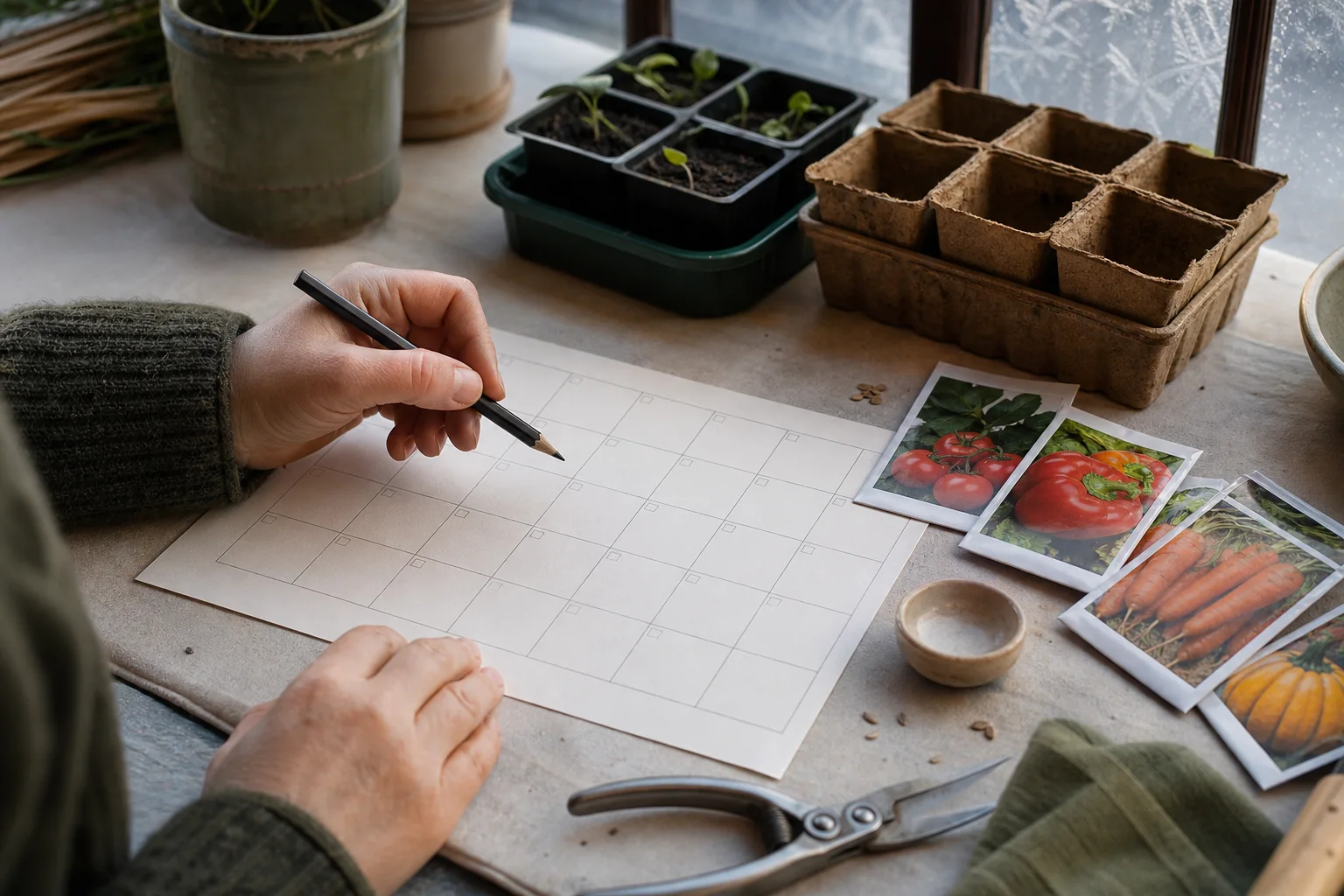
If a tomato packet says to sow indoors six weeks before the average last frost and your local date is May 10, count back to about March 29. The hardening period normally takes place during the final one to two weeks before transplanting, so do not add it twice unless the packet or local guidance specifically separates those periods.
Common planning ranges may place slow-growing peppers and eggplants about eight to ten weeks before transplanting, tomatoes around five to eight weeks, and squash or cucumbers roughly two to four weeks before planting out. These are starting references rather than fixed rules; the cultivar, container size, indoor temperature, light, and packet directions can shift the date.
Decide whether the seed belongs indoors or outside
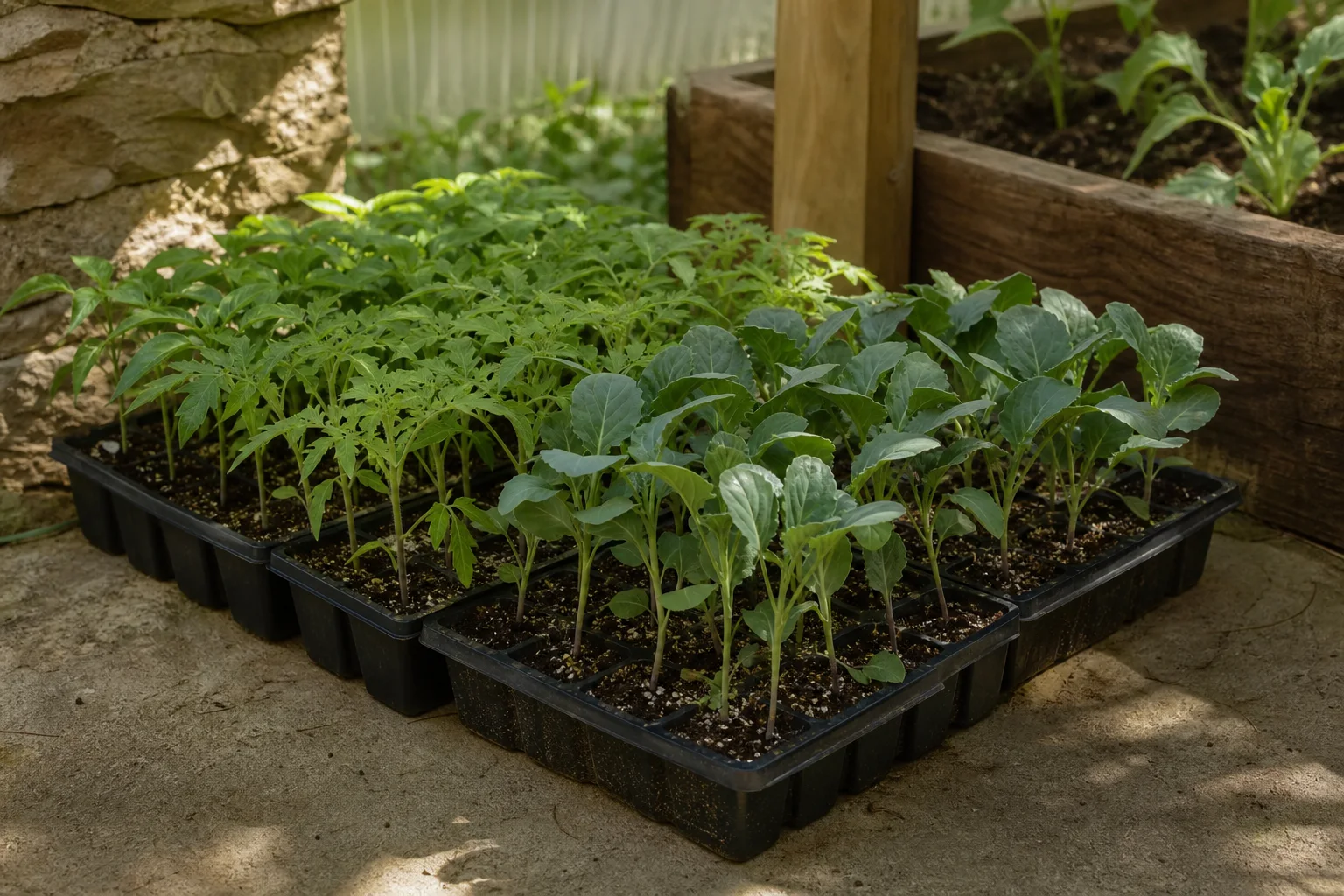
Indoor starting is useful when a crop needs a longer warm season than the local climate provides, develops slowly as a seedling, or benefits from protection during early growth. Tomatoes, peppers, eggplants, many brassicas, and numerous annual flowers are commonly transplanted. The advantage depends on having enough light and space to keep seedlings compact until outdoor conditions are suitable.
Direct sowing avoids transplant stress and is often the better route for root crops and fast-growing plants. Carrots may fork when their primary roots are disturbed, while peas, beans, radishes, and corn are commonly sown where they are intended to grow. Cucumbers, melons, and squash can be transplanted, but their sensitive roots require young seedlings, individual containers, and gentle handling.
Crop season matters as much as the sowing method. Cool-season vegetables such as peas, spinach, radishes, lettuce, and many brassicas can germinate or grow in cooler conditions. Warm-season crops such as beans, cucumbers, squash, melons, peppers, eggplants, and tomatoes are more vulnerable to frost and may stall in cold soil. One warm afternoon does not establish a suitable planting window; look for a stable weather trend.
Sow once the timing and growing conditions agree
For seeds started indoors
- Confirm the week: Record the local outdoor planting target and count backward using the packet’s indoor lead time.
- Prepare the setup first: Use clean containers with drainage, a fresh seed-starting medium, labels, and adequate seedling light. Garden soil may drain poorly in small cells and can introduce weeds or pathogens.
- Follow the packet: Sow at the listed depth and provide any stated light, darkness, warmth, soaking, scarification, or cold-stratification treatment.
- Maintain even moisture: Keep the medium moist enough for germination but not waterlogged. Remove humidity covers after emergence to improve airflow.
- Reassess after emergence: Thin crowded cells and adjust light or temperature if seedlings stretch, lean, or grow faster than the schedule allows.
For seeds sown outside
- Inspect the bed: Soil should crumble when handled rather than smear into a dense clump. Working wet soil may damage its structure.
- Check crop conditions: Compare the packet’s frost and soil-temperature guidance with the forecast and the soil at sowing depth.
- Plant and label: Follow the stated depth and spacing, mark the row, and note the date for later germination checks.
- Water gently: Settle the seedbed without washing small seeds away. Keep the sowing zone consistently moist while seeds germinate.
Prepare indoor seedlings for the outdoor transition
Begin hardening seedlings approximately one to two weeks before their planned transplant date. Hardening is gradual acclimation to outdoor sun, wind, temperature changes, and faster moisture loss. Start with a short period in a sheltered, shaded location, bring the plants inside before unsuitable nighttime temperatures, and increase their exposure in stages.
Warm-season seedlings should not be exposed to frost merely to toughen them. Pause the process during severe wind, heavy rain, a cold snap, or unusually intense heat. Water often enough to prevent damaging wilt, but avoid keeping the medium saturated. Plants may use water faster outside than they did indoors.
Transplant on a calm, cloudy day or later in the afternoon when practical. Water the seedlings beforehand, preserve the root ball, and plant at the depth recommended for the crop. Water the surrounding soil after planting and provide temporary wind or sun protection if conditions become harsher than those encountered during hardening.
Build a schedule that continues beyond spring
Winter planning
List each crop, its intended outdoor date, sowing method, indoor lead time, and days to maturity. Start only species whose countdown has begun. Some perennial flowers and native plants need a period of moist chilling, called cold stratification, but the duration and method are species-specific.
Early and mid-spring
Sow suitable cool-season crops as local conditions permit and begin indoor warm-season crops according to their individual countdowns. Check the forecast before every outdoor sowing or transplanting session. A row cover may moderate wind and temperature changes, but it does not remove weather risk.
Late spring and summer
Direct sow warm-season crops after their temperature requirements are met. For short-harvest crops such as radishes, salad greens, cilantro, and bush beans, make smaller sowings every two to three weeks when seasonal conditions remain suitable. This succession approach can spread harvests instead of producing one large crop at once.
Summer sowing for fall
Start with the average first fall frost. Count backward by the variety’s days to maturity, add the indoor growing period if transplants are involved, and include about two weeks for slower growth under shortening days. Heat-sensitive fall crops may need shade and close moisture management during establishment.
Check whether your timing is working
Well-timed indoor seedlings are compact, upright, and appropriately sized when outdoor conditions become suitable. Roots should hold the growing medium together without forming a dense mat around the container. If plants become oversized early, improve light, avoid excessive fertilizer, and move them into larger containers only when their roots or remaining indoor time justify it.
For direct sowings, use the packet’s expected germination range as a checkpoint rather than expecting immediate emergence. If that period passes, inspect a small part of the row. Intact but unsprouted seeds may indicate unsuitable temperature or moisture; soft or decayed seeds suggest excessive moisture, poor drainage, or low seed quality; missing seeds may point to disturbance or feeding.
Restarting may be reasonable when enough growing season remains. Recheck sowing depth, soil condition, temperature, seed age, and irrigation before repeating the same method. When the seasonal window has narrowed, a faster-maturing variety or locally grown transplant may be more practical than maintaining an overgrown indoor seedling or repeatedly reseeding unsuitable soil.
Build Your Seed-Starting Schedule
Turn your crop list, local growing window, and preferred sowing methods into an organized care plan with dates and follow-up tasks you can adjust as conditions change.
Create My Planting ScheduleFrequently Asked Questions
What should I do if I missed the recommended indoor seed-starting date?
Check the remaining growing season and the variety’s days to maturity. You may still sow a fast-maturing crop, direct sow when appropriate, or obtain a healthy transplant. Starting late is often more manageable than trying to accelerate seedlings with excessive heat or fertilizer.
Is my USDA hardiness zone enough to choose a seed-starting date?
No. The zone reflects typical extreme winter minimum temperatures, mainly for perennial hardiness. Annual seed timing also depends on local frost averages, elevation, soil warming, microclimate, crop tolerance, and the current forecast.
Should I delay planting during an unusually cold or wet spring?
Delay outdoor sowing or transplanting if the crop’s required conditions are not present. Saturated soil, repeated cold nights, and a frost forecast can outweigh the calendar date. Keep indoor seedlings under adequate light and pot them up only if their roots need more room.
How long should I wait before deciding that seeds failed to germinate?
Use the germination range on the packet and count from the sowing date. Cooler-than-recommended conditions can extend that period. Before reseeding, uncover one or two seeds carefully and check their condition without disturbing the rest of the row or tray.
Can flower and perennial seeds use the same frost-date calculation?
Many annual flowers can, but some flowers and perennials require light for germination, a cold period, scarification, or fall and winter sowing. Follow species-specific instructions rather than applying a vegetable countdown to every ornamental seed.
Can I use old seeds when the planting window is short?
You can test a small sample on a damp paper towel before the sowing date. Germination percentage often declines with age and poor storage, though longevity varies by species. When timing is tight, fresh seed may reduce uncertainty and the need for late reseeding.
Sources & Further Reading
- Starting Seeds Indoors University of Minnesota Extension
- Starting Vegetable Seeds Indoors: I. Planning Utah State University Extension
- Starting Vegetable Seeds Indoors: IV. Seedling Culture and Transplanting Utah State University Extension
- Planting the Vegetable Garden University of Minnesota Extension
- Growing Your Own Oregon State University Extension Service
- Climate Glossary USDA Natural Resources Conservation Service