A peace lily can tolerate a dim room while producing few or no flowers. Blooming also depends on plant maturity, cultivar, season, and whether the roots have enough stability to support reproductive growth.
Choose the right route in under a minute
- Healthy, dark leaves but no flowers: Move toward the light route. Gradually relocate the plant to brighter indirect light without exposing it to strong direct sun.
- Recently purchased flowers faded and never returned: Use the maturity route. Maintain good conditions and allow time, because the original display may have been commercially induced before sale.
- New leaves are small, sparse, or leaning toward a window: Improve light first. Clean dusty leaves and reassess the position before changing fertilizer or pot size.
- The mix stays wet, smells sour, or leaves are yellowing: Follow the root-stress route. Pause feeding, empty standing water, and inspect drainage and roots before trying to promote flowers.
- The pot dries extremely quickly and roots densely circle the container: Check for severe root congestion. Repot only one size larger during active growth rather than moving into an oversized container.
- The plant was recently divided, repotted, chilled, or repeatedly wilted: Choose the recovery route. Stabilize care and wait for consistent new foliage before expecting bloom development.
What separates low light, immaturity, and root stress?
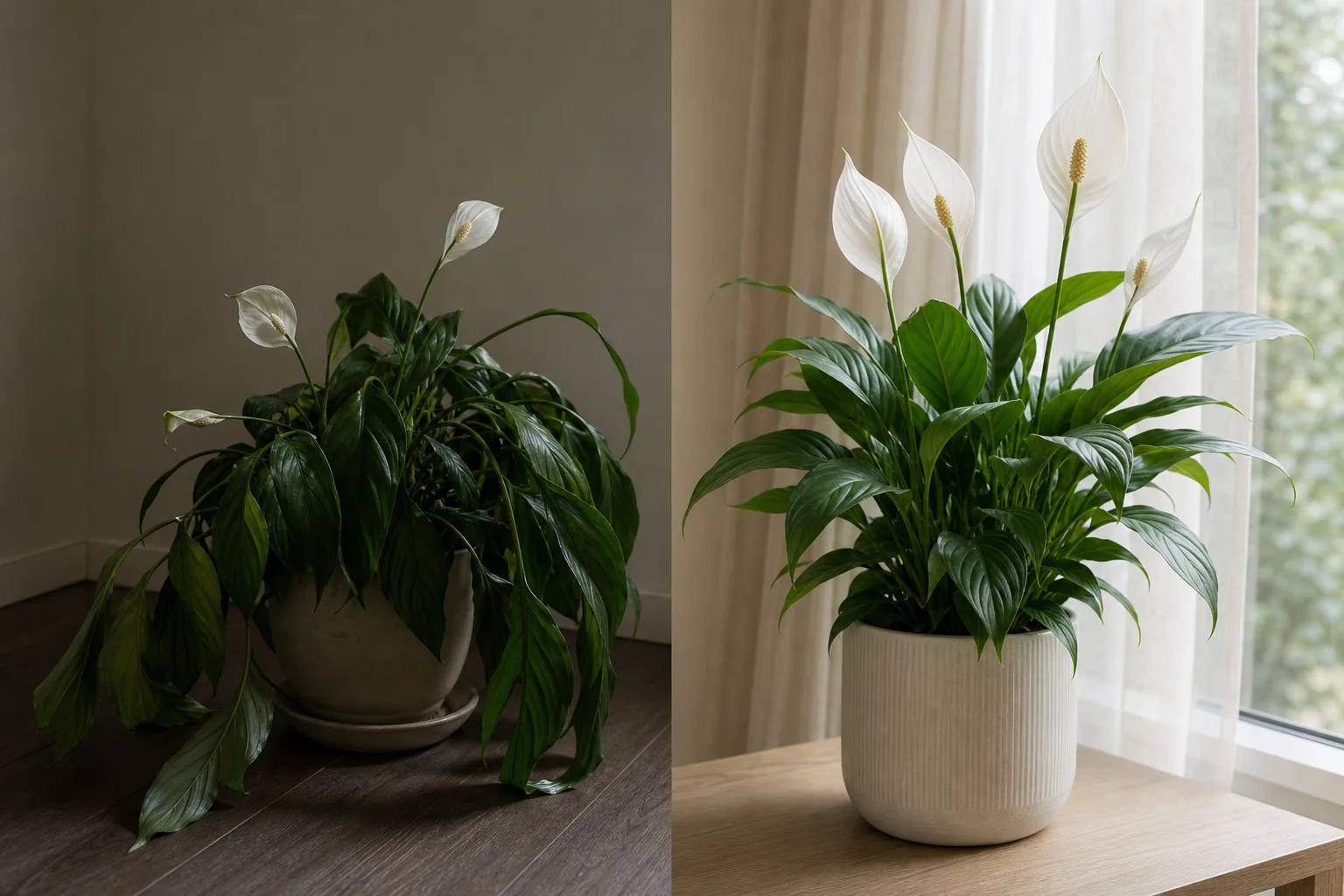
Low light and immaturity are easily confused because both can leave a peace lily looking green but flowerless. With insufficient light, growth is usually slow, leaves may stretch or angle toward the brightest side of the room, and the pot may dry slowly. Peace lilies tolerate shade, but flowering typically improves in bright, filtered light.
An immature plant or a cultivar with a less-frequent natural flowering habit may continue producing well-shaped leaves under suitable light without forming a spathe. This is especially plausible when a newly purchased plant arrived with several flowers, lost them, and then grew normally. Commercial producers may use gibberellic acid, a plant growth regulator, to schedule flowering in young plants throughout the year, so the original display is not necessarily the plant’s natural indoor pattern.
Root stress looks different. Repeated collapse from dryness, persistently saturated mix, a sour odor, widespread yellowing, or stalled foliage suggests that the roots cannot support normal growth. Adding fertilizer in this situation can increase salt stress rather than address the cause. Direct-sun injury is another separate route: bleached patches, crisp areas, and rapid drying indicate that brighter light was introduced too aggressively.
Recent repotting or division can also pause flowering while the plant rebuilds roots and leaves. If foliage is firm and new growth is gradually resuming, consistency is usually more useful than another intervention. No single leaf color or missed bloom confirms a cause; interpret light, pot moisture, roots, and recent changes together.
Increase usable light without scorching the leaves
Choose a place where daylight is bright enough to cast a distinct but soft-edged shadow. An east-facing window or a position near a brighter window filtered by a sheer curtain often works well. Distance alone is not a reliable guide because window size, trees, buildings, season, and glass treatments can substantially change indoor light.
Move the plant closer to the new position in stages over one to two weeks. Watch for pale patches, dry tan areas, or curling on the window-facing leaves; these suggest excessive direct exposure. If the available room remains dim, a houseplant grow light can supplement daylight without putting the peace lily in hot sun.
Keep the plant away from cold drafts, heating vents, and abrupt temperature shifts. Peace lilies are tropical plants, and chilled or fluctuating conditions can slow growth. Wipe broad leaves gently with a damp cloth so dust does not further reduce light capture, and rotate the pot a quarter turn during watering to encourage balanced growth.
Support flowering through the root zone
Water when the upper few centimetres of potting mix feel dry, then moisten the root ball thoroughly and allow excess water to drain. Do not leave the nursery pot standing in a water-filled decorative container. The aim is evenly available moisture with air around the roots, not permanently saturated mix or repeated severe wilting.
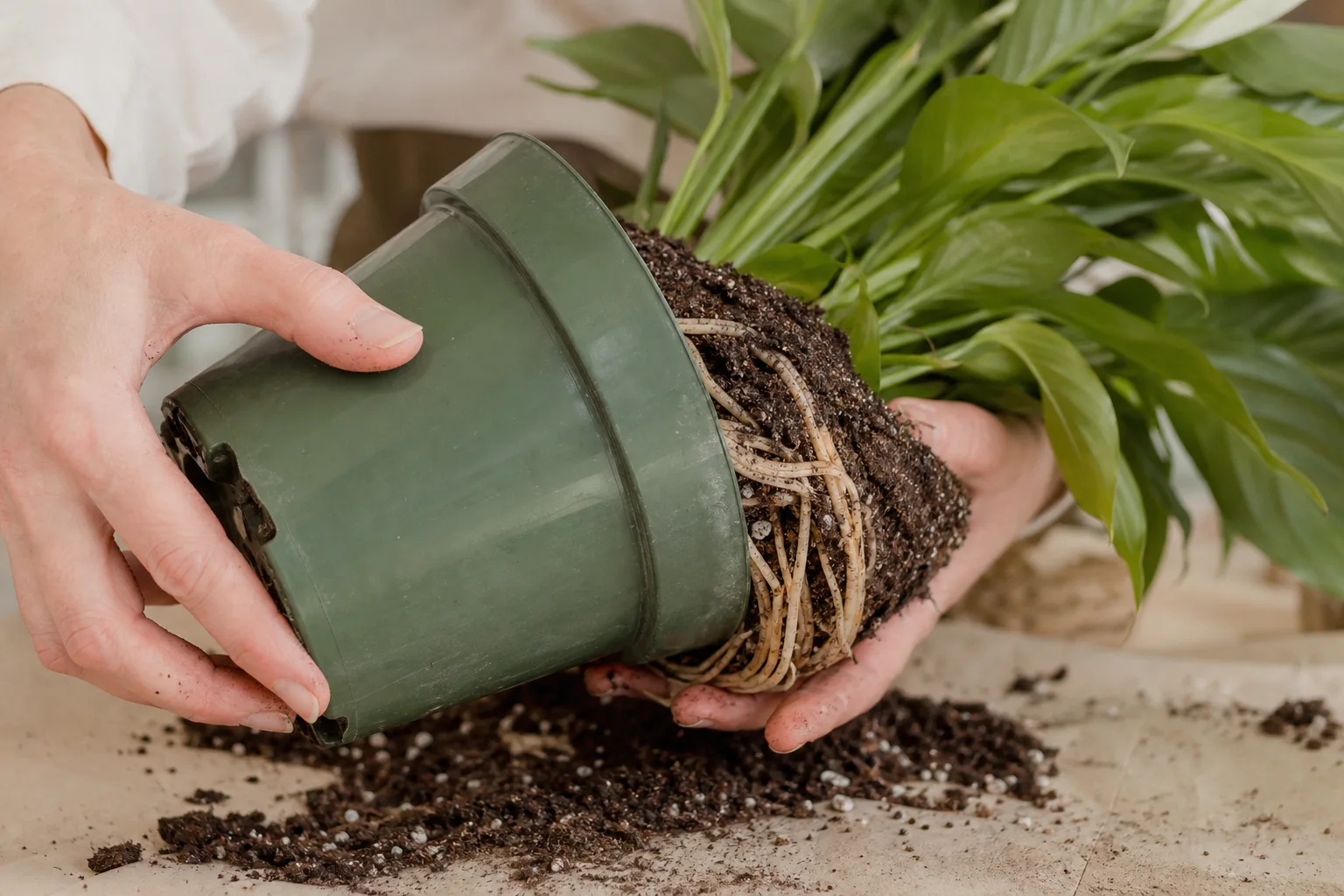
Slide the root ball out only when rapid drying, persistent wetness, odor, or stalled growth gives you a reason to inspect it. Healthy roots are generally firm, while failing roots may be soft, dark, and easily stripped. If the roots are healthy but densely fill the pot, move up by only a small pot size and use an airy, organic houseplant mix with effective drainage.
Peace lilies have modest fertilizer requirements. Feed a healthy, actively growing plant with a balanced houseplant fertilizer at the product’s low-dose houseplant rate during the brighter growing season. Do not feed a plant with damaged roots, recently replaced potting mix, or no active growth. Extra fertilizer is not a substitute for light and may burn roots or leaf tips.
If several conditions changed at once, use the plant care plan generator to organize light, watering, and feeding adjustments without making every correction on the same day.
A staged plan for the next month
Today
Record the current window direction, how long the mix remains wet, and whether the plant is producing new leaves. Remove standing water and spent flower stalks, then select a brighter indirect-light position if the existing location is dim. Begin any permanent relocation gradually rather than making an abrupt jump into strong sun.
Next 3–7 days
Monitor moisture with a finger or wooden skewer instead of watering by the calendar. Check whether the plant receives bright filtered light for a useful portion of the day, and watch for heat or direct-sun injury. Avoid repotting or feeding unless the earlier checks provide a clear reason.
Next 2–4 weeks
Look for firm new leaves, steadier water use, and less leaning toward the window. If the roots appear healthy and active growth is underway, begin a conservative seasonal feeding routine. Keep the environment stable; a flower may take considerably longer than a new leaf to appear, particularly outside the plant’s stronger growing season.
What progress looks like—and when to investigate further
A flowerless peace lily is not necessarily unhealthy. Improved leaf size, regular new foliage, balanced growth around the pot, and predictable drying indicate that the plant is responding even if no spathe has appeared. Many peace lilies flower most readily during brighter spring and summer conditions, but cultivar and indoor environment can shift the timing.
If no new leaves appear after several weeks of suitable warmth and light, or if yellowing and wilting continue, inspect the roots and check for pests rather than adding a bloom product. Soft crown tissue, extensive decayed roots, or a worsening odor calls for prompt removal of damaged material and repotting into fresh mix. Recovery depends on how much healthy crown and root tissue remains.
If the plant grows strongly for several months in appropriate light but still does not bloom, maturity or cultivar genetics becomes more likely. Continue sustainable care instead of repeatedly repotting, dividing, or applying unlabelled plant growth regulators. Division produces additional plants but can postpone flowering while each section rebuilds, so it is not a quick bloom treatment.
Create a Peace Lily Blooming Plan
Turn your plant’s window exposure, pot condition, watering pattern, and current growth into a care routine that prioritizes the most likely limiting factor without changing everything at once.
Build My Peace Lily Care PlanFrequently Asked Questions
How long after increasing light might a peace lily bloom?
Do green peace lily flowers mean something is wrong?
Should I cut off old peace lily flowers?
Can a peace lily flower during winter?
Does a peace lily need to be root-bound to bloom?
What should I do if my pet chews a peace lily?
Sources & Further Reading
- How to Grow Peace Lilies Royal Horticultural Society
- Florida Foliage House Plant Care: Spathiphyllum UF/IFAS Extension
- Spathiphyllum Flowering—Keys to the Future UF/IFAS Extension
- Cultural Guidelines for Commercial Production of Interiorscape Spathiphyllum UF/IFAS Extension
- Peace Lily — Spathiphyllum North Carolina Extension Gardener Plant Toolbox
- Easy Low-Maintenance Houseplants Iowa State University Extension and Outreach
- Lighting for Indoor Plants and Starting Seeds University of Minnesota Extension
- Toxic and Non-Toxic Plants: Peace Lily ASPCA Animal Poison Control Center