A sudden move outdoors or closer to a summer window can leave a houseplant pale, brown, or crispy. Because light injury, dry-soil stress, and wet-root trouble can overlap, the safest response begins with the leaves, the potting mix, and the plant’s recent history.
Choose Your Route From Three Observations
- Pale, bleached, or faded patches appeared after a light change: treat this as likely sunburn. Shift the plant to bright indirect light or protected outdoor shade, then check moisture separately before deciding whether to water.
- Crisping began at leaf tips or margins and the mix feels dry: follow the heat-and-dryness route. Rehydrate the root ball thoroughly, let excess water drain, and reduce intense afternoon exposure while the plant stabilizes.
- Most foliage is limp or yellowing while the mix remains wet: stop watering. Empty the saucer or cachepot, confirm that drainage holes are open, and inspect the roots if the mix stays wet, smells sour, or the plant continues declining.
A brown edge by itself does not prove underwatering. Use the damage pattern, moisture below the surface, pot weight, and recent light change together.
How the Three Lookalikes Differ
All three problems can produce brown tissue and drooping, but the location and sequence of symptoms usually provide stronger clues than color alone. Sunburn is linked closely to exposed leaf surfaces and a recent jump in light. Dryness-related scorch starts where water supply is hardest to maintain, while wet-root stress affects water uptake even though moisture surrounds the roots.
| Likely route | Deciding combination | What to inspect | Wrong move to avoid |
|---|---|---|---|
| Sunburn or excess light | Pale, faded, yellow-white, or bleached patches develop on the most exposed surfaces after stronger direct light; damaged areas later become tan, brown, papery, or brittle. | Compare the window- or sun-facing side with shaded leaves. Review any move outdoors, glass exposure, curtain change, or seasonal increase in sun. | Do not assume the pale tissue needs fertilizer or extra water. Neither corrects direct-light injury. |
| Heat plus dry-soil scorch | Tips and margins crisp first while the mix is dry, the pot feels light, and foliage may curl or lose firmness during the hottest period. | Check moisture several inches down, gaps between dry mix and the pot, blocked irrigation, hot wind, and rapid drying outdoors. | Do not give only a small surface splash; a severely dry root ball may remain dry in the center. |
| Excess moisture or root stress | Foliage remains generally limp despite wet mix, often with lower-leaf yellowing, slow growth, leaf drop, or soft dark roots. | Check the drainage holes, standing water inside a cachepot, root firmness, stem base, odor, and how long the mix remains wet. | Do not add water merely because the plant is wilted. Saturated roots can lose the ability to supply the leaves. |
Thin-leaved tropicals such as ferns, peace lilies, and many understory aroids may scorch quickly in direct outdoor sun. Cacti and succulents can also burn after an abrupt transition, even though established specimens may tolerate stronger light. Their drought tolerance makes a soil check especially important before watering.
Run a Same-Day Leaf, Soil, and Root Check
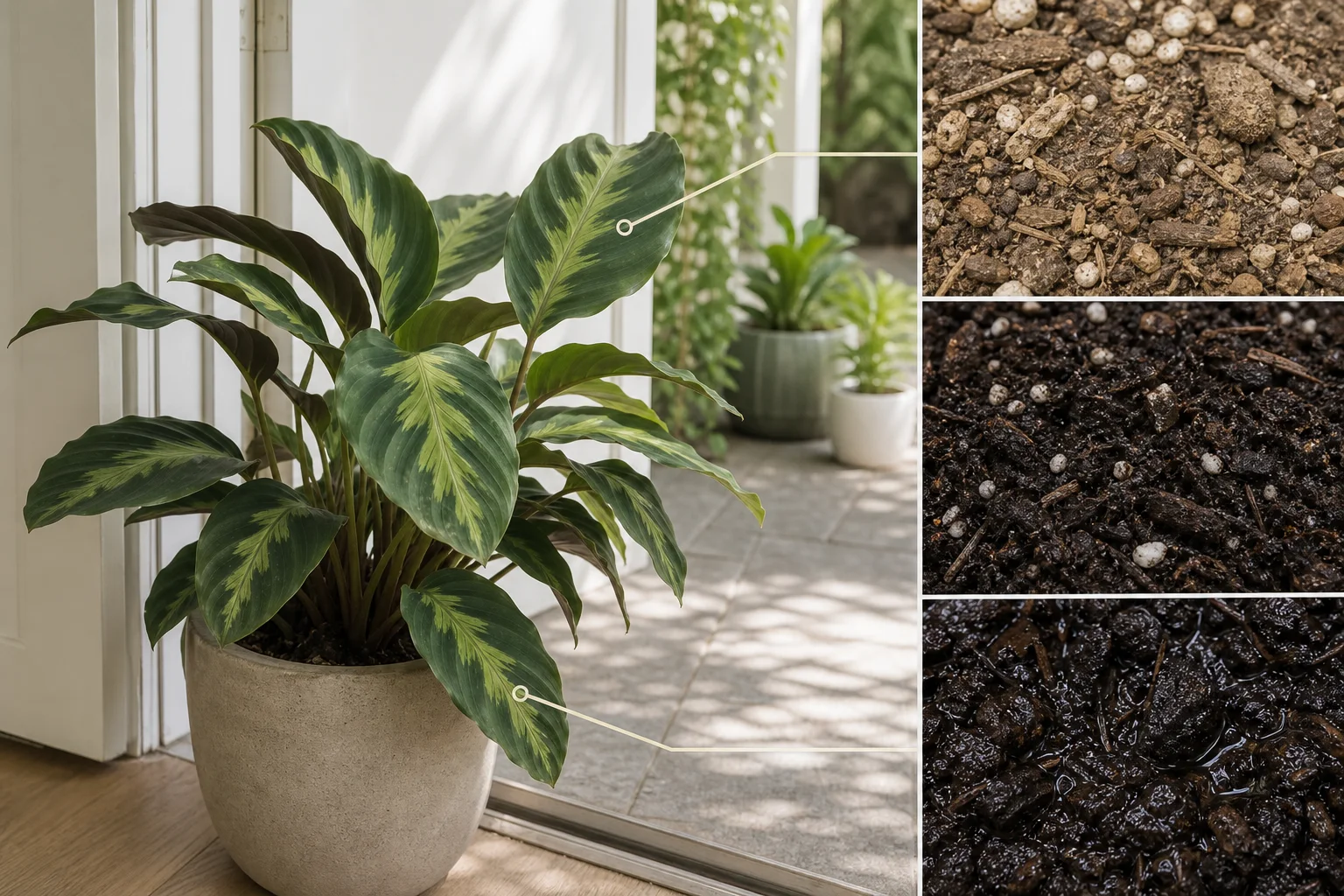
Start by photographing the affected side of the plant so later changes are easier to judge. Inspect both leaf surfaces under bright light. Sunburn usually follows exposure, whereas scattered spots on shaded leaves, expanding lesions with halos, wet-looking tissue, residue, webbing, or visible insects justify a broader pest or disease assessment.
If the mix is dry
Water slowly until excess flows from the drainage holes, then empty the saucer. If the mix has shrunk from the pot or water runs immediately down the sides, apply water in two or three passes several minutes apart. Bottom-watering can also re-wet a resistant root ball, provided the pot is removed once moisture has wicked upward and is allowed to drain.
If the mix is moist but the day is hot
Give the plant relief from hot afternoon sun and drying wind, then reassess its firmness during the cooler evening or following morning. Temporary daytime wilting can occur when leaves lose water faster than roots replace it. Adding water to an already moist pot may create a second problem.
If the mix is persistently wet
Remove standing water and make sure the nursery pot is not sealed inside a decorative container. Slide out the root ball only when wetness persists, drainage is poor, or decline continues. Healthy roots vary in natural color but should generally feel firm. Soft, slimy, collapsing roots or a soft stem base raise concern for serious root or crown damage.
Delay fertilizer and nonessential repotting while the cause is still uncertain. Fertilizer does not restore scorched tissue, and unnecessary root disturbance can add stress. Repot promptly only when correcting waterlogged, decomposed mix, a container without drainage, or confirmed decaying roots.
Rebuild Light Exposure From Shade to Morning Sun
Move a recently scorched plant out of direct midday and afternoon sun, but keep it in species-appropriate bright indirect light or open shade. This is a cultivation correction rather than a brief inspection step. Deep darkness can slow recovery and does not prepare new foliage for the plant’s eventual growing location.
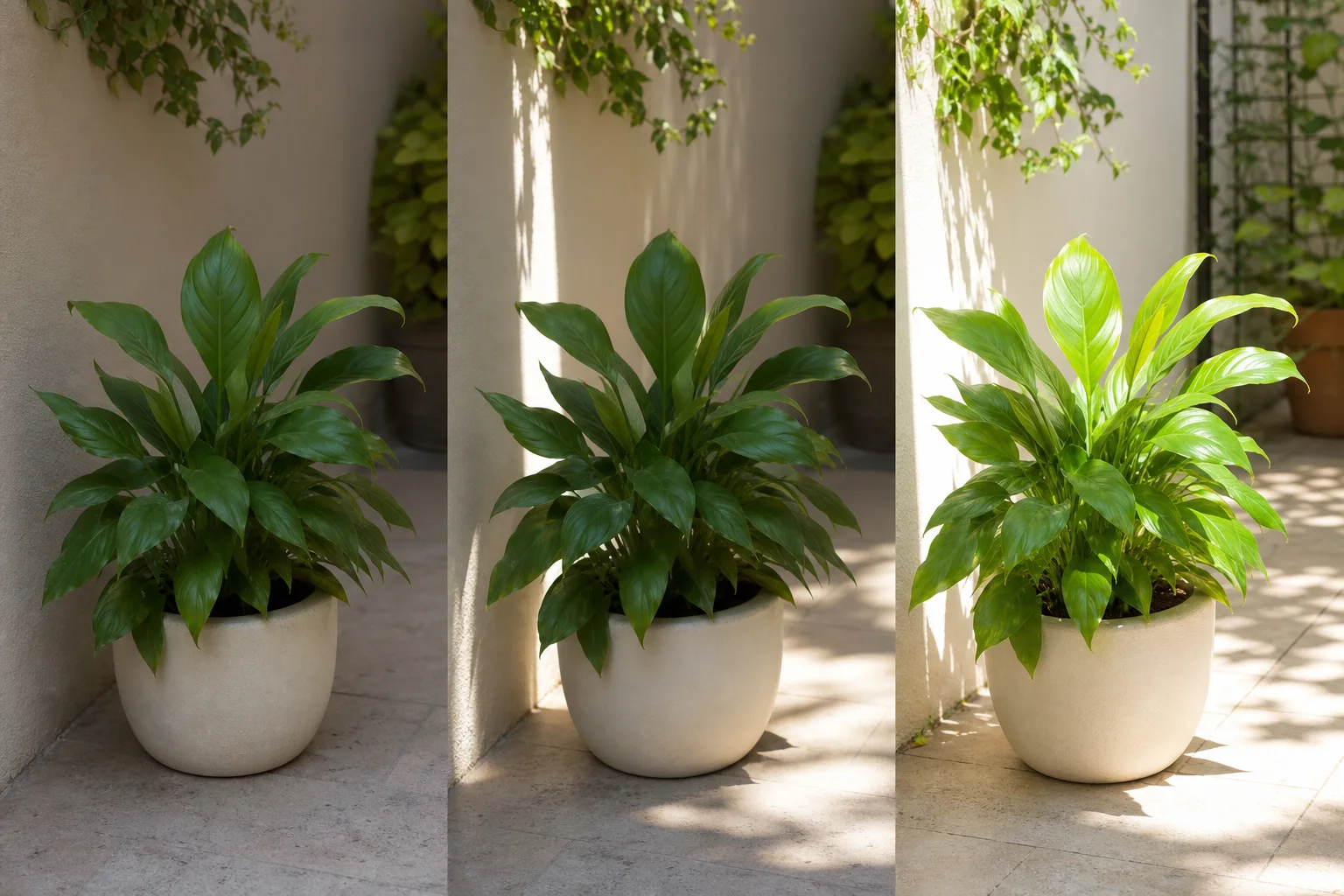
- Protected shade: allow about two to three days in a sheltered position without hot direct sun. Continue checking moisture because outdoor air and wind may dry pots faster than indoor conditions.
- Gentle morning exposure: if no fresh bleaching develops, introduce up to about two hours of early sun for several days. Shelter the plant from strong wind and unusually hot conditions.
- Gradual increases: add a modest amount of morning exposure every few days while watching newly exposed leaves. Step back if new pale patches appear.
The endpoint depends on the species. Many ferns, prayer plants, peace lilies, peperomias, and common understory foliage plants may do better in filtered light throughout summer. Sun-adapted plants can often progress further, but acclimation should still be gradual. Existing indoor-grown leaves may remain more vulnerable than foliage produced under the new conditions.
What to Do Today and What to Watch Next
Today
- Complete the route-specific intervention selected above: protect from harsh sun, rehydrate a genuinely dry root ball, or correct standing water and blocked drainage.
- Mark or photograph the current damage boundary. Avoid removing every affected leaf while some green, firm tissue remains useful to the plant.
- Keep the plant sheltered from extreme heat and wind while avoiding a sudden move into very low light.
Next 3–7 Days
- Check moisture by touch and pot weight rather than following the previous indoor watering calendar.
- Watch whether damage is confined to the old patches or continues appearing on previously unaffected tissue.
- For the wet-root route, look for improving drainage and a normal drying trend. Escalate to a root inspection if the mix stays saturated or the stem base softens.
Next 2–4 Weeks
- Judge recovery mainly by stable stems, normal moisture use, and healthy new leaves. Old bleached or brown areas do not regain green tissue.
- Resume feeding only after the plant is actively growing and the root zone is functioning normally.
- Continue gradual acclimation if outdoor placement remains appropriate, or maintain bright filtered light for species that are sensitive to direct sun.
What Recovery Can Look Like
A plant with localized sunburn and a firm stem or crown may continue growing once its exposure is corrected. The damaged patches are permanent, so success is measured by the absence of new bleaching and by healthy later growth. Remove a leaf when it is entirely dry, collapsing, or creating a sanitation problem; retain partly green leaves when the plant has little healthy foliage left.
Dry-stressed foliage may regain some firmness after the root ball is evenly rehydrated, but fully crisp tissue is dead. If the plant remains limp after thorough watering and drainage, reconsider compacted or damaged roots rather than watering repeatedly. Recovery speed varies with species, season, root condition, and the amount of living foliage.
Wet-root stress carries greater risk when most roots are soft or dark, the crown is mushy, or decline continues after drainage is corrected. Trim confirmed decayed roots with clean tools and repot into a suitably sized draining container when enough firm root tissue remains. If the base is collapsing, propagating an unaffected stem or offset may be more realistic than preserving the original root system.
Seek help from a local Extension service or plant diagnostic laboratory when lesions continue spreading away from exposed surfaces, multiple nearby plants develop similar spots, or fungal growth, bacterial ooze, or extensive stem decay is present. These combinations can indicate a problem beyond ordinary sun or moisture stress.
Diagnose the Leaf Damage Before Changing Care
Upload clear photos of the damaged leaves, the whole plant, and the potting mix to compare sunburn, dry-soil stress, and wet-root symptoms before you water, repot, or change its growing location.
Diagnose My Houseplant’s Leaf DamageFrequently Asked Questions
How quickly can houseplant sunburn appear after a move outdoors?
Visible injury may develop within hours of intense direct exposure, although browning can become more obvious over the following days. Photograph the plant and correct the exposure promptly; a patch finishing its change from pale to brown does not necessarily mean the injury is still spreading.
Should I cut off every sunburned leaf?
No. A partly damaged leaf can still contain useful green tissue. Remove leaves that are fully brown, brittle, or collapsing, but avoid stripping a stressed plant of most of its foliage at once. Use clean scissors and do not cut into healthy stems or the crown.
Can sunburn happen through a window?
Yes. A plant can scorch after moving much closer to a bright south- or west-facing window, especially when seasonal sun becomes stronger. Increase window exposure gradually, or use a sheer curtain to reduce intense direct light while preserving bright growing conditions.
Is a succulent with brown patches more likely to be thirsty?
Not necessarily. Succulents can develop sunburn after an abrupt increase in direct light, while their stored water may keep them firm even as patches bleach. Check the mix and recent exposure separately; watering a succulent in moist soil may increase root risk without helping the damaged leaf.
Should I repot a wilted plant immediately?
Repot when evidence points to persistent waterlogging, decomposed mix, poor drainage, or decaying roots. A sunburned plant with functional drainage usually does not benefit from immediate repotting. Correct its exposure first and avoid combining several stressful changes without a clear reason.
Can every houseplant spend summer outdoors?
No. Suitability depends on species, nighttime temperature, wind, humidity, pests, and the available shade. Sensitive plants may perform better indoors. If outdoor placement is appropriate, begin in a protected shaded location and monitor the pot because outdoor containers can dry faster.
Sources & Further Reading
- Excess Light on Indoor Plants University of Maryland Extension
- When Houseplants Go Outside University of Minnesota Extension
- Spring Houseplant Care University of Minnesota Extension
- Drought Stress to Indoor Plants University of Maryland Extension
- Overwatered Indoor Plants University of Maryland Extension
- Watering Houseplants University of Illinois Extension
- Container Drainage Options University of Illinois Extension
- Pest and Disease Problems of Indoor Plants Penn State Extension