If you are asking, “Why is my houseplant wilting?”, do not automatically reach for the watering can. Both dry soil and prolonged saturation can leave foliage limp, so check the root zone, pot weight, drainage, odor, and recent environmental changes before choosing a rescue path.
First rule: stop and check before adding water
Do not water a wilted houseplant based on drooping leaves alone. Wilting means the leaves and soft stems are not maintaining normal water pressure, but it does not reveal why. The roots may have no moisture available, or they may be surrounded by wet soil yet unable to function properly.
Adding water helps the first situation and can worsen the second. Before doing anything else, move the plant where you can examine its pot, saucer, soil, stems, and leaf surfaces. Unless it is sitting against hot glass or beside a heater, avoid changing several conditions at once.
Stop rule: If the soil below the surface feels moist or the pot feels unexpectedly heavy, pause watering until you have checked drainage and root-warning signs.
Run these five checks at the pot
No single leaf symptom reliably separates underwatering from overwatering. Combine several observations:
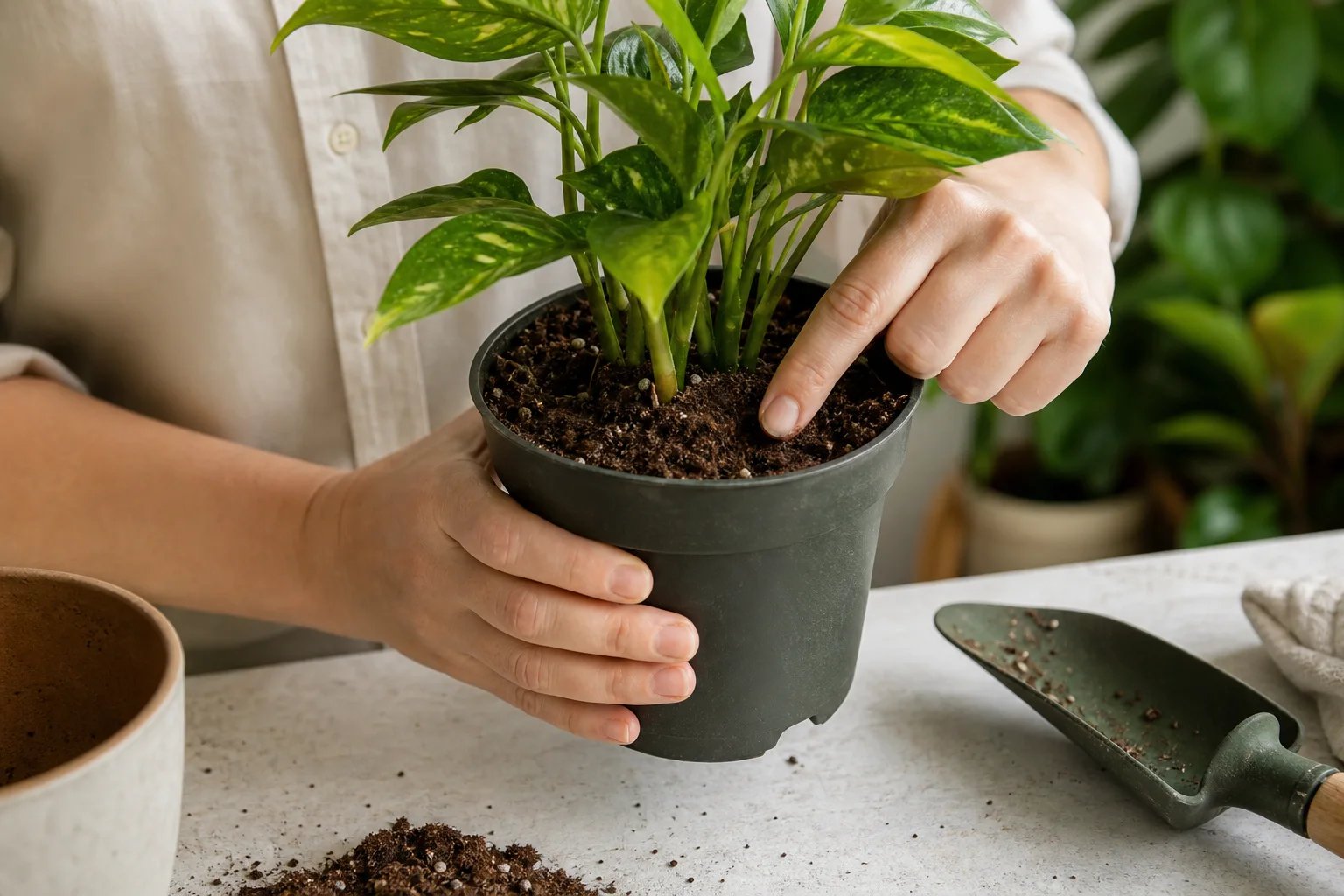
- Feel below the surface. Push a clean finger or wooden skewer into the mix, checking deeper than the crust on top. In a medium pot, examine roughly 1–2 inches down; also check near the center when possible. Cool soil that clings to your finger or darkens a wooden skewer is still moist.
- Lift the pot. A dry root ball is noticeably lighter than the same pot after thorough watering. This becomes more useful when you learn the weight of that particular plant in both states.
- Inspect the drainage route. Confirm that the growing pot has open drainage holes. Look for water trapped in a saucer, decorative cachepot, foil sleeve, or self-watering reservoir.
- Smell the root zone. Healthy mix usually smells earthy or faint. A sour, stagnant, or rotten odor supports concern about prolonged wetness and damaged tissue.
- Review recent changes. Note a heat wave, stronger seasonal sun, a move to a brighter window, air-conditioning, a heater, repotting, or a sudden change in watering help.
Moisture meters can provide an additional clue, but compacted mix, salts, and uneven moisture can affect readings. Confirm the result with soil feel, pot weight, and drainage observations.
Path A: the root ball is dry and the pot feels light
Underwatering is more likely when the mix is dry below the surface, the pot is very light, or the root ball has pulled away from the pot’s sides. Leaves may feel thin, curled, dry, or brittle, with crisp brown tips or edges. These foliage clues support the diagnosis but should not replace the soil check.
What to do
- Water slowly across the soil surface until the entire root ball is moist and excess water exits the drainage holes.
- If water immediately races down gaps around a shrunken root ball, apply it in several slow passes. Alternatively, stand a pot with drainage holes in shallow water for about 15–30 minutes, then remove it and let it drain completely.
- Check the center of the mix afterward. A pot that remains very light may contain dry, water-repellent pockets.
- Return the plant to appropriate light, away from intense heat while it is stressed.
Do not leave the container standing in water after the root ball has rehydrated. If the mix becomes bone-dry again unusually quickly, check whether roots are tightly circling the pot or whether the plant recently received much brighter light or higher temperatures.
Path B: the soil is wet and the pot feels heavy
Overwatering describes a root zone that remains wet too long, not simply one generous watering. When water occupies the air spaces in potting mix for an extended period, oxygen available to roots decreases. Root growth and water uptake can then fail, producing wilt even though moisture is present.
Supporting signs include widespread yellowing, soft leaves or stems, slow growth, leaf drop, persistent fungus gnats, wet soil long after watering, or a rotten smell. Water trapped around a nursery pot inside a decorative container is an especially common cause.
What to do first
- Do not add more water.
- Remove the growing pot from its cachepot or sleeve and empty all standing water.
- Clear blocked drainage holes without aggressively disturbing healthy roots.
- Keep the plant in suitable bright, indirect light with ordinary air circulation. Avoid intense sun, a heater, or a strong fan intended to force rapid drying.
- Do not fertilize a visibly stressed plant. Fertilizer will not restore damaged roots.
If the mix begins drying normally and the plant is otherwise stable, monitoring may be less disruptive than immediate repotting. A fixed watering interval is not the solution; recheck the root zone before each future watering.
When wilting warrants a root inspection
Repeatedly wet soil plus continuing decline is a reason to inspect below the surface. Check the roots when you notice several of these warnings:
- The mix remains saturated much longer than it previously did.
- The pot has no drainage hole or has repeatedly stood in water.
- There is a sour or rotten odor.
- The stem base or crown is dark and soft.
- Leaves keep yellowing and dropping while the soil is moist.
- The plant continues collapsing after excess water has been removed.
How to check safely
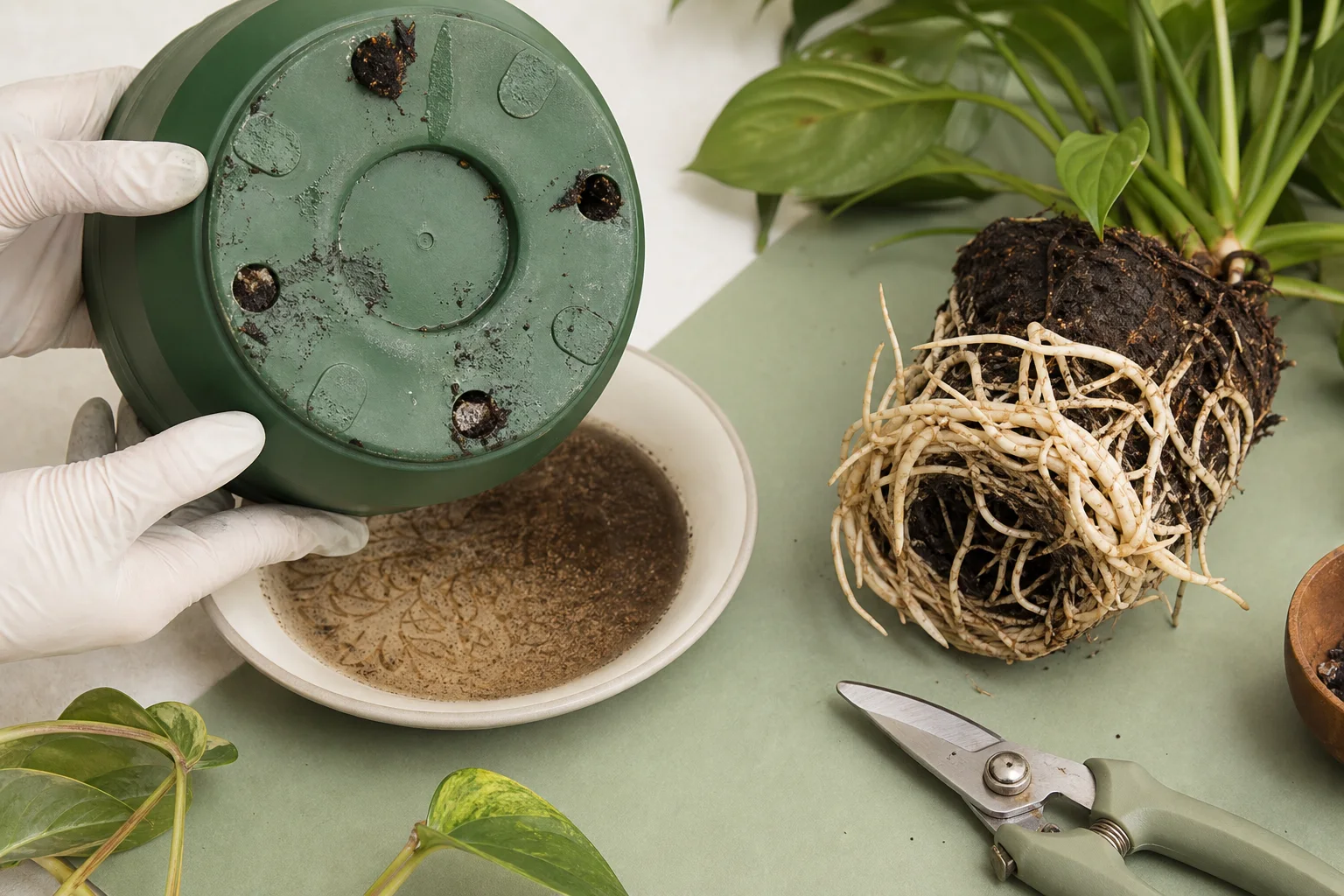
Slide the root ball out gently and support the stems rather than pulling them. Healthy root color varies by species and potting mix, so do not diagnose rot from brown coloration alone. Be more concerned about roots that are soft, slimy, hollow, foul-smelling, or whose outer layer slips away when lightly handled.
If extensive damaged roots are present, remove clearly dead tissue with clean tools and repot into fresh, species-appropriate mix in a pot with open drainage. Use a container that fits the remaining root system; placing a reduced root ball in an oversized volume of mix can keep it wet for too long. Recovery is not guaranteed, particularly when rot has reached the crown or main stem.
Watch for recovery without overcorrecting
After treating confirmed dryness, some plants regain firmness within hours, while others need a day or longer. Leaves that became completely brown or crisp will not turn green again. Judge progress by firmer remaining foliage, stable stems, normal drying of the root zone, and eventually healthy new growth—not by the recovery of every damaged leaf.
Plants with wet-root stress usually respond more slowly because root function must stabilize or regrow. Record the date of your intervention, photograph the plant from the same angle, and check moisture and pot weight over the following days. Avoid repeated watering, fertilizing, pruning, repotting, and relocation in quick succession unless active rot requires immediate action.
Escalate the diagnosis if wilting spreads despite appropriate moisture, the crown softens, roots continue deteriorating, or pest and disease signs appear. A clear photo of the whole plant, leaf damage, soil surface, drainage holes, and any exposed roots can make a remote diagnosis more useful, although a photo alone cannot confirm root health.
Still unsure which wilt pattern you are seeing?
Upload clear photos of the whole plant, leaves, soil surface, pot, and drainage area for a guided Photo Diagnosis. Include whether the soil feels wet or dry and when the plant was last watered.
Diagnose My Wilting PlantFrequently Asked Questions
Can an overwatered houseplant look dry and wilted?
Yes. Prolonged saturation reduces oxygen around the roots and can damage their ability to take up water. The foliage may therefore wilt even while the potting mix remains wet. Check moisture below the surface, pot weight, drainage, odor, and root condition before adding water.
How far down should I check the soil?
Check beyond the dry surface layer. For many medium houseplant pots, feeling approximately 1–2 inches down is a useful starting point, but pot size, species, and root depth matter. A wooden skewer can help assess moisture nearer the center of deep or densely rooted pots.
Should I repot every wilted plant with wet soil?
No. First remove standing water, open the drainage route, and assess how long the mix stays wet. Repotting is more justified when there is foul odor, soft or deteriorating roots, crown rot, severely compacted mix, no functional drainage, or continuing decline.
Why did my houseplant wilt after I moved it closer to a window?
Stronger light and warmer leaves can increase water use, while hot glass can create rapid heat stress. Check the root zone before watering. If it is moist, move the plant slightly away from the heat and acclimate it to brighter light gradually.
Why does water run straight through my wilted plant’s pot?
Very dry potting mix can shrink from the container or become difficult to rewet, allowing water to bypass the root ball. Apply water slowly in repeated passes or soak a pot with drainage holes in shallow water for about 15–30 minutes, then let it drain completely.
How often should I water a wilting houseplant after it recovers?
Do not switch to a universal number of days. Check the species’ moisture preference, soil below the surface, pot weight, light, temperature, container material, and drainage. Water when the root zone has reached the appropriate degree of dryness for that plant.
Sources & Further Reading
- Why is my houseplant wilting? Iowa State University Extension and Outreach
- Properly Watering Container Houseplants Virginia Cooperative Extension
- How Plants Absorb Water Royal Horticultural Society
- How to Help a Poorly Houseplant Royal Horticultural Society
- Diagnosing Poor Plant Health Penn State Extension