A shiny film on foliage can be the first visible clue that a hidden pest is feeding higher on the plant. This guide starts with the residue, then narrows the cause by insect shape, location, and the plant parts affected.
Follow the residue before choosing a treatment
- Sticky lower leaves or furniture: inspect directly above the residue. Honeydew commonly falls from insects feeding on higher leaves or stems.
- Brown, tan, or gray bumps that stay attached: follow the scale route and examine stems, midribs, and leaf undersides.
- White cotton, powder, or wax in crevices: follow the mealybug route and open leaf axils, sheaths, and folded growth carefully.
- Clusters of green, brown, red, or black insects: follow the aphid route, concentrating on tender shoots, buds, and young leaf undersides.
- Tiny white insects fly up when disturbed: also consider whiteflies and check beneath the leaves for flat immature stages.
- No insects after two careful inspections: clean a marked area and watch for fresh residue. Droplets limited to leaf tips, flowers, or a wound may have a non-pest source.
Black sooty mold supports the presence of sugary residue, but it does not identify the insect that produced it.
Scale, mealybugs, or aphids: compare the deciding clues
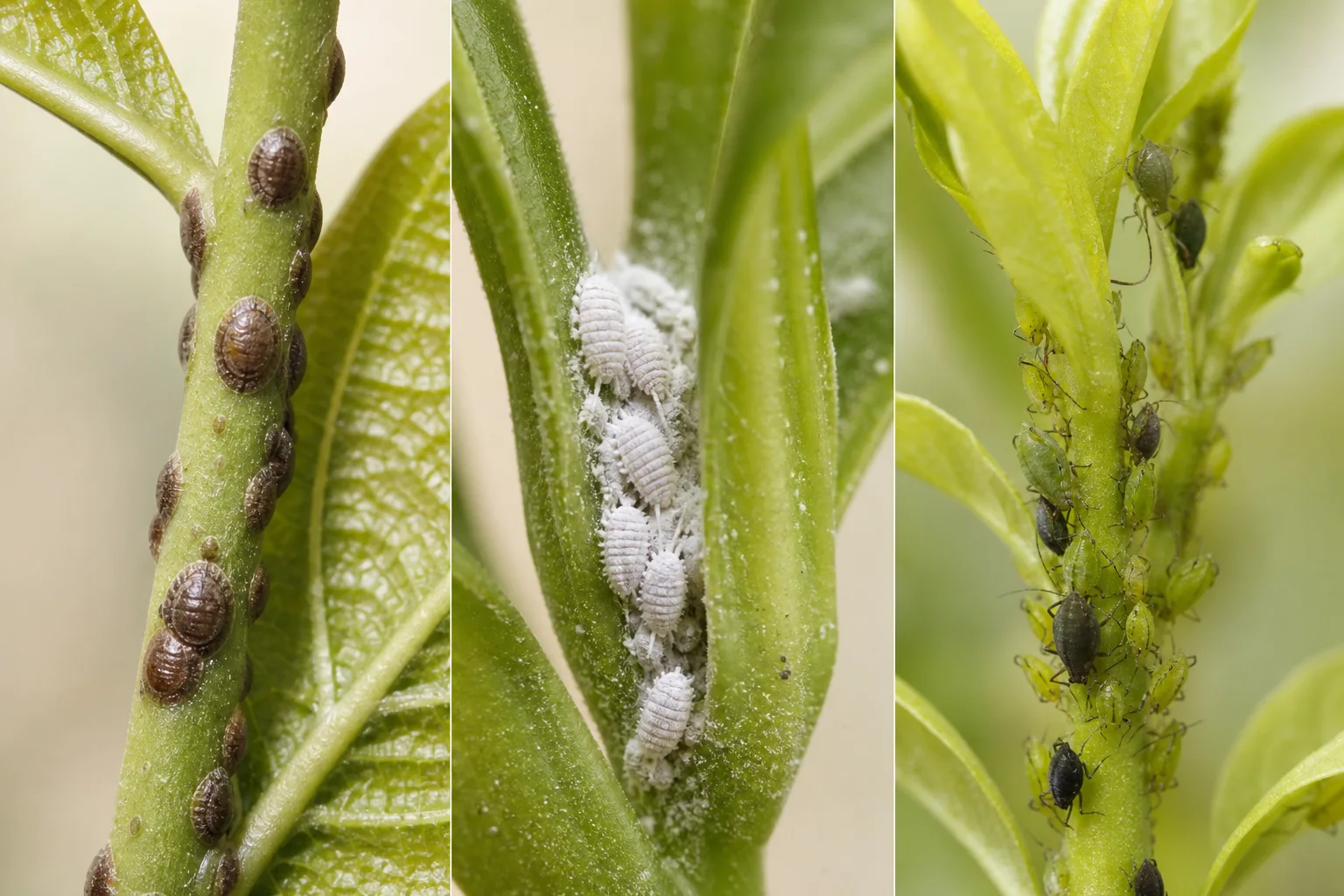
All three pests withdraw plant sap, may produce honeydew, and can contribute to yellowing, weak growth, or leaf drop when populations become substantial. The deciding evidence is the insect itself: its body covering, ability to move, preferred hiding place, and association with new versus established growth.
| Likely pest | What it looks like | Best places to inspect | Important distinction |
|---|---|---|---|
| Soft scale | Tan, brown, or gray oval to dome-shaped bumps | Stems, twigs, midribs, veins, and leaf undersides | Older stages are mostly stationary and can resemble part of the plant. Armored scales look similar but do not produce honeydew. |
| Mealybugs | Oval insects covered by white powdery wax, often surrounded by cottony material | Leaf axils, stem bases, sheaths, folds, veins, flower clusters, and pot crevices | Wax may obscure the segmented insect underneath. Small colonies can remain hidden deep in joints. |
| Aphids | Soft, pear-shaped insects with visible legs and antennae, in several possible colors | New shoots, buds, young stems, and the undersides of tender leaves | They form exposed colonies and may leave pale cast skins. New leaves can curl or distort around feeding sites. |
Do not rely on color by itself. Scale can blend into bark-like stems, mealybug wax can resemble harmless debris, and aphids may be green, brown, red, or nearly black. A hand lens or a clear close-up phone photograph can reveal body segments, legs, and wax that are difficult to see unaided.
Isolate, clean, and match the response to the pest
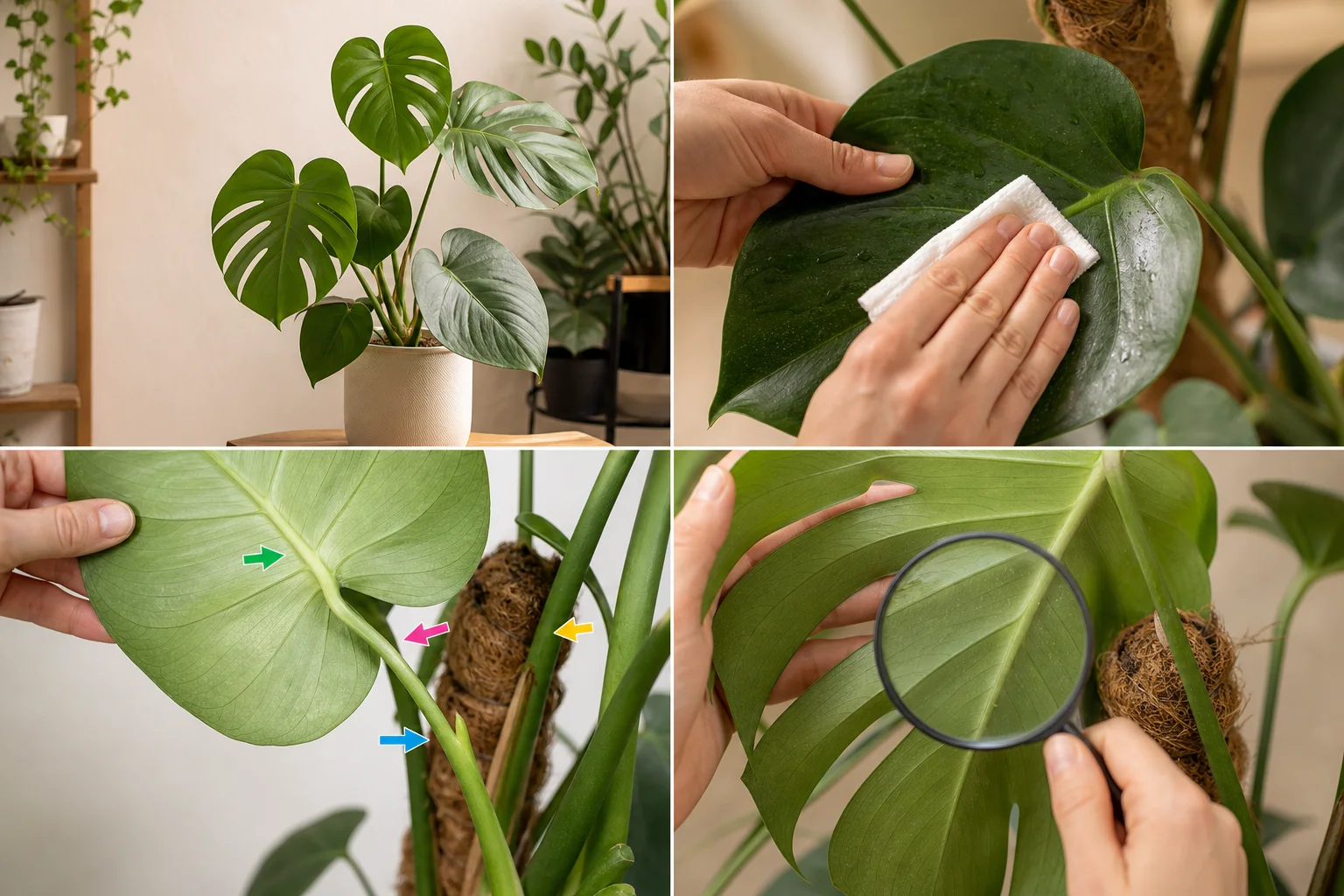
Move the affected plant away from the collection while avoiding contact with neighboring foliage. Wash honeydew from sturdy leaves with lukewarm water and a soft cloth, supporting each leaf from beneath. Cover the potting mix if necessary so the rinse does not saturate it. Cleaning creates a baseline: fresh stickiness later suggests that insects are still feeding.
For a small, accessible infestation
- Rinse exposed aphids and mobile immature insects from foliage, paying attention to leaf undersides.
- Rub or scrape individual scale insects away gently without gouging the stem.
- Remove mealybugs with tweezers or a cotton swab. If using rubbing alcohol directly on insects, test a small plant area one to two days beforehand because some foliage can burn.
- Bag and discard heavily occupied leaves or shoots when pruning will not remove an excessive portion of the plant.
When a labeled product is warranted
Insecticidal soap or horticultural oil may help when it is labeled for indoor use, the identified pest, and the relevant plant or use site. Coverage matters because these products act mainly where they contact pests, while wax, crevices, and protected life stages can reduce exposure. Test a small area first and do not treat a drought-stressed, heat-stressed, or sun-heated plant.
Follow the product label for dilution, ventilation, application intervals, protective equipment, and reentry. Keep children and pets away for the period stated on the label. Avoid increasing the concentration or combining products unless their labels permit it; more material can increase plant injury and exposure without resolving hidden stages.
What if repeated inspections reveal no pest?
Guttation is the release of water through structures at leaf tips or margins, often when root pressure is high and transpiration is low. It produces regularly positioned droplets rather than a widespread film falling onto lower foliage. After drying, dissolved minerals may leave pale marks. Watering can influence guttation, but watering alone does not explain colonies, cottony wax, sooty mold, or recurring sticky deposits beneath the canopy.
Plant sap from a damaged leaf or stem is generally localized around the wound. Floral nectar is similarly concentrated around flowers or specialized glands. Wipe one affected area, photograph it, and recheck it over the next several days. Fresh residue appearing below intact stems or leaves should prompt another pest inspection, ideally with magnification.
Also inspect plants above or beside the affected one. Honeydew can fall from an infested hanging plant and coat a pest-free plant, shelf, or floor below. Finding the highest source of fresh residue prevents unnecessary treatment of the wrong plant.
A practical monitoring plan for the next month
Today
- Isolate the plant, inspect the residue source, and photograph any insects before removing them.
- Clean a few marked leaves and the nearby surface so new honeydew is easy to recognize.
- Remove accessible pests mechanically and choose further action only after identification.
Next 3–7 days
- Reinspect the same axils, stems, veins, and growing points under bright light.
- Look for fresh droplets, newly visible crawlers, mealybug wax, or expanding aphid colonies.
- If using a pesticide, follow its labeled schedule rather than applying on an arbitrary daily routine.
Next 2–4 weeks
- Continue checking the isolated plant and its former neighbors at least weekly.
- Remove residual honeydew and sooty mold gently as feeding declines.
- Extend isolation if fresh residue or living pests appear. Several rounds of inspection and proportionate control may be needed because eggs and concealed insects can escape the first pass.
How to judge progress—and when replacement is reasonable
Useful signs of progress include no fresh honeydew on cleaned leaves, declining insect numbers, and undamaged new growth. Previously curled, yellowed, or scarred foliage may not regain its earlier appearance. Scale coverings can also remain attached after the insect has died, so new residue and newly settled insects are better activity indicators than old shells alone.
Escalate the response when honeydew returns quickly after cleaning, pests spread to neighboring plants, or the plant develops substantial leaf loss, dieback, or weak new growth. Recheck the identification before changing products. A clear close-up submitted to the plant diagnosis tool can help organize the residue pattern and visible pest evidence.
Discarding a heavily infested, replaceable plant may be more practical than prolonged treatment, especially when mealybugs or scale occupy numerous inaccessible crevices. For a valuable specimen or a large indoor planting, seek help from a local Extension office, plant clinic, or qualified pest-management professional. Propagation is an option only when clean material can be taken and monitored separately, since small pests can travel on cuttings.
Diagnose the Sticky Residue on Your Houseplant
Upload clear photos of the residue, the entire plant, leaf undersides, stems, axils, and any visible insects. Comparing those locations can help narrow the evidence to scale, mealybugs, aphids, whiteflies, or a non-pest residue before you choose a treatment.
Diagnose My Houseplant’s Sticky LeavesFrequently Asked Questions
Why are the leaves still sticky after the insects appear to be gone?
Old honeydew can remain until it is washed away, and dead scale coverings may stay attached. Clean and mark a few leaves, then monitor them for 48–72 hours. Fresh droplets or renewed shine suggest that living pests remain elsewhere on the plant.
Can yellow sticky traps identify the pest causing honeydew?
Sticky traps may reveal winged aphids or adult whiteflies, but they do not detect stationary scale or most mealybugs reliably. Use traps as supporting evidence, not as a substitute for inspecting stems, leaf undersides, axils, and new growth.
Should I repot a houseplant because its leaves are sticky?
Not usually. Repotting does not address foliage-feeding aphids or scale and may stress the plant. Consider the roots only if white wax or mealybugs appear around drainage holes or within the root ball; root-associated infestations require a more specific management plan.
Can I use ordinary dish soap on aphids or mealybugs?
Household detergents vary in composition and can injure foliage. A commercial insecticidal soap labeled for the pest and use site provides clearer directions. Test any permitted product on a small area and wait for the label-recommended period before treating the whole plant.
Does black sooty mold mean the plant has a fungal disease?
Sooty mold grows on sugary honeydew rather than invading the leaf like many plant pathogens. Removing the mold without addressing the sap-feeding insect leaves its food source in place. Control the honeydew producer, then wipe the remaining film from tolerant foliage.
What should I do if a pet contacts a recently treated plant?
Follow the pesticide label’s first-aid instructions and contact your veterinarian or the emergency number listed on the product. Keep the container available when calling. Do not make the pet vomit or give a home remedy unless a veterinary or recognized poison-control professional directs you.
Sources & Further Reading
- What is this sticky substance all over the table, floor, and lower leaves of my houseplant? Iowa State University Extension and Outreach
- Houseplant Problems UC Statewide Integrated Pest Management Program
- Managing Insects on Indoor Plants University of Minnesota Extension
- Managing Houseplant Pests Colorado State University Extension
- Pest and Disease Problems of Indoor Plants Penn State Extension
- How Do You Get Rid of Mealybugs on Houseplants? University of New Hampshire Extension
- Guttation: A Pressure Relief for Plants University of Missouri Integrated Pest Management
- Read the Label First: Protect Your Pets United States Environmental Protection Agency