Yellow leaves can reflect a temporary seasonal slowdown or a developing root, nutrition, pest, or disease problem. The location and pattern of discoloration usually provide better evidence than yellow color alone.
Choose Your Route in Under a Minute
- Soil remains wet and leaves are yellowing or dropping: Pause routine irrigation, empty any saucer, and follow the root-and-drainage inspection route.
- Soil is dry several inches down and leaves curl upward or feel leathery: Water the active root zone deeply, then reassess moisture rather than beginning frequent shallow watering.
- Older leaves are uniformly pale while new growth stays greener: Check root health first; if drainage is sound, investigate nitrogen supply and soil pH.
- Young leaves are yellow between green veins: Use the micronutrient route and check pH, cold soil, salinity, and root function before applying iron or a complete citrus fertilizer.
- Leaves have stippling, webbing, sticky residue, cottony clusters, or fixed bumps: Inspect for mites, scale, mealybugs, or related sap-feeding pests and identify the pest before choosing treatment.
- Yellowing followed a cold spell, indoor move, repotting, or sharp light change: Stabilize conditions and monitor new growth before assuming the soil lacks nutrients.
- Mottling is irregular across the midvein, with twig decline or small, lopsided, partly green fruit: Avoid moving citrus material and contact your local Extension office or state agriculture department about possible citrus greening.
Wet Roots, Drought, or Deficiency: What Separates Them?
Root stress versus lack of water
Both excess and insufficient water can produce yellow leaves because either condition limits water and nutrient movement. Persistently wet soil, a heavy pot, leaf drop, weak growth, or a sour smell increases concern about oxygen-starved or decaying roots. Drought is more likely when soil is dry through the root zone and foliage curls upward, dulls, or becomes leathery.
Watering a wet root ball again can intensify root stress. Conversely, giving a severely dry tree only small surface sips may leave deeper roots dry. Test moisture beneath the surface and in more than one location under an in-ground canopy before deciding which route applies.
Root dysfunction versus a true nutrient shortage
Uniform paling that begins on older leaves commonly fits nitrogen deficiency, but unhealthy roots, saturated soil, cold conditions, or an unsuitable pH can produce a similar appearance. Fertilizer is more likely to help when roots are firm, drainage is effective, the tree is actively growing, and its feeding history suggests nutrients have been depleted.
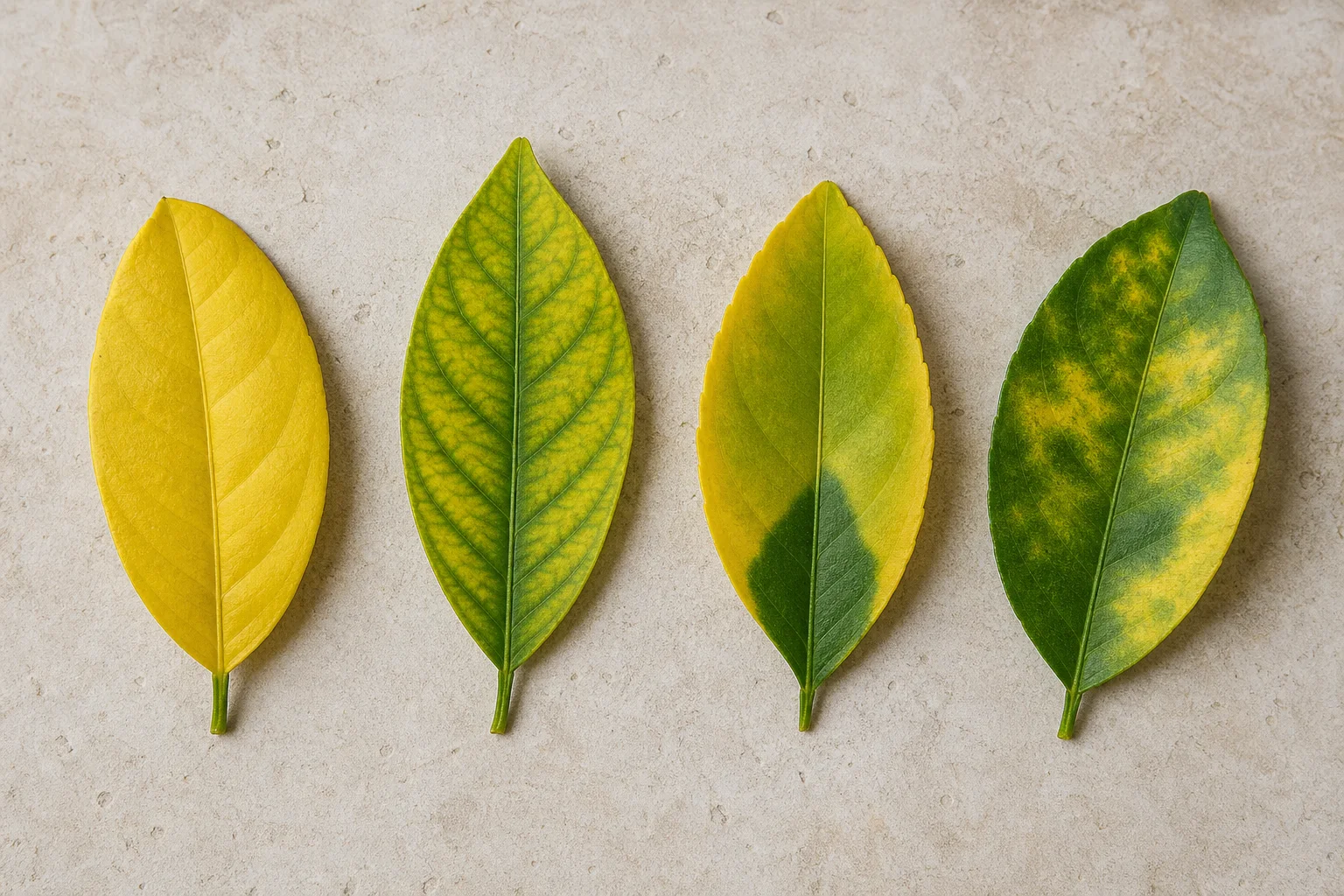
Iron, zinc, and manganese problems tend to be most visible on younger foliage as yellow tissue between greener veins. Magnesium-related yellowing usually begins near the tip and margins of older leaves, sometimes leaving a green, inverted V near the base. These patterns guide testing, but overlapping deficiencies can make a photograph alone inconclusive.
Nutrient patterns versus citrus greening
Nutrient chlorosis is often broadly symmetrical on each side of the midvein. Huanglongbing, also called citrus greening or HLB, may cause asymmetrical blotchy mottling, prominent yellow veins, twig dieback, premature fruit drop, and small or unevenly colored fruit. One mottled leaf does not confirm HLB; official inspection or laboratory testing may be needed.
Inspect the Root Zone Before Changing the Schedule
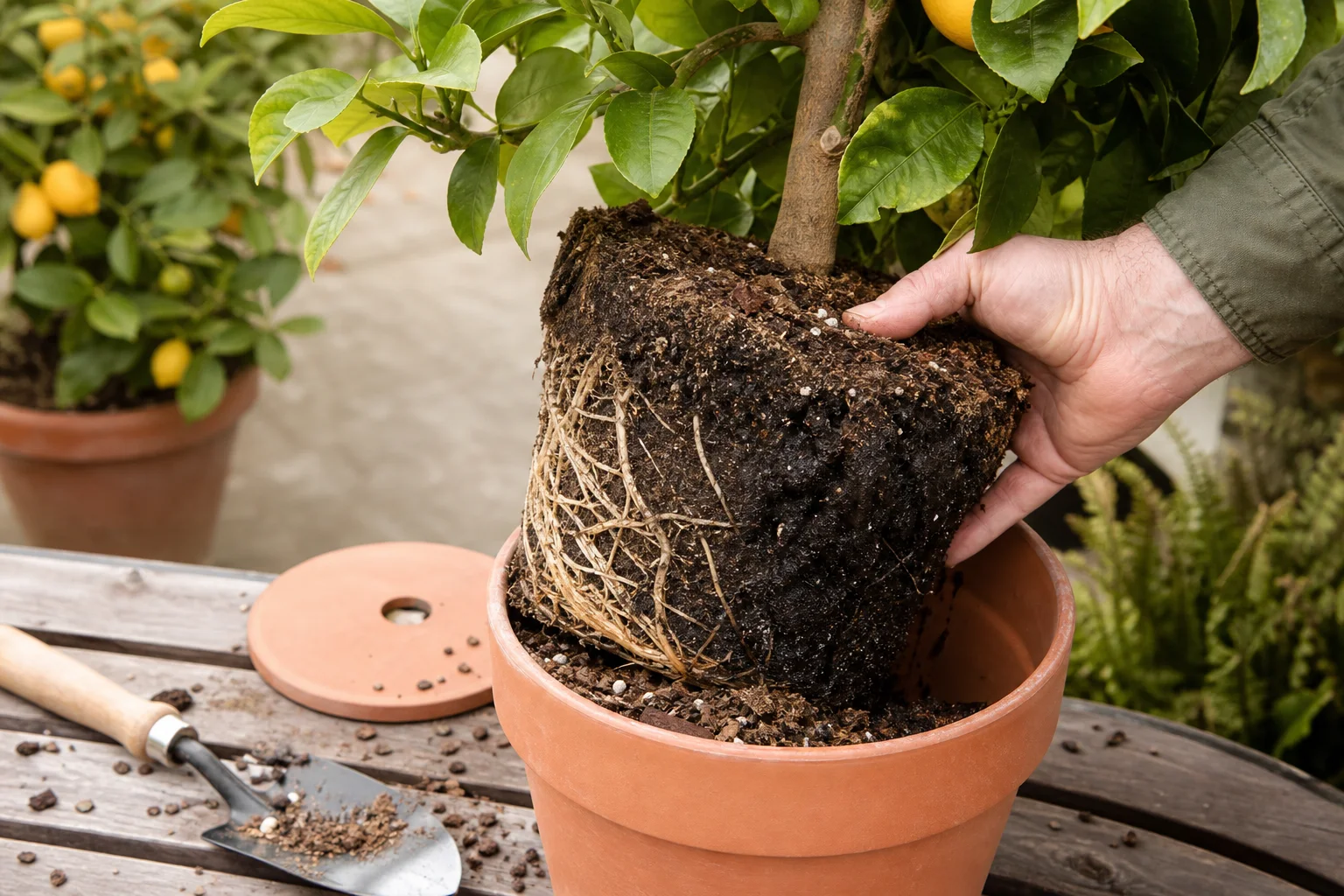
For a container tree, check the pot's drainage holes, remove standing water, and compare moisture near the surface with moisture lower in the root ball. If water runs immediately around a shrunken root ball, soak it gradually until the mix is evenly moist. If the mix stays saturated for days, improve drainage and reduce irrigation frequency rather than merely reducing the volume of each watering.
Slide a manageable potted tree out only when root trouble is strongly suspected. Healthy citrus roots are generally firm, while extensive soft, dark roots and an unpleasant smell support a decay diagnosis. Trim only clearly dead roots with sanitized tools and repot into fresh, free-draining mix. Avoid moving a stressed tree into a much larger pot, which can retain excess moisture around a limited root system.
For an in-ground lemon, dig narrow inspection holes beneath the canopy without cutting major roots. Compare moisture near an emitter with soil farther away, and verify that water reaches the active root zone rather than collecting beside the trunk. Keep mulch and piled soil away from the trunk, root crown, and graft union.
Important: Established citrus generally benefits from deep irrigation followed by partial drying, but the interval varies with heat, rainfall, soil texture, tree size, and container volume. Use measured soil moisture rather than a fixed calendar.
If the canopy keeps declining despite corrected drainage, or the trunk shows cracking, dark lesions, or gummy exudate, contact a citrus specialist or Cooperative Extension office. Phytophthora and other root or crown disorders can resemble ordinary overwatering and may require professional confirmation.
Match Nutrition to the Leaf Pattern
Review when and how the tree was last fed, whether it grows in a pot or the ground, and whether new shoots are developing. Container lemons lose nutrients through repeated watering and have a limited soil volume, while in-ground trees can be affected by soil pH, salinity, root disease, competing lawn irrigation, or fertilizer placed outside the active root zone.
Uniform yellowing on older foliage
Once drainage and roots appear healthy, use a fertilizer labeled for citrus and follow its rate for the tree's size and growing situation. Nitrogen supports citrus foliage, but excess fertilizer may burn roots, increase salt accumulation, or produce vulnerable growth. Split applications during active growth are generally preferable to one oversized dose.
Yellow young leaves with green veins
Interveinal chlorosis can involve iron, zinc, or manganese, but adding one micronutrient without checking the wider conditions may miss the cause. A soil or potting-mix pH test and, for landscape trees, a laboratory soil test can narrow the options. Use labeled citrus micronutrients only at the stated dilution and timing because concentrated foliar products can damage leaves.
Yellow margins with a green area near the base
This pattern can fit magnesium deficiency, especially on older foliage, but it does not justify routine Epsom salt use. Confirm the pattern and consider a soil or tissue test where available. A balanced citrus product may already contain magnesium, and unnecessary additions can upset nutrient balance or increase dissolved salts.
Judge a correction mainly by the quality and color of subsequent growth. Older yellow leaves may remain discolored even after the underlying problem improves, so repeatedly feeding in pursuit of instant greening raises the risk of overapplication.
Check the Secondary Causes That Change the Treatment
Sap-feeding pests
Inspect leaves under bright light, especially along midveins and on lower surfaces. Fine pale stippling and delicate webbing can indicate mites; immobile brown or gray bumps can be scale; white cottony material may be mealybugs. Sticky honeydew or sooty mold supports some sap-feeding pest routes but does not identify the insect by itself.
Move an infested container lemon away from other plants as temporary containment. Remove a small population manually where practical, then select a product labeled for both citrus and the identified pest. Follow label directions, observe harvest restrictions, and avoid spraying oils during excessive heat or when the tree is drought-stressed.
Cold roots and abrupt environmental changes
Cool soil can temporarily reduce nutrient uptake even when nutrients are present. Winter yellowing may also follow prolonged rain, dry wind, low indoor light, or warm indoor air around a cold root ball. Maintain stable conditions and wait for active growth before making aggressive fertilizer changes.
If a potted lemon needs stronger growing light, acclimate it gradually over several days to limit leaf scorch. An indoor tree also benefits from being kept away from heating vents and sudden temperature swings. Leaf loss immediately after relocation may reflect adjustment rather than one isolated deficiency.
Salt accumulation
Brown tips or margins, yellowing, a white crust on the mix, and a history of frequent fertilizer use raise concern about salts. For a container with reliable drainage, slowly leach the mix with water and allow it to drain fully. Do not attempt heavy flushing when the pot drains poorly; correct the drainage problem first.
Possible citrus greening
HLB is a regulated citrus disease in affected parts of the United States. If irregular blotchy mottling occurs with twig dieback, poor fruit development, or Asian citrus psyllids, avoid transporting the tree, cuttings, leaves, or fruit until local authorities advise you. Fertilizer does not address HLB, and state reporting or quarantine requirements can vary by location.
A Staged Plan for the Next Four Weeks
Today
- Photograph the whole canopy and several affected leaves so you can compare changes later.
- Record whether old leaves, new leaves, or one branch is most affected.
- Check soil moisture below the surface, drainage, recent weather, feeding history, and visible pests.
- Stop reactive watering and fertilizing until you have selected the most likely route.
- Temporarily separate a potted tree if pest evidence is present.
Over the Next 3 to 7 Days
- Correct the confirmed moisture problem by restoring thorough drainage or rewetting a dry root zone.
- Stabilize temperature and light; acclimate gradually if the growing location truly needs to change.
- Treat only an identified pest, following the product label and any harvest interval.
- Arrange soil, pH, tissue, or disease testing if symptoms overlap or decline appears substantial.
Over the Next 2 to 4 Weeks
- Track new leaf color, shoot growth, leaf-drop rate, soil drying time, and any pest activity.
- Begin an appropriate citrus feeding program only after root conditions support nutrient uptake.
- Reinspect treated pest areas because eggs or missed insects may require label-directed follow-up.
- Seek local expert help if yellowing spreads, twigs die back, roots continue deteriorating, or suspicious fruit symptoms develop.
What Recovery Looks Like and When to Escalate
Progress may appear first as slower leaf loss, firmer foliage, stable soil drying, and healthy new shoots. Existing yellow tissue may change little, particularly after prolonged chlorosis or physical root damage. Use new growth and the overall canopy trend as the main evidence that the correction is helping.
A mildly stressed lemon can take several weeks to resume visible growth, especially during cool weather. Avoid stacking interventions during that period. Simultaneous repotting, pruning, fertilizing, spraying, and relocation can add stress and make it difficult to tell which change affected the tree.
Escalate promptly when the tree develops extensive twig dieback, a soft or damaged root crown, gummy trunk lesions, rapid canopy thinning, or possible HLB symptoms. A laboratory, Extension office, certified arborist, or state plant-health authority can help distinguish root pathogens, nutrient disorders, herbicide injury, and regulated disease.
If most roots or the trunk base have decayed, recovery may be limited. Replacement can be more practical than repeated treatment, particularly when a regulated disease is confirmed. Propagating a grafted lemon from a cutting preserves the upper variety but not the original disease-resistant or size-controlling rootstock.
Diagnose Your Lemon Tree's Yellow Leaves
Upload clear photos of the whole tree, affected leaves, stems, and soil surface to compare the visible pattern with likely water, nutrient, pest, and disease routes.
Diagnose My Lemon TreeFrequently Asked Questions
Should I remove yellow leaves from my lemon tree?
Leave attached leaves in place unless they are badly damaged, pest-infested, or clearly dead. Partly yellow leaves can still contribute energy. Remove fallen material from the soil surface, and sanitize pruning tools if disease is suspected.
Can a yellow lemon leaf become green again?
Mild chlorosis may improve after its cause is corrected, but strongly yellow or damaged leaves often remain discolored. Healthy new growth, reduced leaf drop, and a stable canopy are more useful recovery indicators than waiting for every old leaf to regain color.
Should I give a yellowing lemon tree Epsom salt?
Use Epsom salt only when evidence supports magnesium deficiency and the planned amount fits test results or qualified local guidance. Several other problems create similar yellowing, and unnecessary magnesium sulfate may add salts without addressing damaged roots, nitrogen shortage, or unsuitable pH.
Do coffee grounds help yellow lemon leaves?
Coffee grounds do not provide a predictable correction for citrus chlorosis and may compact when applied thickly. Add small quantities to a managed compost system instead of piling them around the trunk. Choose fertilizer from the diagnosed need and its labeled nutrient analysis.
Is some winter yellowing normal on a lemon tree?
Older citrus leaves may yellow and drop during winter, particularly when cool soil limits nutrient uptake or rainfall keeps roots wet. Monitor moisture and wait for warmer growing conditions before making major feeding changes, unless rapid decline or disease signs require earlier investigation.
Does heavy fruiting make lemon leaves turn yellow?
A large fruit load increases demand for water and nutrients, but fruiting alone does not confirm the cause. Check irrigation coverage, roots, feeding history, and the yellowing pattern. Young or weakened trees may benefit from thinning some fruit while the underlying stress is corrected.
Sources & Further Reading
- Yellow Citrus Leaves University of California Agriculture and Natural Resources
- Citrus: Identifying Diseases and Disorders of Leaves and Twigs University of California Statewide Integrated Pest Management Program
- Phytophthora Root Rot in Citrus University of California Statewide Integrated Pest Management Program
- Citrus Greening and Asian Citrus Psyllid USDA Animal and Plant Health Inspection Service
- Citrus Insects and Related Pests Clemson Cooperative Extension
- Irrigating Citrus Trees University of Arizona Cooperative Extension
- Growing Citrus in Pots UC Master Gardeners of San Luis Obispo County
- Yellowing Leaves and Leaf Drop in Citrus in Winter: A Common Problem University of California Agriculture and Natural Resources