Philodendron leaves can curl when water uptake, roots, pests, or the surrounding environment disrupt normal growth. The curl pattern and accompanying signs can help you choose the right response without making several care changes at once.
Match the visible signs to your first response
- Dry mix, light pot, and limp or inward-curled leaves: Water the entire root ball slowly, let the excess drain, and empty the saucer. Recheck the plant after the mix has absorbed moisture.
- Wet mix, heavy pot, yellowing, or a sour smell: Pause watering and take the root-health route. Check drainage and inspect the roots rather than adding more water.
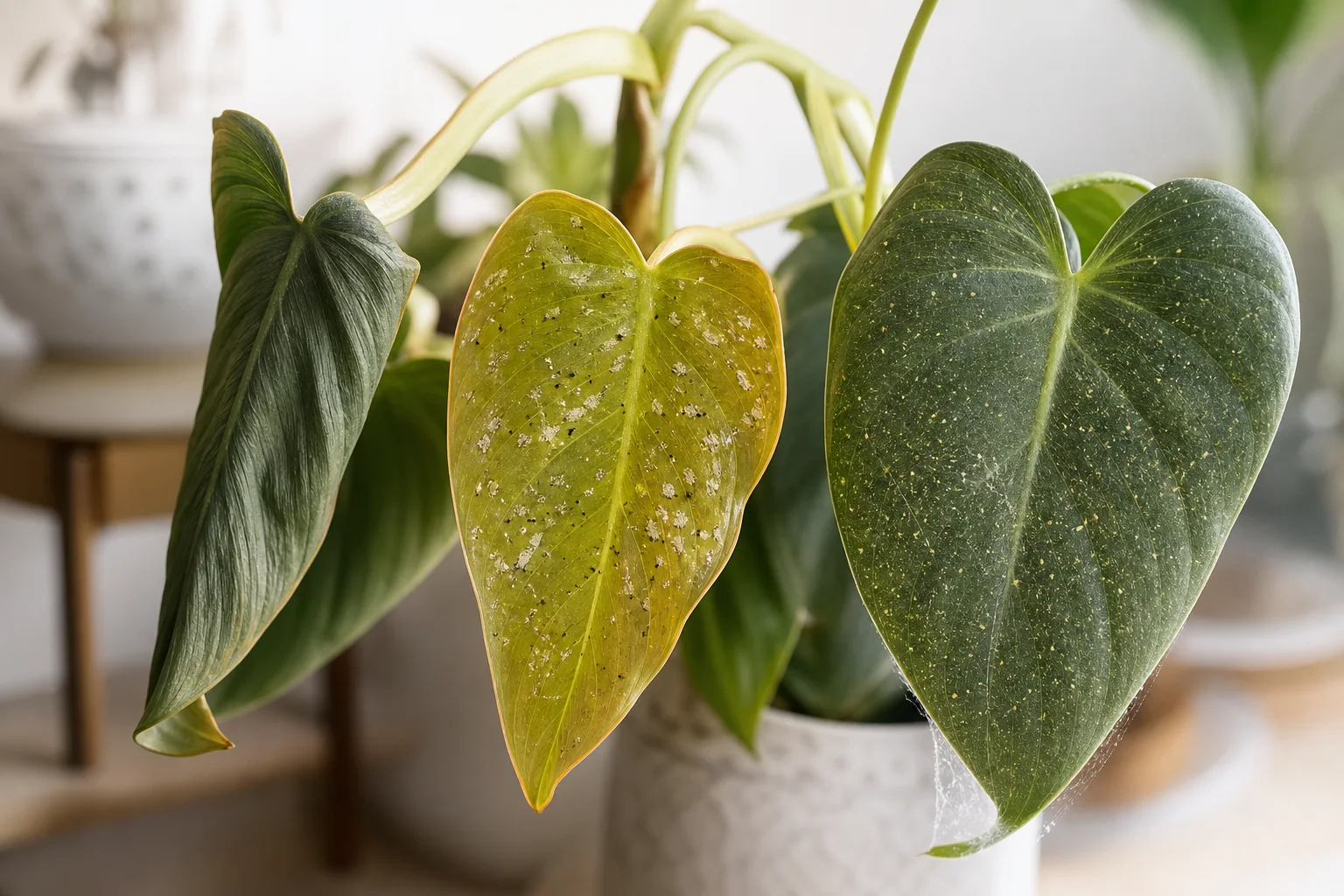
- Silvery scars, black specks, pale stippling, or fine webbing: Temporarily isolate the plant for containment. Inspect leaf undersides, emerging leaves, and stem joints under bright light to identify the pest route.
- Curling on the window, vent, or radiator side: Move the plant away from cold glass and direct air blasts. Record the temperature near its leaves before making further changes.
- Bleached patches or crisp areas after stronger sun exposure: Shift it to bright, indirect growing light. Acclimate gradually if you later increase its light again.
- Only one emerging leaf is rolled while older foliage is healthy: Allow it time to expand and keep conditions steady. Do not peel or force the leaf open; examine it for pests if it develops scars or remains deformed.
Distinguish thirst, root trouble, pests, and environmental stress
Underwatering and impaired roots can look surprisingly similar. Both reduce the amount of water reaching the leaves, so either condition may produce curling, drooping, dry margins, or slower growth. The deciding evidence is below the foliage: underwatered mix feels dry through much of the root zone and the pot becomes noticeably lighter, while root trouble is more likely when the mix stays wet, drainage is poor, or roots are soft and dark.
Dry air and dry soil also overlap, but they are not interchangeable. Low humidity may contribute to crisp margins, difficult leaf expansion, and stress in thin-leaved or velvety philodendrons. Widespread limp curling accompanied by a very light pot points more strongly toward dry substrate. Humidity changes cannot compensate for roots that lack either moisture or oxygen.
Thrips and spider mites leave different supporting clues. Thrips feeding on expanding tissue may produce curled, undersized leaves with silvery or brown scarring and tiny dark waste spots. Spider mites more often cause fine pale stippling or bronzing, with delicate webbing appearing as numbers increase. Curling without feeding damage does not confirm either pest.
Temperature and light injury usually follow exposure patterns. Leaves nearest a cold pane, exterior door, heater, or air-conditioning vent may react first. Excess direct sun is more convincing when curling appears with pale, scorched, or crispy tissue after a location or seasonal light change. Simply moving a stressed plant into deep shade could slow recovery, so retain bright indirect light unless the foliage is actively scorching.
Confirm the moisture and root condition before repotting
Push a clean finger or wooden skewer several inches into the mix, then compare that result with the pot's weight. A dry surface alone is not enough evidence because the lower root zone may still be moist. If the mix is dry through much of the pot, water slowly until the root ball accepts moisture and excess runs from the drainage holes. Discard collected water rather than leaving the pot submerged.
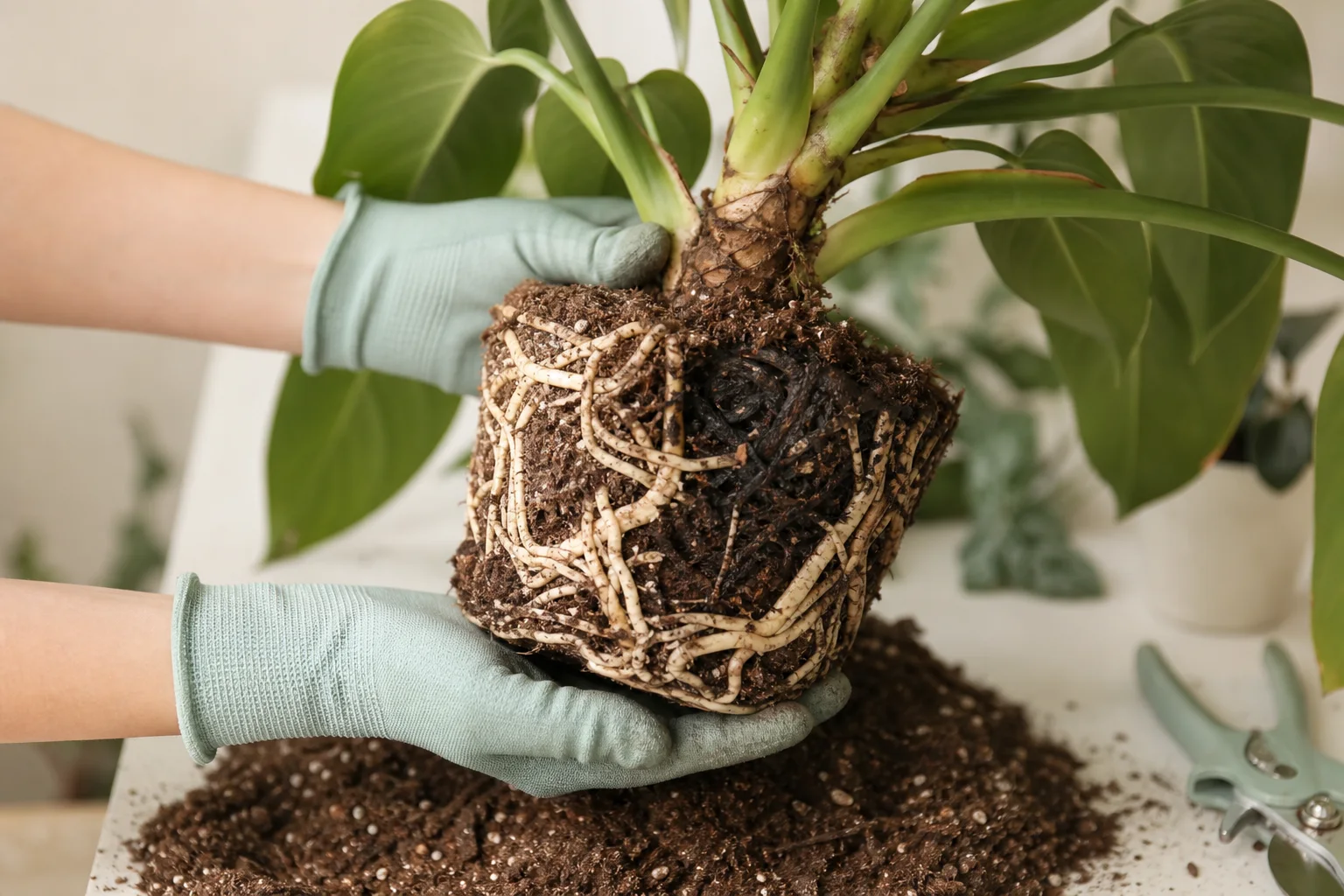
If the mix remains wet unusually long, smells sour, or accompanies yellowing and continued curling, gently slide out the root ball. Healthy roots are generally firm and may be pale, cream, tan, or light brown depending on the mix and species. Rotten sections tend to be dark, soft, hollow, or easily stripped from their inner core. Wear gloves because philodendron sap can irritate skin.
Remove severely decayed roots with clean, disinfected shears and replace collapsed, foul-smelling mix with a fresh, well-aerated houseplant medium. Use a container with drainage that fits the remaining root system; an oversized pot can retain more water than weakened roots use. Repotting is corrective only when root or substrate evidence supports it, not a routine response to every curled leaf.
Correct pests and room conditions without compounding stress
For suspected pests, examine both sides of every leaf, the newest folded growth, petiole joints, and any supports or nearby plants. Shake foliage over white paper to reveal mobile thrips or mites. Rinsing sturdy foliage with lukewarm water can reduce exposed pests. If treatment is needed, choose an insecticidal soap or horticultural oil labeled for indoor plants and the identified pest, test a small area, and follow its directions for coverage and repetition.
Avoid applying pesticides to a severely moisture-stressed plant. Broad, untargeted insecticide use may fail to reach pests hidden in folded leaves and can complicate mite problems. Keep the plant separated while monitoring, clean fallen material from the pot, and inspect neighboring plants. Existing scars and deformed tissue may remain after pests are controlled, so judge results by pest counts and healthier new growth.
Philodendrons generally prefer warm, stable conditions, bright indirect light, and moist but well-drained substrate. Move the plant away from cold glass and direct heating or cooling airflow. If room humidity is persistently low, a humidifier is more effective than occasional misting. Position it so foliage does not remain wet, and provide air circulation without creating a direct draft.
If the plant needs brighter growing conditions, increase light gradually over one to two weeks. Different philodendrons tolerate different intensities: thin, dark, or velvety leaves may show stress sooner than tougher foliage, while variegated plants may need stronger indirect light to maintain growth. Watch the plant's response rather than treating one window direction as a universal prescription.
A staged plan for the next four weeks
Today
Choose one route from the early decision aid. Correct confirmed dryness, pause watering and inspect roots when wet-soil evidence is present, or isolate a plant with pest clues. Remove exposure to direct air blasts or scorching sun, but avoid changing watering, light, humidity, fertilizer, and pot size simultaneously.
Next 3–7 days
Monitor substrate moisture by feel and pot weight rather than a fixed calendar. Check isolated foliage under bright light every few days and continue any labeled pest treatment as directed. After root work, keep the mix lightly and evenly moist rather than saturated, and withhold fertilizer while the root system is stressed.
Next 2–4 weeks
Look for firmer foliage, stable moisture use, fewer detected pests, and new leaves that expand with less distortion. Resume light feeding only if the plant is producing healthy growth and the roots are functioning. If symptoms continue, reassess the original route instead of increasing the intensity of an unconfirmed treatment.
What recovery looks like and when to escalate
A mildly thirsty philodendron may regain firmness after the root ball is evenly moistened, although leaves with crisp or torn tissue cannot repair those areas. Plants recovering from root damage or pests usually need longer because progress depends on functional roots and new leaf production. Older curled leaves may stay misshapen even when the underlying problem has improved.
Escalate the inspection if the stem base or crown softens, decay continues into healthy roots, a foul odor returns, or each new leaf emerges smaller and more distorted. Persistent unexplained damage may warrant help from a local Extension plant clinic, especially when spots spread despite dry foliage and corrected care. Take clear photographs of the entire plant, both leaf surfaces, roots, pot, and growing location.
If extensive stem rot is advancing, saving healthy, pest-free sections as cuttings may be more realistic than preserving the original root system. Choose firm stem material with viable nodes and use clean tools. Do not propagate visibly infested or decaying pieces, because that may transfer the original problem into the new container.
Diagnose Your Philodendron's Curling Leaves
Several causes can produce the same curled appearance. Add photos and recent care details to narrow the diagnosis before changing the plant's watering, pot, or treatment plan.
Diagnose My PhilodendronFrequently Asked Questions
Will curled philodendron leaves flatten again?
Soft leaves curled by brief dryness may relax after moisture balance returns. Leaves damaged by pests, sun, cold, tearing, or prolonged stress often retain some distortion. Evaluate recovery by the firmness and shape of subsequent growth rather than expecting every older leaf to become flat.
Should I mist curled philodendron leaves?
Occasional misting raises humidity only briefly and does not correct dry soil or unhealthy roots. A room humidifier can provide a steadier increase when humidity is low. Avoid keeping foliage continually wet, particularly when leaf spots or poor air circulation are present.
Can tap water make philodendron leaves curl?
Ordinary tap water is not usually the first explanation for curling. Repeated use of softened water or excessive fertilizer can contribute to salt accumulation and damaged margins. Water thoroughly enough to produce drainage periodically, and avoid using water passed through a sodium-based softener.
Should I remove curled leaves?
Keep curled leaves that remain mostly green because they can still support the plant. Remove a leaf when it is largely dead, severely pest-damaged, or decaying. Use clean shears and avoid removing a large share of the foliage from an already stressed plant.
Why are only my philodendron's new leaves curling?
A newly emerging leaf may simply still be expanding. Repeatedly crinkled or scarred new leaves are more concerning and can indicate thrips, unstable moisture, dry air, or physical damage while the tissue was folded. Inspect the growing point carefully and do not force leaves open.
What should I do if a pet chewed the philodendron?
Philodendrons contain insoluble calcium oxalate crystals that can cause oral pain, drooling, vomiting, and difficulty swallowing. Remove access to the plant and contact your veterinarian or a recognized animal poison-control service promptly. Seek urgent veterinary care if breathing or swallowing is affected.
Sources & Further Reading
- Philodendron North Carolina Extension Gardener Plant Toolbox
- Houseplant Problems University of California Statewide Integrated Pest Management Program
- Thrips University of California Statewide Integrated Pest Management Program
- Spider Mites University of California Statewide Integrated Pest Management Program
- Managing Insects on Indoor Plants University of Minnesota Extension
- Care: Houseplants University of Illinois Extension
- Caring for Houseplants University of Missouri Extension
- These Houseplants Can Cause Trouble for Your Pets ASPCA Animal Poison Control Center