If the leaves on your hibiscus plant are turning yellow, first check the soil moisture, recent temperature or light changes, drainage, and leaf undersides. A few older yellow leaves can accompany normal adjustment, but widespread or rapidly progressing yellowing usually means the plant is under stress. The pattern of discoloration offers better clues than the color alone.
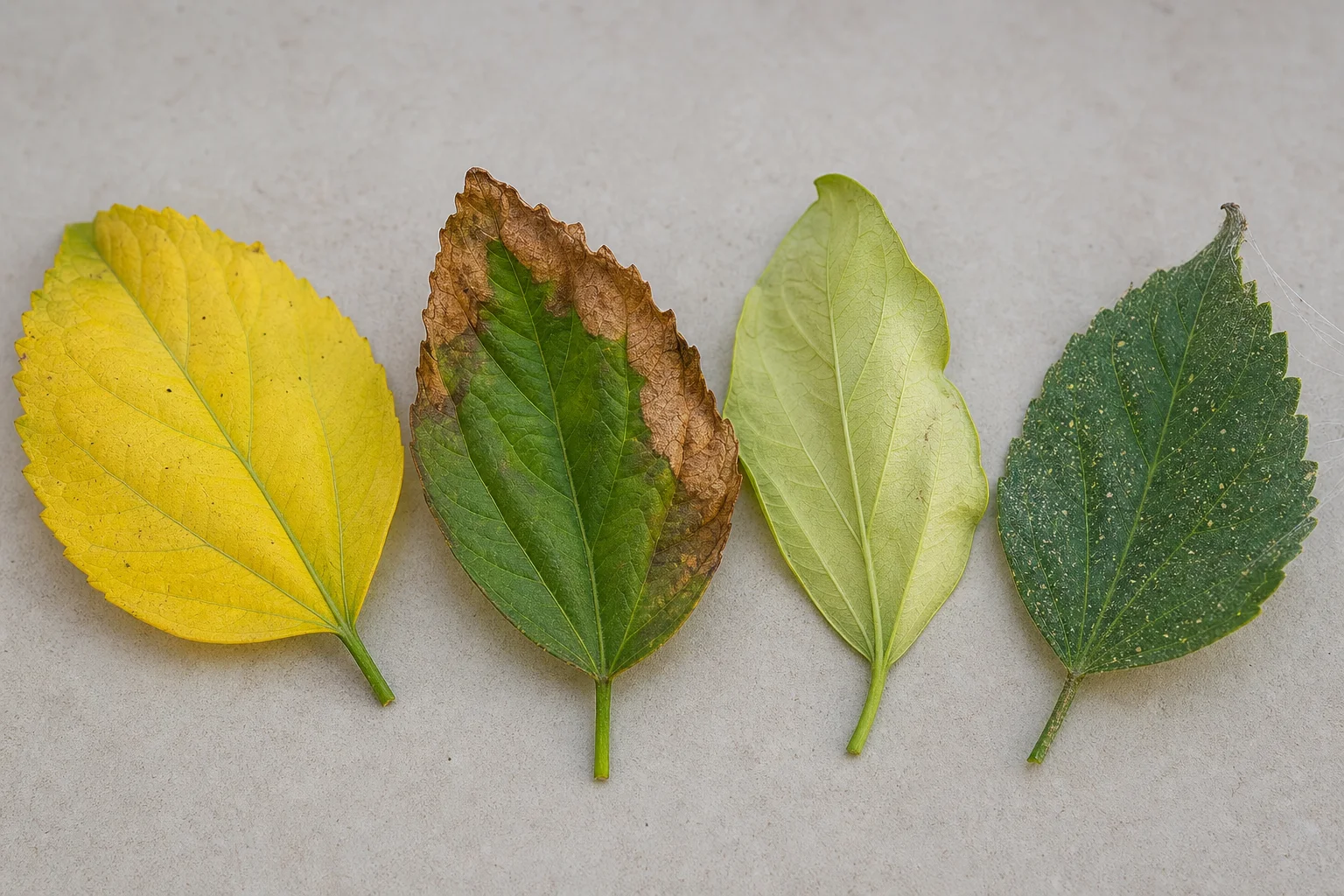
Start with the yellowing pattern
Before adding water, fertilizer, or a pest treatment, note which leaves are affected and what else has changed. This guide focuses mainly on tropical hibiscus, Hibiscus rosa-sinensis, although several checks also apply to hardy types.
- A few older, lower leaves: This may follow a move, seasonal transition, or change in watering. Occasional shedding is less concerning when new growth remains healthy.
- Many soft yellow leaves with wet soil: Excess water, blocked drainage, or declining roots becomes more likely.
- Yellow leaves that feel dry or crisp: Check for dry soil, intense heat, a root-bound container, or an irregular watering pattern.
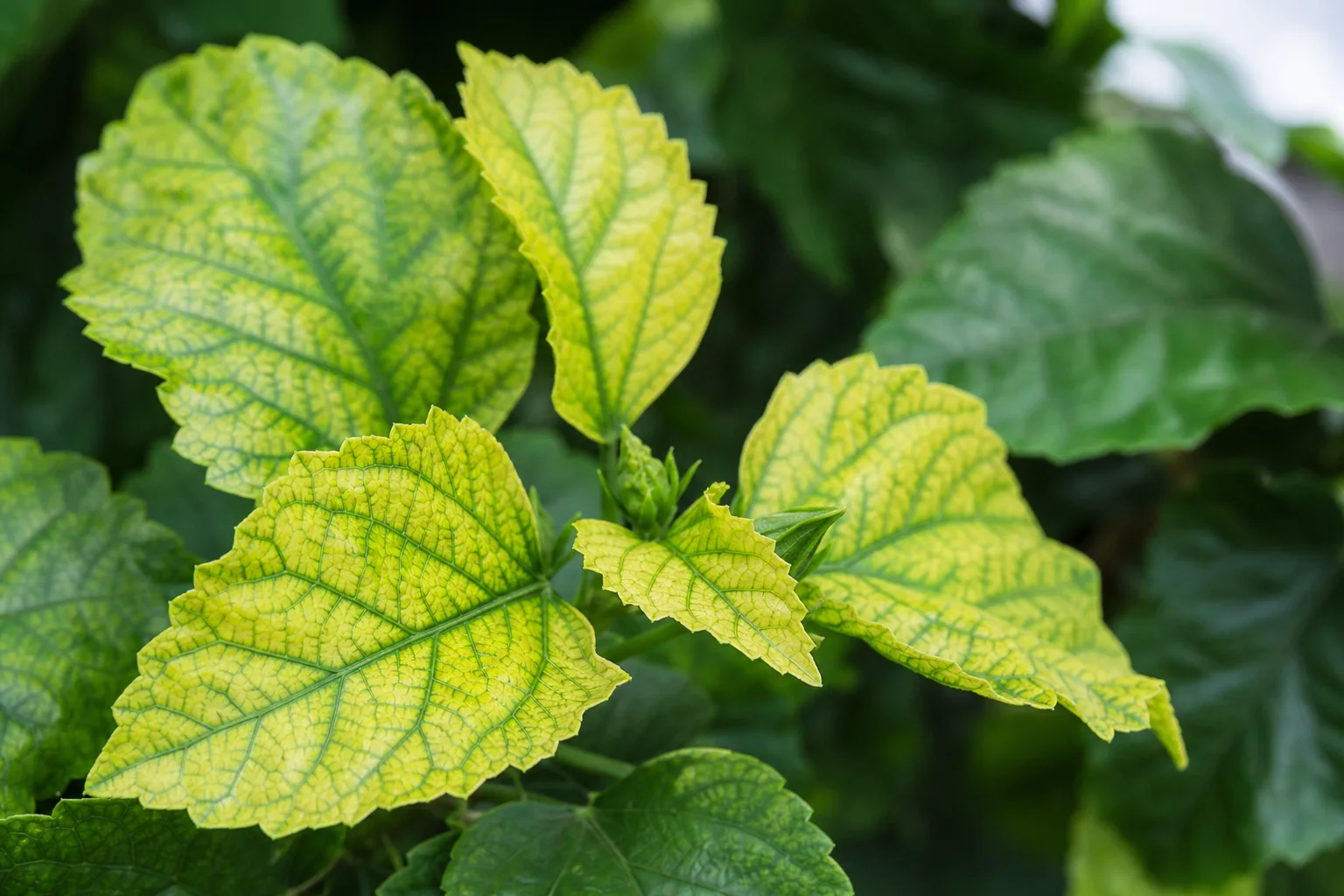
- Yellow new leaves with greener veins: Consider iron or another micronutrient uptake problem, particularly in alkaline soil or potting mix.
- Fine pale dots, bronzing, or webbing: Inspect for spider mites.
- Sticky leaves, black coating, or tiny insects underneath: Look for aphids, scale, mealybugs, or whiteflies.
- Distinct brown or black lesions: Leaf spot, spray injury, sun scorch, or another localized problem may be involved.
If you have a hardy perennial hibiscus outdoors, foliage yellowing as the plant dies back in autumn may be part of its seasonal cycle.
Do these checks before treating the plant
Spend a few minutes collecting evidence before changing the plant's care. Applying several treatments at once can create new stress and make the original cause harder to identify.
- Feel the potting mix below the surface rather than judging it by color alone.
- Confirm that a container has open drainage holes and is not standing in collected water.
- Review the previous one to two weeks: Was the plant moved, repotted, fertilized, allowed to wilt, exposed to heavy rain, or brought indoors?
- Inspect both sides of several leaves with a flashlight or magnifying lens.
- Look for firm new growth, stem discoloration, unusual odor from the soil, and roots circling the drainage holes.
- Temporarily separate an infested indoor hibiscus from nearby plants.
Unless a deficiency has been supported by the leaf pattern or a soil test, pause extra fertilizer while you assess moisture and root health.
Check watering and root health first
Both drought and waterlogged roots can produce yellow leaves, wilting, and leaf drop. The soil condition and leaf texture help distinguish them.
If the soil is wet
Allow excess water to drain and empty the saucer or decorative outer pot. Do not water again merely because the surface looks dry; check slightly deeper. If the mix stays saturated for days, examine whether the pot is oversized, the drainage holes are obstructed, or the potting mix has compacted.
A plant that remains limp in wet soil may have impaired roots. If yellowing continues, slide a container plant out carefully. Healthy roots are generally firm, while extensively brown, soft, or foul-smelling roots suggest serious root decline. Remove badly deteriorated material with clean tools and repot into a draining mix only when root damage or unsuitable soil makes that step necessary.
If the soil is dry
Water the root ball thoroughly until surplus water exits the drainage holes. Very dry potting mix may pull away from the container and resist rewetting, so apply water slowly in more than one pass. Going forward, check moisture regularly and water according to the plant's actual use rather than a rigid calendar.
Outdoor hibiscus may need more frequent checks during hot, windy weather, while an indoor plant typically uses less water in cooler or dimmer conditions.
Review light, temperature, and recent moves
Tropical hibiscus prefers bright light and warm, relatively stable conditions. A sudden move between a sunny patio and a dim room can lead to yellowing and leaf drop even when the roots are healthy.
- After moving indoors: Place the plant near the brightest suitable window and keep it away from cold entryways, heating vents, and abrupt drafts.
- After moving outdoors: Increase direct-sun exposure gradually. Leaves formed indoors can scorch when placed immediately in intense sun.
- During cool weather: Tropical hibiscus may respond to temperatures near or below about 50–55°F with slowed growth, yellow leaves, or bud loss. Move containers to a protected location before cold conditions arrive.
- In low light: Expect slower water use. Reduce watering frequency as needed, but do not let the root ball become severely dry.
Some leaf loss can occur while the plant adjusts. The more useful sign is whether yellowing slows and healthy growth resumes after conditions stabilize.
Use leaf age to investigate nutrients and soil pH
Nutrient problems are possible, but adding fertilizer without checking the pattern can worsen salt buildup or root stress.
Older leaves yellow first
Uniform paling that begins on older foliage may be associated with low nitrogen, depleted container mix, insufficient light, or unhealthy roots. If the plant is actively growing, roots are healthy, and it has not been fed recently, apply a complete fertilizer labeled for hibiscus or flowering container plants at the label rate.
New leaves yellow between green veins
This pattern is consistent with iron chlorosis, although manganese issues and root problems can look similar. Alkaline soil or irrigation water can make micronutrients harder for roots to absorb even when they are present. A soil or potting-mix test is more informative than repeatedly adding iron.
Correct poor drainage before treating a suspected deficiency. Avoid using Epsom salt as a general remedy; it supplies magnesium and may not address the actual cause. Also avoid heavy feeding during cold, low-light, or otherwise inactive periods.
Inspect closely for pests and leaf damage
Hibiscus can host spider mites, aphids, whiteflies, thrips, scale, and mealybugs. These pests remove plant fluids or damage leaf cells, potentially causing stippling, yellowing, distortion, sticky residue, or leaf drop.
- Spider mites: Look for very fine pale speckles, bronzing, and delicate webbing, especially beneath leaves.
- Whiteflies: Small white adults may flutter up when foliage is disturbed. Immature stages remain on leaf undersides.
- Aphids, scale, and mealybugs: Check tender growth, stems, and leaf joints for insects, waxy material, sticky honeydew, or dark sooty growth.
- Thrips: Look for scarred or silvery tissue, distorted growth, and tiny dark waste spots.
For a light infestation, washing the foliage—particularly the undersides—may reduce pest numbers. If further control is needed, use an insecticidal soap, horticultural oil, or another product specifically labeled for the plant and identified pest. Follow the product label, test a small area first, and avoid applications during stressful heat or intense sun.
Isolated spots are not enough to identify a disease from appearance alone. Seek local Extension help if lesions spread, stems begin dying back, or the problem persists after environmental and pest causes have been addressed.
Monitor the plant instead of stacking treatments
Choose the most likely cause, make one focused correction, and photograph the plant so you can compare it over time. Leaves that are already fully yellow may drop rather than regain their previous color. Look for slower leaf loss, firm stems, stable soil moisture, and healthier new foliage.
During active growth, improvement may become apparent over the following weeks, but timing varies with root condition, temperature, light, and the severity of stress. Escalate the investigation if yellowing spreads rapidly, the plant remains wilted in moist soil, roots or stems become soft, lesions expand, or pests persist despite label-directed treatment.
A clear photo of the whole plant, affected leaves, leaf undersides, and soil surface can make a photo-based diagnosis more useful. Include recent watering, temperature, fertilizer, and relocation details rather than relying on leaf color alone.
Compare Your Hibiscus Symptoms
Upload photos of the whole plant and affected leaves to narrow the likely causes. Add soil moisture, recent weather, watering, and relocation details for a more useful assessment.
Diagnose My HibiscusFrequently Asked Questions
Should I remove yellow leaves from my hibiscus?
You can remove leaves that are fully yellow, loose, or badly damaged using clean scissors or gentle hand pressure. Avoid stripping many partly green leaves at once because they may still contribute to the plant's energy production. Removing leaves improves appearance but does not correct the underlying cause.
How can I tell whether my hibiscus is overwatered or underwatered?
Check the root zone rather than relying on wilting alone. An underwatered plant usually has dry mix and may develop crisp foliage. An overwatered plant has persistently wet soil, often with soft yellow leaves, and may remain limp because damaged roots cannot function normally. Drainage, container size, recent weather, and root condition provide additional evidence.
Can yellow hibiscus leaves turn green again?
Slightly pale leaves may improve if the stress is corrected early, but fully yellow leaves commonly remain discolored and eventually fall. Judge progress by whether yellowing slows and new leaves emerge with healthier color.
Does a hibiscus with yellow leaves need fertilizer?
Not necessarily. Fertilizer is more reasonable when an actively growing plant has healthy roots, suitable moisture, and a pattern consistent with nutrient shortage. Do not feed heavily when the soil is waterlogged, roots are deteriorating, or the plant is resting in cool, dim conditions.
Why did my hibiscus turn yellow after I brought it indoors?
The change may reflect reduced light, lower water use, dry indoor air, temperature fluctuations, or pests carried in from outdoors. Place it in bright light, keep it away from drafts and vents, adjust watering to the slower indoor growth rate, and inspect leaf undersides.
Is yellowing normal on a hardy hibiscus in fall?
Hardy perennial hibiscus naturally dies back as the growing season ends in colder climates, so autumn yellowing may accompany dormancy. Yellowing during active summer growth, especially with wilting, spots, or widespread leaf loss, deserves further investigation.
Sources & Further Reading
- Hibiscus University of Minnesota Extension
- Care of Hibiscus rosa-sinensis Smithsonian Gardens
- Hibiscus: Home and Landscape University of California Statewide Integrated Pest Management Program
- Houseplant Problems University of California Statewide Integrated Pest Management Program
- Identifying Plant Nutrient Deficiencies: Iron Iowa State University Extension and Outreach
- Growing Hardy Hibiscus Kansas State University Research and Extension