An aloe plant commonly turns yellow when its roots remain wet for too long, but yellowing can also result from drought, insufficient light, abrupt sun exposure, cold, pests, or normal leaf aging. Start by feeling the affected leaves and checking moisture deep in the pot. Those two observations can help you avoid treating a dry aloe as though it were overwatered—or adding water to damaged roots.
Read the yellowing pattern before changing its care
Yellowing is a symptom rather than a diagnosis. Look at where the color change began, how the leaf feels, and whether the soil is wet or dry. Several causes can occur together, especially when an aloe receives less light during winter but continues to be watered on a summer schedule.
- Soft, swollen, translucent, or easily detached yellow leaves: Excess moisture and declining root health are likely, particularly if the mix stays damp or smells stale.
- Thin, folded, puckered, or wrinkled yellow leaves: The plant may be short of water. The pot will usually feel light, and dry mix may have pulled away from its sides.
- Pale leaves with weak, stretched, or leaning growth: Insufficient light is a stronger possibility.
- Bleached yellow-tan patches that later become dry: Check whether the aloe was recently moved into intense direct sun.
- Yellow speckles accompanied by cottony deposits, firm bumps, or sticky residue: Inspect for mealybugs or scale.
- Water-soaked, discolored patches after a cold night or draft: Chilling injury may be involved.
- One firm lower leaf slowly yellowing: This can be normal aging when the center remains healthy and new yellowing is not spreading.
Check the potting mix instead of following the calendar
Excess moisture is a frequent issue with indoor succulents. Aloe stores water in its fleshy leaves, and its roots need air as well as moisture. Potting mix that remains saturated fills air spaces around the roots, which can reduce root function and contribute to yellow, soft foliage.
- Push a wooden skewer or finger several inches into the mix, reaching deeper than the dry-looking surface.
- Lift the container. A surprisingly heavy pot often still holds considerable moisture.
- Check whether the pot has an open drainage hole and whether water is trapped in a saucer or decorative cover pot.
- Consider how long the mix takes to dry. A large pot, compact peat-heavy mix, cool room, or low-light position can keep the root zone wet for an extended period.
Water according to the condition of the mix rather than a fixed weekly interval. University of Minnesota Extension recommends allowing succulent soil to dry between waterings, while each watering should still moisten the root ball thoroughly and drain freely.
Inspect the roots if the leaves are soft and the soil stays wet
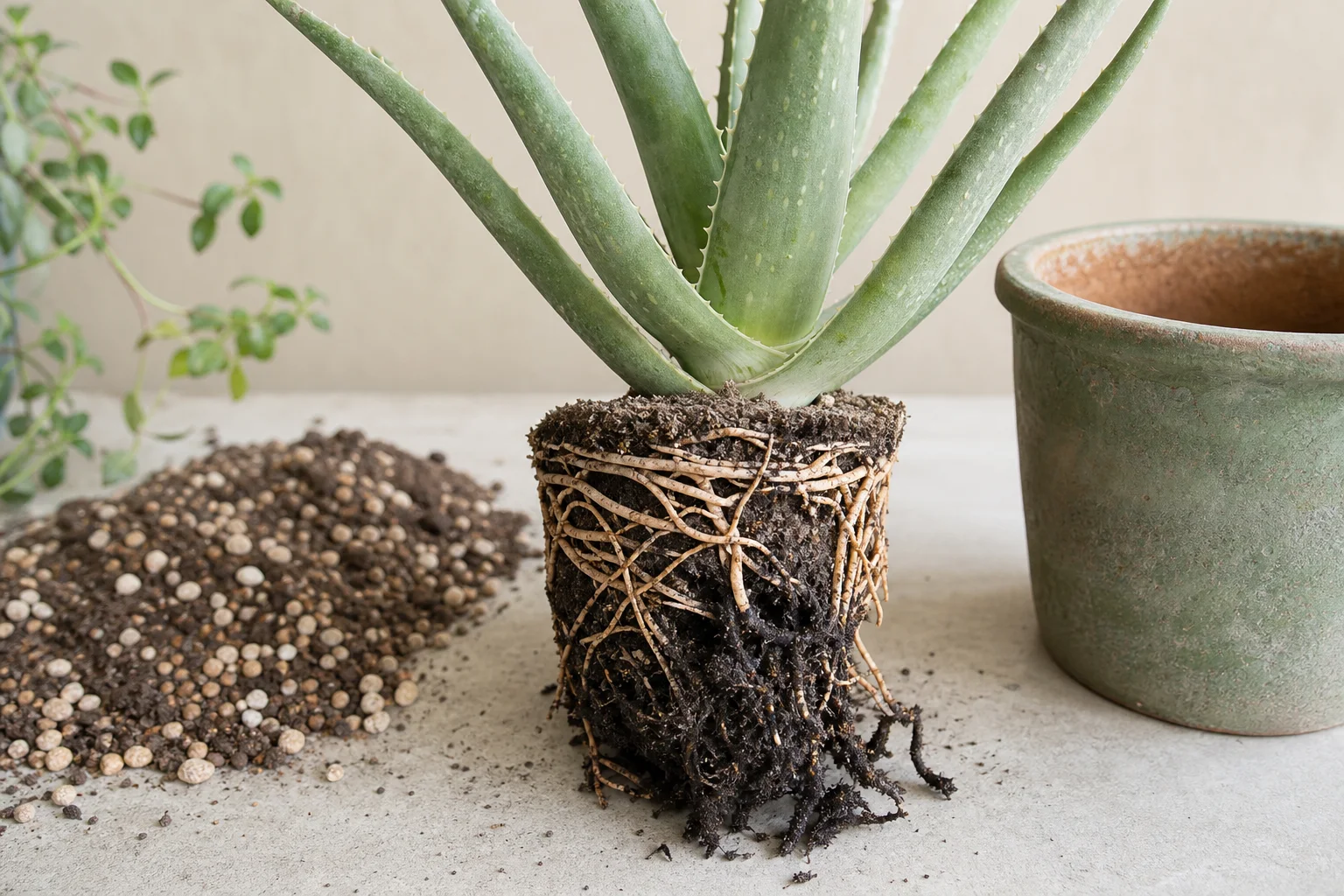
Root inspection is useful when yellowing is spreading, the base feels loose, or the mix remains damp for an unusually long time. Ease the aloe from its container while supporting the rosette rather than pulling on individual leaves.
- Healthier roots: Usually firm rather than limp, with no sour or decaying odor.
- Damaged roots: May be dark, soft, hollow, or easy to strip apart. Penn State Extension notes that dark, limp roots and the loss of healthy root tips can accompany root rot, although root color naturally varies among plants.
- Serious base damage: A soft, darkened crown or central stem suggests that decay has progressed beyond the fine roots. Recovery becomes less predictable when the growing point is affected.
If roots look firm and the soil is dry, return the plant to its pot and investigate light, drought, temperature, pests, or natural aging instead. Unnecessary root disturbance can add stress.
What to do when excess moisture is the likely cause
- Stop watering temporarily. Empty standing water and let the root zone dry if the roots and base are still firm.
- Correct drainage. Move the aloe from a container without drainage into one with an unobstructed hole. Choose a pot only slightly wider than the root mass; excess unused mix can remain wet.
- Replace unsuitable mix when necessary. Use a coarse cactus or succulent mix that drains readily. Added mineral material such as horticultural grit or perlite may improve drainage if the packaged mix is dense.
- Remove clearly dead roots. If inspection reveals soft or collapsing roots, trim only the deteriorated tissue with a clean tool. Allow fresh cuts to dry before returning them to moist conditions.
- Keep water out of the rosette. Apply water to the mix and let the excess leave the pot rather than collecting between the leaves.
- Pause fertilizer. A plant with damaged roots is unlikely to benefit from immediate feeding, and accumulated salts can add stress.
Do not repeatedly give small sips to a wet root ball. Once the mix has dried and the remaining roots appear stable, water thoroughly and wait for the mix to dry again. A severely decayed crown may not recover, but healthy offsets can sometimes be separated if their bases and roots remain firm.
Correct light or temperature stress gradually
If the aloe is pale or stretched
Move it toward a brighter window or use an appropriate grow light. Aloe generally performs well in abundant indoor light, but fertilizer cannot replace missing light. Increase exposure gradually over one to two weeks, particularly after a dim winter or a move outdoors.
If yellowing followed a sudden sunny move
Bleached patches on the most exposed side suggest sun scorch rather than a watering problem. Move the aloe back from intense midday or afternoon sun, then acclimate it in stages. Existing damaged patches may remain visible, so evaluate success by the condition of later growth.
If the plant was chilled
Move it away from frosty glass, exterior-door drafts, and cold air-conditioning. UNH Extension reports that aloe is sensitive to temperatures below about 50°F, while frost can cause more extensive injury. Cold-damaged tissue may look translucent or water-soaked before becoming brown or soft.
Rule out pests before reaching for fertilizer
Inspect the leaf bases, undersides, and tight spaces within the rosette. Mealybugs resemble small cottony deposits, while scale insects look like tan or brown bumps that remain attached to the plant. Sticky honeydew can occur with sap-feeding pests, and moderate infestations may cause yellow spotting or loss of vigor.
- Isolate an infested aloe from nearby plants.
- Remove a small population manually with a cotton swab or soft brush.
- For persistent pests, select a product labeled for the identified pest, the plant, and indoor use. Follow its label, test a small area first, and keep treated plants away from intense sun while the foliage dries if the instructions advise it.
- Recheck sheltered leaf bases regularly because newly emerged insects can be easy to miss.
University of Maryland Extension lists aloe among the indoor plants that scale can infest and advises monitoring after treatment. Nutrient shortage is possible but is usually considered after moisture, roots, light, temperature, and pests have been assessed. If the aloe has healthy roots, receives strong light, and has not been fed during active growth, apply a diluted cactus or houseplant fertilizer according to its label rather than using a concentrated dose.
Monitor the center instead of waiting for yellow leaves to turn green
A leaf that has become substantially yellow may not regain its former color. Judge the plant by what happens next: the yellowing should stop spreading, the center should remain firm, and later growth should emerge without the same symptoms. Changes may be slow because indoor aloe growth varies with season, temperature, and available light.
- Mark or photograph the edge of a discolored area so you can compare it after one or two weeks.
- Remove a lower leaf once it is dry and releases easily, or cut off soft, collapsing tissue with a clean blade.
- Escalate the root inspection if additional leaves become soft despite drier soil.
- Seek local extension or horticultural advice if spots continue to spread while the soil and roots appear healthy, since disease, chemical injury, or a less common pest may need closer examination.
Keep aloe away from pets that chew plants. The ASPCA lists aloe as toxic to cats and dogs. If a pet may have swallowed it, contact a veterinarian or a recognized animal poison-control service promptly rather than waiting for symptoms.
Compare your aloe’s symptoms with Photo Diagnosis
Upload a clear photo of the whole rosette, yellow leaves, soil surface, and pot. Photo Diagnosis can help organize visible clues and possible causes, but checking moisture and root texture remains important when excess water is suspected.
Diagnose My AloeFrequently Asked Questions
Should I cut yellow leaves off my aloe plant?
You can remove a leaf that is fully yellow, dry, or soft and collapsing. Use a clean, sharp blade and cut near the base without damaging neighboring leaves. If the leaf is only partly discolored but remains firm, leaving it in place while you correct the cause may reduce unnecessary injury to the plant.
Can a yellow aloe plant become green again?
Substantially yellow tissue often retains some discoloration. Improvement is more reliably shown by firm center leaves, no additional yellowing, and healthy later growth. The speed and extent of recovery depend on root condition, light, temperature, and season.
How can I tell whether my aloe is overwatered or underwatered?
An overwatered aloe commonly has soft, swollen, translucent, or easily detached leaves while the mix remains damp. An underwatered aloe is more likely to have thin, folded, puckered, or wrinkled leaves, a very light pot, and mix that has dried throughout. Check below the surface because both conditions can cause yellowing and drooping.
How often should I water an aloe plant?
There is no dependable universal interval. Wait until the potting mix has dried well into the container, then water thoroughly and allow the excess to drain. Light, temperature, pot size, container material, mix composition, and season all affect how quickly the plant uses water.
Does a yellow aloe need fertilizer?
Not necessarily. Feeding a plant with wet soil or damaged roots may add stress without addressing the cause. First check drainage, root condition, light, cold exposure, and pests. If those are suitable and the plant is actively growing, a diluted fertilizer labeled for succulents or houseplants may be used according to its directions.
Why is only the bottom leaf of my aloe turning yellow?
One older bottom leaf may yellow as part of normal turnover, especially if it remains firm and the rest of the rosette looks healthy. Investigate further if several lower leaves yellow together, become soft, detach easily, or are accompanied by persistently damp soil.
Sources & Further Reading
- Q&A: What Causes Aloe Leaves to Turn Yellow? University of Maryland Extension, Maryland Grows
- Aloe, a Hardy Houseplant Penn State Extension
- Cacti and Succulents University of Minnesota Extension
- What Should I Know About Growing Aloe at Home? University of New Hampshire Extension
- Aloe Vera: Houseplant How-To South Dakota State University Extension
- Scale Insects on Indoor Plants University of Maryland Extension
- Aloe ASPCA Animal Poison Control Center
- Fungal Root Rots and Chemical Fungicide Use Penn State Extension