A drooping Monstera usually has a water-uptake problem, but that does not necessarily mean it needs more water. Dry soil can cause wilting, while persistently wet soil can damage roots and produce a similar symptom. Check the potting mix, drainage, roots, and recent environmental changes before choosing a fix.
Start with a five-minute drooping check
Look at the whole plant before treating one leaf. A Monstera that has suddenly become limp needs a different response from a plant whose older leaves have gradually angled downward as its vine has grown.
- Feel the potting mix: Push a finger or wooden skewer several inches into the mix. Note whether it is dry, evenly damp, or wet and dense.
- Lift the container: A notably light pot supports a dry-soil diagnosis. A heavy pot that remains wet for many days points toward poor drainage or excessive watering.
- Inspect the foliage: Dry, curling edges often accompany drought stress. Yellow, soft leaves are more concerning when the soil is still wet.
- Smell the mix: A sour or decaying odor can indicate deteriorating roots or stagnant potting media.
- Check recent events: Consider repotting, relocation, a cold draft, intense sun, missed watering, or a change in season.
Do not add water merely because the leaves hang down. Moisture at root level is the most useful first distinction.
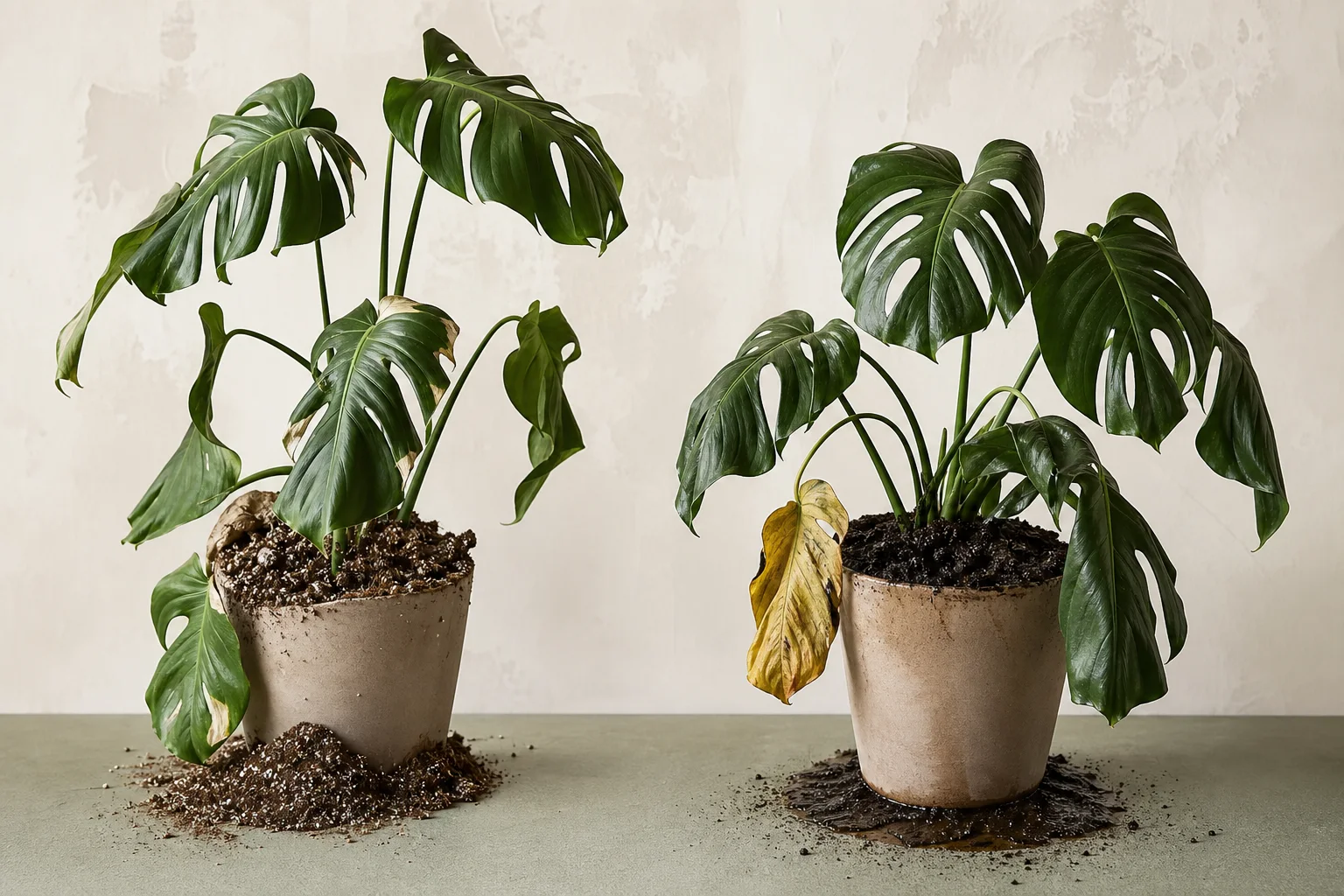
If the soil is dry, rehydrate the root ball thoroughly
Underwatering is likely when the mix is dry several inches down, the container feels light, and the soil has pulled away from the pot. Leaves may feel thin or limp, and their margins can become dry or curled.
What to do
- Move the plant to a sink, shower, or draining area.
- Apply room-temperature water slowly across the soil surface until water exits the drainage holes.
- Wait several minutes and water again if the first application ran through cracks without moistening the root ball.
- Empty the saucer or decorative outer pot after drainage stops.
- Recheck the soil regularly rather than following a fixed calendar.
If very dry mix repels water, soak the nursery pot in a shallow basin for a short period, then remove it and let it drain well. A healthy but thirsty Monstera may begin lifting its leaves within several hours, although the response can take longer when drought has damaged fine roots.
If the pot becomes dry again within a day or two, inspect for a tightly packed root ball. Rapid drying can mean the plant needs a modestly larger container rather than increasingly frequent small drinks.
If the soil is wet, investigate drainage and root health
Wet-soil drooping occurs because roots need both moisture and oxygen. When the mix stays saturated, declining roots may no longer move enough water to the foliage, causing the plant to wilt even though the pot is wet.
Signs that raise concern
- Soil remains wet for an unusually long time.
- Lower leaves turn yellow while the plant droops.
- Leaves or stems feel unusually soft.
- The pot has no drainage hole or stands in trapped water.
- Fungus gnats are active around the pot.
- The mix smells sour, or exposed roots look brown, black, soft, or easily stripped.
What to do
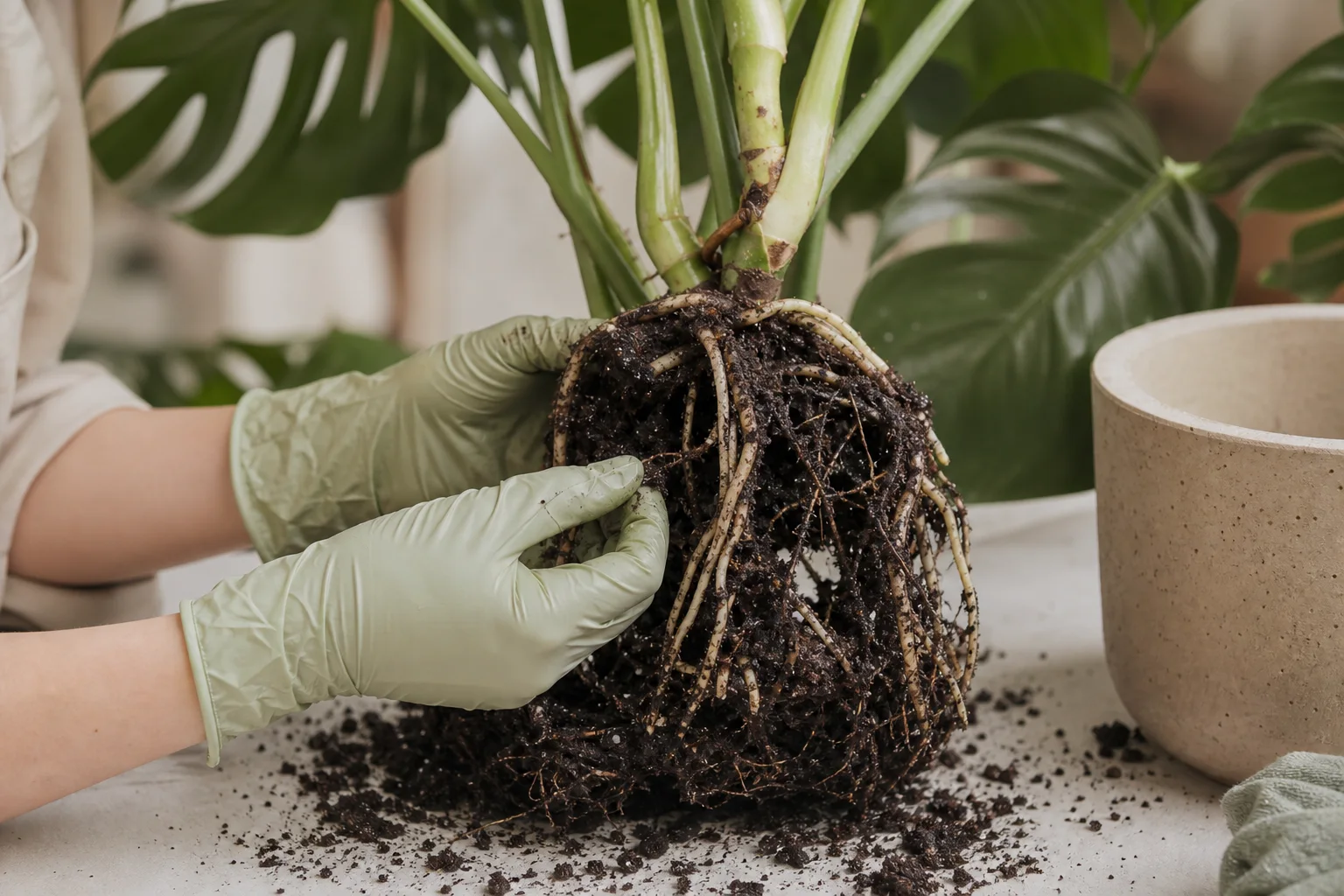
Stop watering until the moisture level has fallen, empty standing water, and clear blocked drainage holes. If the plant continues to decline or the mix smells unhealthy, slide out the root ball and inspect it. Healthy Monstera roots are generally firm and pale cream, tan, or light brown; decayed areas tend to be soft and dark.
Trim clearly dead roots with cleaned tools and repot into fresh, well-draining houseplant mix in a container only slightly larger than the remaining root system. Avoid adding fertilizer while damaged roots are adjusting. Recovery depends on how much healthy root and stem tissue remains.
Check light, temperature, and sudden changes
If moisture and roots appear normal, review the plant's environment. Monstera grows best with bright filtered light, but abrupt exposure to strong direct sun can increase water loss and scorch foliage. In very low light, the plant uses water more slowly and may develop elongated, weak growth that leans rather than truly wilts.
- Heat or intense sun: Droop develops during the brightest part of the day, sometimes with pale or brown scorched areas. Move the plant back from harsh direct sun rather than compensating with repeated watering.
- Cold exposure: Leaves may become limp, discolored, or water-soaked after contact with a cold window, outdoor transport, or a draft. Move the plant to a stable indoor location and wait before removing tissue unless it has clearly died.
- Dry air: Low humidity more often contributes to curling or dry edges than whole-plant collapse. A humidifier may help in very dry rooms, but adding extra water to the soil does not correct dry air.
- Recent relocation: A sudden change in light, temperature, or airflow can produce temporary stress. Keep care steady while watching for new symptoms.
Bright indirect light and a location away from heating vents, air-conditioning outlets, and frequently opened exterior doors provide a useful baseline for recovery.
Decide whether it is wilting or simply leaning
Monstera deliciosa is a climbing vine. As its stems lengthen and leaves become larger, unsupported growth can lean or spread across the room even when the foliage remains firm and healthy. A support problem is more likely when the leaves are green, the petioles feel rigid, and only the main stem is changing position.
Attach the stem loosely to a sturdy stake, plank, trellis, or climbing pole with soft ties. Secure the main vine rather than forcing individual leaf stalks upright. Leaf stalks naturally rotate toward light and need room to move.
Consider the roots and recent repotting
A rootbound Monstera may droop because a crowded root ball dries very quickly. Roots circling densely inside the pot, emerging through drainage holes, or occupying nearly all available mix support this diagnosis. Move up by only a small pot size and use an aerated mix; an oversized container can retain moisture around a limited root system.
Some drooping after repotting can reflect root disturbance. Keep the plant in stable, filtered light, avoid another immediate repot, and do not fertilize until it shows renewed growth. Persistent decline, a soft stem base, or wet mix should prompt another root inspection.
Inspect for pests and localized physical damage
Pests are a less common cause of sudden whole-plant drooping than moisture problems, but a heavy infestation can weaken growth. Examine leaf undersides, veins, petiole joints, and new leaves under strong light.
- Fine stippling, dusty-looking foliage, or delicate webbing can indicate spider mites.
- Silvery scars, distorted new leaves, or tiny dark specks can accompany thrips.
- Sticky residue, fixed bumps, cottony clusters, or visible insects suggest other sap-feeding pests.
Isolate a suspicious plant from nearby houseplants and confirm the pest before selecting a treatment. Washing accessible foliage and wiping both leaf surfaces can reduce dust and remove some pests, but repeated inspection is important because eggs or hidden insects may remain.
If only one leaf droops, inspect its petiole for a crease, break, bruise, or damage from a tight tie. A bent petiole may not regain its original position even when the rest of the plant remains healthy.
Monitor the plant without stacking treatments
After correcting the most likely cause, keep other conditions steady. Simultaneously watering, fertilizing, repotting, pruning, and relocating the plant can add stress and make it difficult to tell which change helped.
Encouraging signs
- Leaf stalks become firmer or lift slightly.
- The pot begins following a more predictable wet-to-dry cycle.
- Yellowing stops spreading to additional leaves.
- New roots are firm, and new growth opens without distortion.
When to escalate
Inspect the roots or seek local horticultural help if drooping continues despite appropriate moisture, the stem base softens, dark lesions spread, the plant develops a strong decaying odor, or multiple leaves collapse rapidly. A photo-based diagnosis can help organize the visible clues, but soil moisture, root condition, and recent care history are still needed for a useful assessment.
Compare your Monstera's symptoms
Upload clear photos of the full plant, drooping leaves, soil surface, and pot so the Photo Diagnosis tool can help you narrow down visible causes. Include your moisture check and recent care changes for better context.
Diagnose My MonsteraFrequently Asked Questions
Should I water my Monstera as soon as it starts drooping?
Not until you check the soil. Water thoroughly if the root ball is dry. If the mix is still wet, adding more water may worsen poor drainage or root decline.
How long does an underwatered Monstera take to perk up?
A mildly thirsty plant with healthy roots may begin responding within several hours, but improvement can take a day or longer. Leaves damaged by severe dehydration may not fully regain their previous appearance.
Can an overwatered Monstera look thirsty?
Yes. Persistently wet soil can reduce oxygen around the roots and contribute to root decay. Damaged roots cannot supply the leaves effectively, so the plant may droop while its potting mix remains wet.
Why is only one Monstera leaf drooping?
An individual leaf may be old, shaded, physically bent, or attached to a damaged petiole. Check for a crease and localized discoloration. If the rest of the plant is firm and producing healthy growth, one low leaf is less suggestive of a whole-root-system problem.
Should I cut off drooping Monstera leaves?
Keep leaves that are green and structurally intact because they can still support the plant. Remove a leaf when it is largely dead, badly decayed, or attached by a broken petiole, using a cleaned cutting tool.
Why did my Monstera droop after repotting?
Root disturbance, a sudden environmental change, or an overly large pot can contribute. Keep conditions stable and check that excess water can drain. Persistent drooping in wet mix warrants an inspection for damaged roots.
Sources & Further Reading
- Monstera deliciosa University of Minnesota Extension
- Monstera deliciosa University of Connecticut Home Garden Education Office
- Why is my houseplant wilting? Iowa State University Extension and Outreach
- Properly Watering Container Houseplants Virginia Cooperative Extension
- Monstera as a Houseplant Penn State Extension
- Houseplant Problems University of California Statewide Integrated Pest Management Program
- Toxic and Non-toxic Plants: Cutleaf Philodendron ASPCA