A plant may droop when its leaves are losing water faster than the roots can replace it, but dry soil is only one possible cause. Wet roots, heat, cold, transplant stress, compacted soil, and pests can produce a similar posture. Check the soil and surrounding conditions before adding water, because the wrong response may increase the stress.
First, confirm that the droop is a problem
Compare the plant with an earlier photo or with stems and leaves elsewhere on the same plant. A meaningful change may include leaves hanging at a lower angle, soft petioles, limp new growth, curling, or an entire stem losing support.
Some plants naturally trail, while prayer plants and related species reposition their leaves between day and night. If the leaves return to their usual position each morning and remain firm and normally colored, the movement may be natural rather than a sign of declining health.
Look for accompanying clues
- Soft, thin, or curling leaves: often associated with water loss or heat stress.
- Yellow leaves and persistently wet soil: may point toward excess moisture or impaired roots.
- Blackened or translucent tissue: can follow chilling or cold exposure.
- One limp stem: inspect for a bend, wound, soft area, or stem lesion.
- Drooping plus stippling, webbing, sticky residue, or visible insects: check for pests.
Check the soil before you water
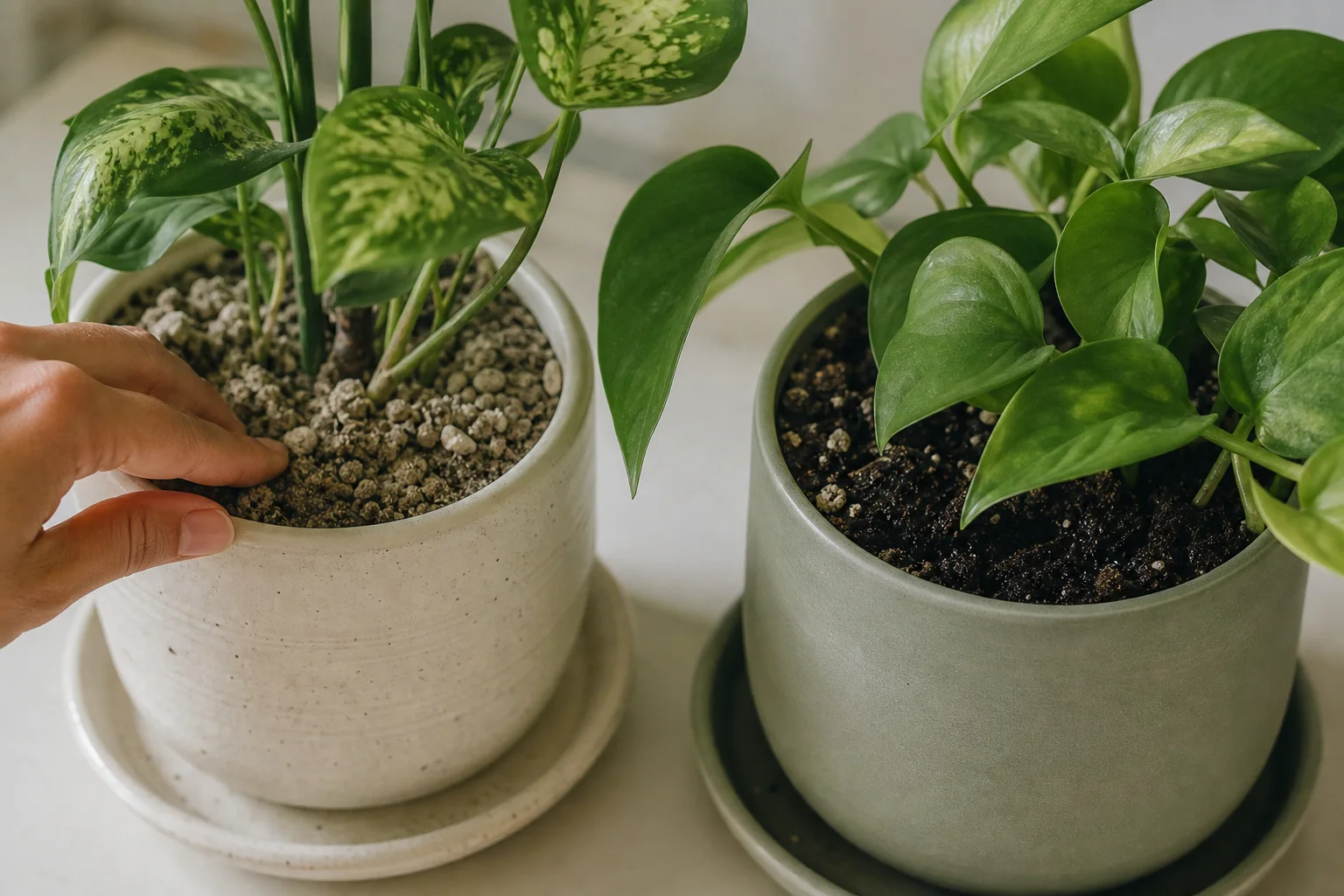
Push a clean finger, wooden skewer, or moisture probe into the root zone rather than judging only the surface. Potting mix can be dry on top but wet below, especially in large containers or decorative cachepots. Lift smaller pots as well: dry pots are often noticeably lighter than recently watered ones.
If the root zone is dry
Water slowly and evenly until excess drains from the bottom, then empty the saucer or outer pot. If water races down a gap around the root ball, apply it in several passes or briefly soak the pot so the mix can absorb moisture, then let it drain thoroughly.
If the root zone is still wet
Do not add more water merely because the leaves are hanging. Check that drainage holes are open, remove standing water, and move the plant away from conditions that slow drying, such as a cold windowsill. Persistent drooping in wet mix calls for a root inspection.
Match the drooping pattern to the likely cause
No single leaf position identifies the cause. Use several observations together and consider what changed shortly before the drooping began.
- Dry mix, light pot, crisp edges: underwatering is more likely.
- Wet mix, yellowing, leaf drop, or a soft stem base: excess moisture or root damage is more likely.
- Drooping mainly during hot afternoons: heat and rapid water loss may be involved, particularly if the plant firms up overnight.
- Bleached or scorched areas after a move: sudden exposure to stronger sunlight may be contributing.
- Dark, collapsed tissue after a cold night: investigate cold injury or a draft.
- Drooping soon after repotting: disturbed roots, damaged stems, or a sharp change in moisture may be responsible.
- Slow growth, rapid drying, and dense circling roots: the plant may be pot-bound.
- Localized drooping with spots or discolored stem tissue: examine the affected area for physical damage or disease.
When several causes remain possible, correct the least disruptive issue first. Stabilizing temperature and checking moisture is usually less stressful than immediately fertilizing, pruning, or repotting.
Inspect the roots if wet soil and drooping occur together
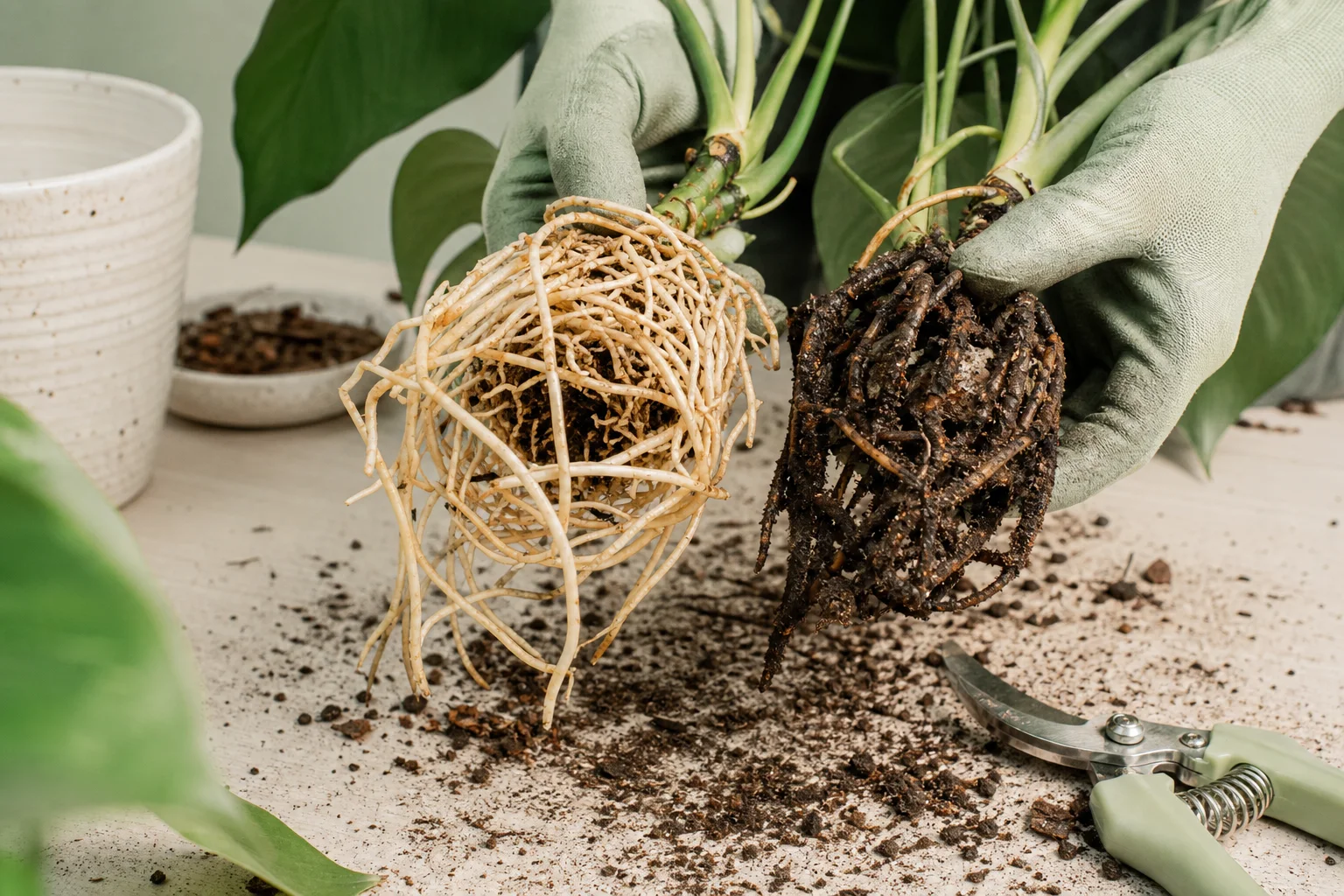
Roots need both moisture and air. Saturated or poorly structured potting mix can limit oxygen around roots, while damaged roots may be unable to move enough water to the leaves. This helps explain why a plant can appear thirsty even when its soil is wet.
- Slide the root ball out gently while supporting the stems and soil.
- Look for firm, light-colored roots as well as dark, soft, slimy, or easily detached sections.
- Smell the root zone. A sour or decaying odor strengthens the case for root deterioration, although odor alone is not diagnostic.
- Check whether the container has drainage holes and whether the mix is dense or compacted.
If only a limited portion is affected, trim soft roots with clean tools and repot into fresh, well-draining mix in a container appropriately sized for the remaining root system. If most roots and the stem base have deteriorated, propagation from healthy tissue may be more practical than repeated repotting. Results depend on the plant species and the extent of damage.
Rule out environmental stress
Move beyond the pot if soil moisture does not explain the symptom. Leaves may lose firmness when a plant is beside a heating vent, air conditioner, cold window, fireplace, or suddenly brighter window. A recently purchased plant may also react to different light, humidity, and temperature conditions.
What to do
- Move the plant away from direct blasts of hot or cold air.
- Shield it from intense midday sun if drooping appeared after a sudden move to brighter light.
- Return recently relocated plants to stable, species-appropriate conditions.
- Group humidity-loving plants or use a room humidifier if dry air is accompanied by crisp margins and curling.
- Avoid leaving tropical foliage touching cold window glass.
Humidity changes alone do not explain every drooping plant. Treat them as one clue alongside soil moisture, temperature, and the plant's known care requirements.
Inspect stems and leaf undersides for pests or damage
Heavy feeding by aphids, spider mites, mealybugs, whiteflies, or scale insects can weaken foliage and contribute to curling, discoloration, or drooping. Examine leaf undersides, new growth, stem joints, and the point where the affected stem enters the soil.
- Fine pale stippling and delicate webbing: possible spider mites.
- White cotton-like clusters: possible mealybugs.
- Sticky residue with clusters of small insects: possible aphids, scale, or whiteflies.
- A crease or split in one stem: possible physical injury rather than a whole-plant water problem.
- Dark, sunken, or soft stem tissue: isolate the plant while investigating possible rot or disease.
Separate a potentially infested plant from nearby plants. Rinsing suitable foliage and removing pests by hand may reduce light infestations. If a pesticide is needed, select a product labeled for the pest and plant, follow the label, and test it on a small area first because stressed foliage may be sensitive.
Monitor recovery instead of stacking treatments
After correcting the most likely cause, keep the plant in stable conditions and record the date, soil moisture, and actions taken. Do not add fertilizer to a severely stressed or root-damaged plant; fertilizer does not replace water uptake and excess salts may add stress.
Encouraging signs
- Leaves or petioles begin regaining firmness.
- Drooping stops spreading to additional stems.
- The soil begins drying at a more normal rate.
- New growth emerges without distortion or collapse.
Signs that call for a closer diagnosis
- The plant remains limp while the soil stays wet.
- The stem base becomes soft, dark, or foul-smelling.
- Drooping spreads rapidly despite stable moisture and temperature.
- Roots are extensively soft or detached.
- Widespread spotting, pest activity, or stem lesions appear.
A correctly watered plant with intact roots may regain firmness relatively quickly, while plants with root loss, cold injury, or transplant damage may need substantially longer. Existing damaged leaves may not return to their previous appearance even when later growth improves.
Not sure what the drooping pattern means?
Upload a clear photo of the whole plant, affected leaves, soil surface, and pot. Photo Diagnosis can help organize visible clues and suggest what to inspect next, although root moisture and texture still need to be checked in person.
Diagnose My PlantFrequently Asked Questions
Should I water a plant as soon as it starts drooping?
Not until you check moisture below the surface. Water if the root zone is dry; if it is wet, inspect drainage, roots, temperature, and other symptoms instead. Adding water to saturated mix may increase root stress.
Why is my plant drooping even though the soil is wet?
Roots in saturated, compacted, or poorly drained mix may lack oxygen or may already be damaged. Cold conditions can also slow water use and keep the soil wet. Check for drainage holes and inspect roots for soft texture, discoloration, or deterioration.
Why did my plant droop after repotting?
Root disturbance, broken fine roots, a much larger pot, compacted mix, or an abrupt change in moisture can contribute. Keep conditions stable, avoid fertilizer while the plant is highly stressed, and make sure the new pot drains. Continued decline may justify checking the roots and stem base.
Can too much sunlight make a plant droop?
Yes. Strong light and heat can increase water loss faster than roots can replace it. This is more likely after a sudden move into direct sun and may occur with bleaching, scorched patches, or crisp edges. Move the plant to bright but gentler light and reassess its moisture.
How long does a drooping plant take to recover?
Timing varies with the cause, species, and severity. A mildly dry plant with healthy roots may begin firming after thorough watering, while root damage, chilling, or transplant stress can take days or longer to stabilize. Judge progress by firm new growth and the absence of spreading symptoms rather than by one damaged leaf.
Should I fertilize a drooping plant?
Usually not as the first response. Fertilizer does not correct dry soil, saturated roots, heat stress, or cold damage, and accumulated salts may worsen stress. Identify and correct the underlying condition before resuming an appropriate feeding routine.
Sources & Further Reading
- Diagnose Indoor Plant Problems University of Maryland Extension
- Drought Stress to Indoor Plants University of Maryland Extension
- Winter Indoor Plant Problems University of Maryland Extension
- How to Help a Poorly Houseplant Royal Horticultural Society
- Diagnosing Poor Plant Health Penn State Extension
- Repotting Houseplants Penn State Extension
- Prayer Plant — Maranta leuconeura North Carolina Extension Gardener Plant Toolbox