A pothos commonly droops because its roots cannot supply the leaves with enough water—either because the potting mix is too dry or because persistently wet conditions have damaged root function. Before adding water, feel the mix below the surface, check whether the pot can drain, and look for yellow leaves, soft stems, or unhealthy roots. Those observations are more useful than the droop alone.
Start with the soil, not the watering can
Drooping describes a symptom rather than a single diagnosis. Both dry roots and unhealthy roots can leave pothos leaves soft and hanging, so watering without checking the pot may make the underlying problem worse.
Use this two-minute check
- Feel below the surface: Insert a finger or wooden skewer about 2 inches into the potting mix. Note whether it feels dry, lightly moist, or wet.
- Lift the pot: A surprisingly light pot supports a dryness diagnosis. A heavy pot several days after watering suggests that the mix is holding moisture.
- Check drainage: Confirm that the growing pot has open drainage holes and is not standing in water inside a saucer or decorative cover pot.
- Read the leaves: Mostly green, flexible leaves with dry soil point toward thirst. Drooping combined with widespread yellowing, soft tissue, or a sour smell raises concern about root stress.
- Review recent changes: Consider a missed watering, repotting, a cold draft, direct afternoon sun, fertilizer use, or moving the plant to a darker room.
Penn State notes that too little water may temporarily droop pothos leaves, while excess water can contribute to root rot. Its pothos guidance recommends watering in response to soil dryness rather than following a fixed calendar. See Penn State Extension's pothos care guidance.
If the potting mix is dry: rehydrate the root ball
Underwatering is likely when the pot feels light, the mix is dry below the surface, and the leaves remain green but thin or limp. The mix may also shrink away from the pot wall. A severely dry, peat-based mix can repel water, allowing it to run down the sides without moistening the center.
What to do
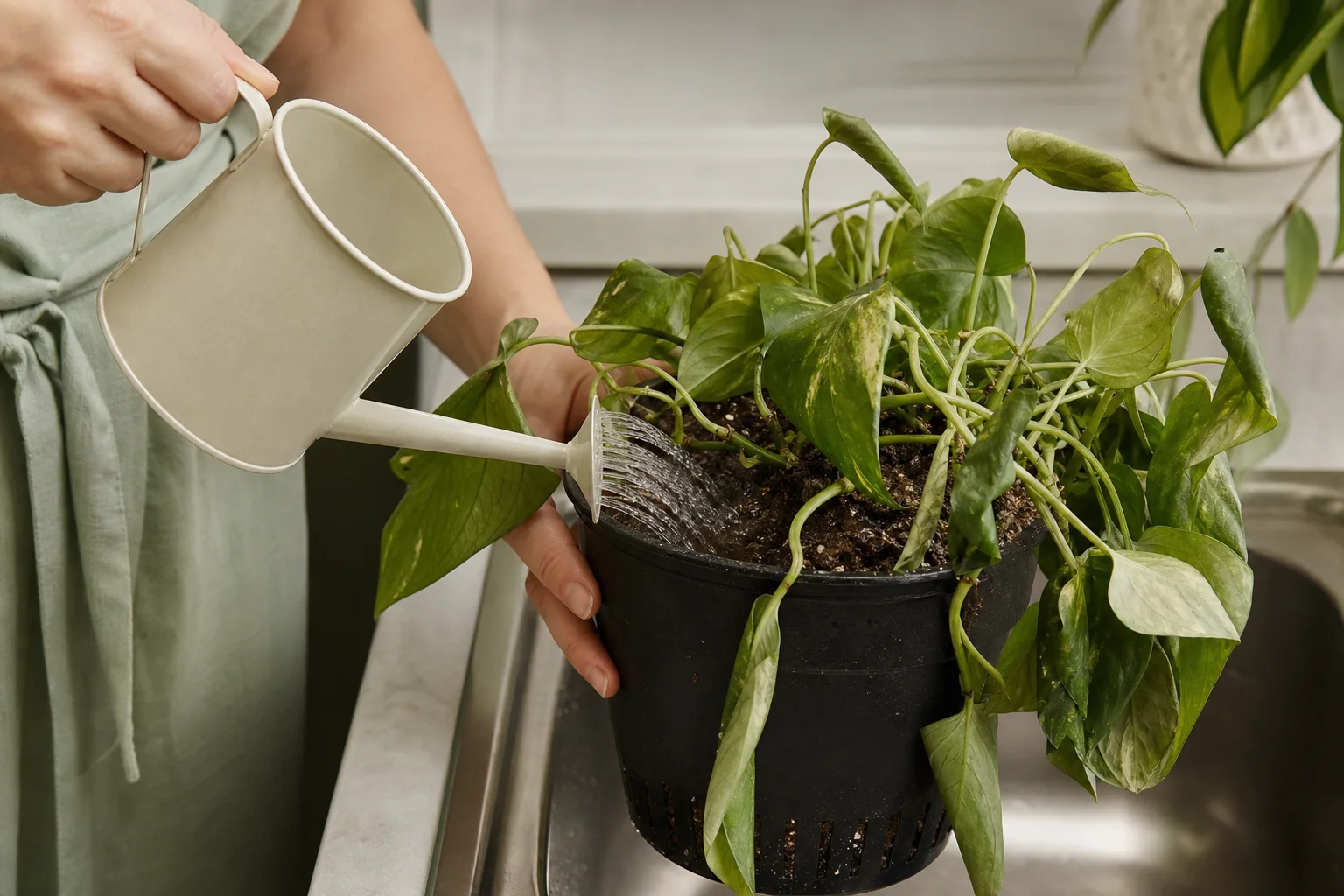
- Move the plant to a sink and water slowly across the full surface.
- Pause for a minute, then water again so the root ball has time to absorb moisture.
- Let excess water leave through the drainage holes before returning the pot to its saucer or cover pot.
- If water immediately races through a shrunken root ball, place the growing pot in shallow water for 10 to 20 minutes. Remove it when the mix feels evenly moist, then allow it to drain thoroughly.
Leaves often begin regaining some firmness within several hours to a day when dryness is the main issue. Recovery may be slower if the plant remained dry for an extended period, and badly damaged leaves may not regain their former posture.
Avoid the rebound mistake
Do not compensate by keeping the mix continuously saturated. Resume checking the soil and water again only after the upper portion has dried. Conditions such as brighter light, warmer rooms, long vines, and a root-filled pot can make a pothos use water more quickly.
If the soil is wet: investigate drainage and root health
A drooping pothos in wet soil does not usually need another drink. Roots require oxygen as well as moisture, and a dense or persistently saturated mix can interfere with root function. Root rot becomes more concerning when drooping occurs with yellow lower leaves, stalled growth, a persistent unpleasant smell, soft stem bases, or dark, limp roots.
Check the hidden water traps first
- Remove the nursery pot from its decorative cover and empty collected water.
- Make sure drainage holes are not blocked by compacted mix or roots.
- Stop watering until the upper mix dries unless the plant is being removed for an urgent root inspection.
- Move the plant to bright, indirect light with normal air movement, but avoid intense sun while it is stressed.
When to inspect the roots
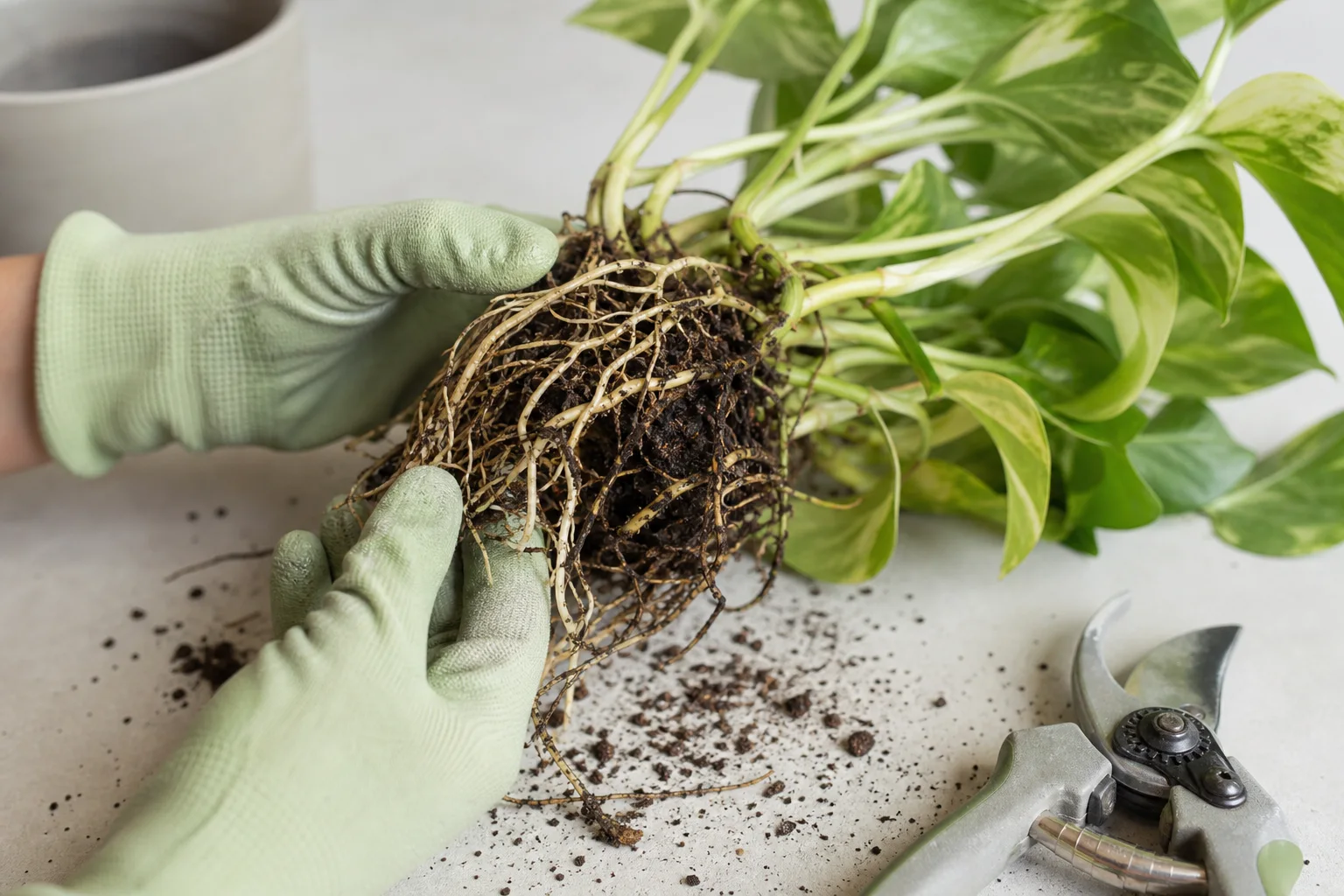
Slide the plant from its pot if the mix stays wet for many days, the smell is abnormal, yellowing is spreading, or the plant continues declining. Healthy pothos roots are generally firm. Roots affected by rot may appear dark, soft, limp, or stripped of their outer tissue. Penn State lists blackened, mushy roots and wilting among root-rot indicators, although laboratory testing may be needed to identify a particular pathogen. Review Penn State's indoor plant disease guidance.
How to respond to damaged roots
- Use clean tools to remove roots that are clearly soft or decomposing while retaining firm tissue.
- Discard the old mix and wash the pot before reuse, or select a clean container with drainage.
- Repot in fresh, well-drained indoor potting mix without compressing it tightly.
- Water enough to settle the new mix, let it drain, and then monitor moisture rather than watering on a schedule.
Do not fertilize immediately after major root loss. Fertilizer cannot replace damaged roots, and excess salts may add stress. Severely affected plants sometimes continue declining; taking a few firm, healthy node cuttings can preserve viable material while the parent plant is monitored.
Check for a crowded pot or recent repotting
A root-bound pothos may droop repeatedly because a dense root mass contains little mix and dries quickly. Look for roots circling the inside of the pot, emerging through drainage holes, or filling most of the lower root ball. Water rushing through rapidly and the plant becoming limp again soon after watering are additional clues.
If the plant is root-bound
- Repot into a clean container that is only modestly wider than the root ball.
- Gently loosen densely circling roots rather than tearing the center apart.
- Use fresh, well-drained mix and leave room at the top for watering.
- Drain the pot fully and keep it in stable, bright indirect light while it adjusts.
Penn State recommends examining the roots when a houseplant dries unusually fast, has roots leaving the drainage holes, or has slowed growth. An oversized container is not a shortcut: a large volume of unused mix may stay wet longer than the roots can use it. See Penn State Extension's repotting guide.
If drooping began after repotting
Minor drooping can follow root disturbance, a major change in potting mix, or a sudden change in moisture. Keep conditions steady and avoid repeated watering, fertilizer, pruning, and relocation at the same time. Inspect again if the decline spreads, stems soften, or the mix remains saturated.
Rule out light and temperature stress
Once soil moisture and roots have been assessed, consider the plant's surroundings. Pothos grows well in moderate to bright indirect light and tolerates lower light, but darker conditions reduce water use. A pot moved away from a window may therefore remain wet longer even when the watering routine has not changed.
Environmental clues
- Cold exposure: Sudden limpness after contact with a cold window, air conditioner, winter draft, or chilly transport may indicate temperature injury. Dark, water-soaked tissue makes this more concerning.
- Heat and sun: Hot direct sun can increase water loss and may produce pale, yellow, or scorched areas, especially after an abrupt move.
- Heating vents: Warm, dry airflow can dry leaves and potting mix unevenly.
- Low light: This is more likely to produce weak, sparse growth and slower drying than an isolated episode of sudden drooping.
Penn State suggests average room temperatures of about 60–80°F for pothos and protection from direct sun. North Carolina State Extension likewise recommends bright indirect light, well-drained mix, and allowing the medium to dry between waterings. View the NC State Extension plant profile.
Move a stressed pothos away from the immediate hazard, but avoid making several dramatic changes at once. A stable location makes it easier to judge whether new leaves and stems are improving.
Inspect for pests, fertilizer stress, and damaged stems
Pests are less likely than a moisture problem to cause sudden whole-plant drooping, but a substantial infestation can weaken leaves and new growth. Examine both leaf surfaces, petioles, nodes, and the points where vines cross the pot rim.
- Spider mites: Look for fine stippling, dull leaves, and delicate webbing, particularly on leaf undersides.
- Mealybugs: Check for white, cotton-like clusters around nodes and leaf joints.
- Scale insects: Look for attached brown or tan bumps and sticky residue.
- Stem damage: A sharply bent, pinched, or rotting vine may droop beyond the damaged section while the rest of the plant remains firm.
Isolate a pest-suspect plant from nearby houseplants. Begin with physical removal and washing where practical, and use only a product labeled for the identified pest and indoor plants if further treatment is needed. Follow its label, test it on a small area, and keep treatments away from children and animals.
Recent heavy fertilizer use can also injure roots or create salt stress. Clues include crust on the soil or pot, brown leaf margins, and drooping that followed feeding. Pause fertilizer while the plant is stressed. If the pot drains freely and roots are not rotting, flushing the mix thoroughly with water and letting it drain may help remove accumulated salts.
Monitor the plant before changing course again
After addressing the most likely cause, record what you changed and observe the plant over the next several days. Existing damaged leaves may remain yellow, marked, or misshapen, so judge progress by the condition of the vines, the rate of new yellowing, soil behavior, and eventually new growth.
Encouraging signs
- Leaves regain some firmness after a dry root ball is evenly watered.
- The mix begins drying at a reasonable pace rather than remaining saturated.
- Yellowing and leaf loss slow instead of moving rapidly up the vines.
- Stems remain firm and healthy buds or leaves begin developing.
Escalate the inspection when
- the plant stays limp despite an evenly moist—not saturated—root ball;
- yellowing, stem softness, or an abnormal smell spreads;
- roots are extensively dark and decomposing;
- the problem returns after every watering;
- pest signs continue appearing after treatment.
A photograph can help compare leaf posture, discoloration, stem damage, and pest clues, but it cannot confirm moisture deep in the pot or identify a root pathogen by itself. Pair any photo assessment with a soil check, drainage history, and root inspection when indicated.
Pet and household caution
Pothos contains insoluble calcium oxalates and can irritate the mouth if chewed. Keep discarded leaves and cuttings away from pets and children. If a pet has eaten pothos or develops drooling, vomiting, mouth swelling, or difficulty swallowing, contact a veterinarian or a recognized animal poison-control service promptly. See the ASPCA pothos toxicity entry.
Get a photo-led pothos check
Upload clear photos of the whole plant, affected leaves, stems, and soil surface to compare visible drooping patterns and damage clues. For a stronger assessment, include whether the mix feels dry or wet and how long it has stayed that way.
Diagnose My PothosFrequently Asked Questions
Should I water my pothos as soon as it droops?
Check the potting mix first. Water when the root zone is dry, but do not add more water when the mix is already wet. Drooping in wet soil can indicate poor drainage, root damage, cold stress, or another problem that additional watering may worsen.
How long does a drooping pothos take to perk up after watering?
If dryness is the main cause and the roots remain functional, the leaves may begin regaining firmness within several hours to a day. A badly dried, root-bound, cold-damaged, or root-stressed plant may respond more slowly. Recheck whether the center of the root ball absorbed water if there is no improvement.
Why is my pothos drooping even though the soil is moist?
Possible causes include saturated or compacted mix, water trapped in a cover pot, damaged roots, a severely crowded root ball, cold exposure, stem injury, fertilizer stress, or pests. Check drainage and recent care changes, then inspect the roots if the soil remains wet or the plant is developing yellow leaves and soft tissue.
Why did my pothos droop after repotting?
Repotting can disturb roots and change how quickly water moves through the container. Keep the plant in stable, bright indirect light, confirm that the pot drains, and allow the upper mix to begin drying before watering again. Worsening yellowing, odor, or soft stems calls for a closer root inspection.
Should I mist a drooping pothos?
Misting does not correct a dry root ball or unhealthy roots. Diagnose soil moisture, drainage, and root condition first. Normal household humidity is generally workable for pothos, although keeping the plant away from strong heating or cooling vents may reduce environmental stress.
Can I save healthy vines if the pothos roots are badly damaged?
Firm vines with healthy leaves and intact nodes may be used as cuttings. Cut with clean tools below a node and root the sections separately in water or an appropriate propagation medium. Results depend on the health of the cutting and growing conditions.
Sources & Further Reading
- Pothos as a Houseplant Penn State Extension
- Epipremnum aureum North Carolina Extension Gardener Plant Toolbox
- Diagnosing Poor Plant Health Penn State Extension
- Pest and Disease Problems of Indoor Plants Penn State Extension
- Repotting Houseplants Penn State Extension
- Toxic and Non-toxic Plants: Devils Ivy ASPCA