If your succulent appears to be dying, check the soil and stem before reaching for the watering can. Soft translucent leaves and a dark, unstable stem often indicate excess moisture, while dry soil paired with thin, wrinkled leaves points more toward dehydration. Poor light, abrupt sun exposure, temperature stress, and pests can produce similar decline, so use the checks below to distinguish them.
First, stabilize the plant without guessing
A stressed succulent can decline further when several treatments are applied at once. Before watering, fertilizing, or repotting, move it away from neighboring plants and inspect it in bright, indirect light.
- Touch the stem near the soil line. A firm stem is encouraging. A soft, dark, or collapsing base suggests that decay may be advancing.
- Check moisture below the surface. Insert a clean wooden skewer toward the bottom of the pot. Damp soil clinging to it means the root zone has not dried yet.
- Look underneath the container. Confirm that the pot has an open drainage hole and is not standing in collected water.
- Check leaf joints and crevices. Look for cottony clusters, sticky residue, webbing, bumps, or moving insects.
- Review recent changes. Note whether the plant was watered, repotted, fertilized, moved outdoors, placed against a cold window, or exposed to stronger sun.
Pause routine watering until you know whether the root zone is wet or dry. If the stem is collapsing, proceed to the root inspection rather than waiting for the potting mix to dry on its own.
Is the succulent overwatered or underwatered?
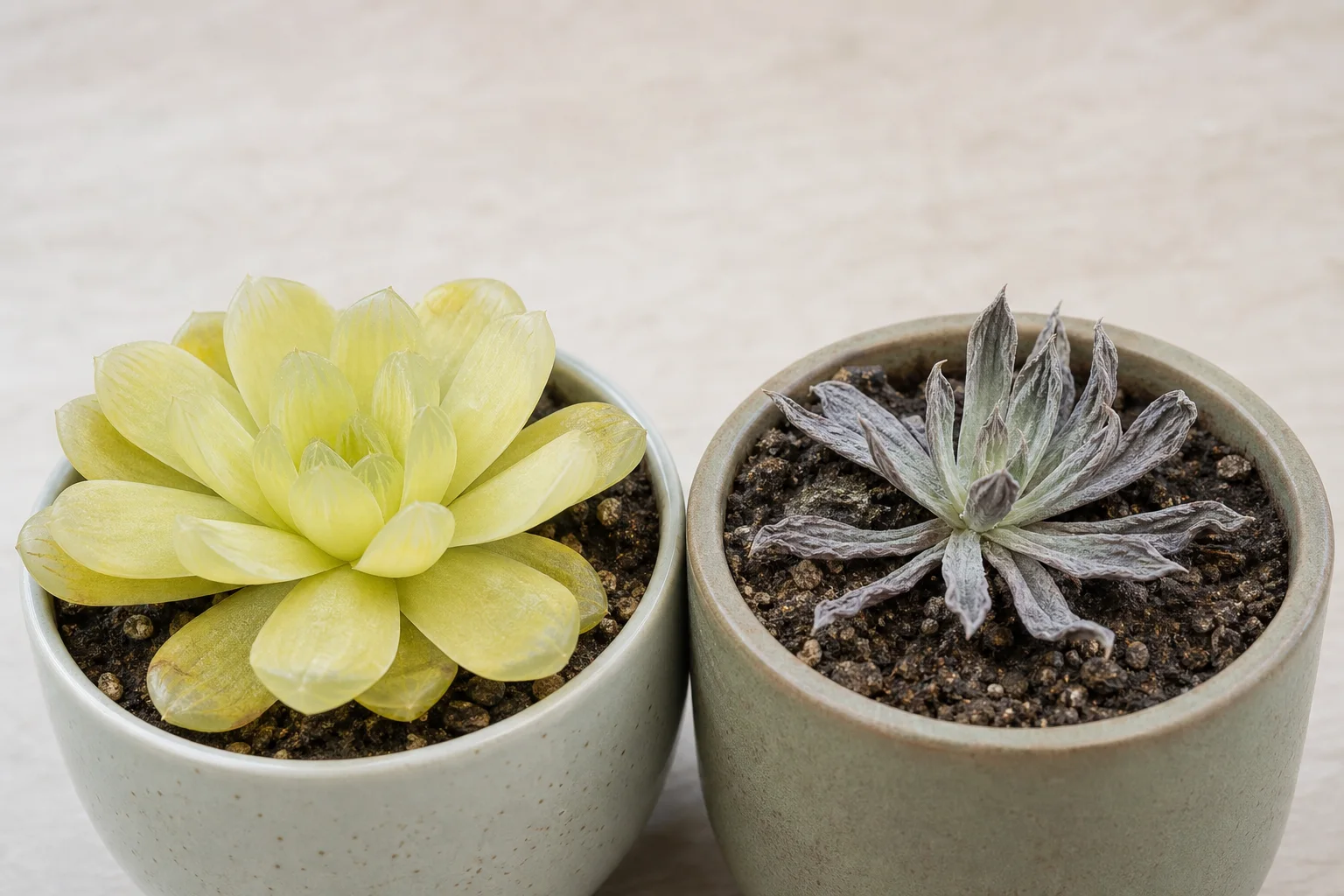
Both moisture extremes can cause wilting and yellowing, so a leaf symptom by itself is not enough. Compare the leaves with the condition and weight of the pot.
Patterns associated with excess moisture
- Leaves feel soft, swollen, translucent, or unusually yellow.
- Healthy-looking leaves detach with a light touch.
- The stem near the soil is brown, black, soft, or unstable.
- The pot remains heavy and the mix stays damp for many days.
- The plant smells musty, or roots are dark and mushy when examined.
Patterns associated with dehydration
- Leaves become thinner, wrinkled, folded, or deflated.
- Lower leaves develop dry, crisp tissue rather than translucent softness.
- The pot feels very light and the mix is dry throughout.
- Soil may have contracted from the sides of the pot, causing water to run around the root ball without wetting it.
If the mix is dry and the plant is wrinkled but still firm at the stem, water slowly and thoroughly until excess drains. If water races through a shrunken root ball, briefly bottom-water the pot to rehydrate the mix, then let it drain well. Do not repeat watering until the mix has dried according to the needs of the identified species.
Inspect the roots if the stem is soft or the soil stays wet
A pot without drainage, dense organic mix, an oversized container, or frequent watering can keep roots short of oxygen and encourage decay. If the base is soft or the pot remains wet unusually long, remove the plant gently and inspect the root system.
- Slide the root ball from the pot and loosen wet mix without pulling hard on delicate roots.
- Compare firm, pale or tan roots with roots that are dark, soft, hollow, or easily stripped apart.
- Using a cleaned cutting tool, remove decayed roots and any soft stem tissue. Continue only until the remaining tissue appears firm and free of spreading discoloration.
- If usable roots and a firm base remain, repot into a clean container with a drainage hole and fresh, porous cactus or succulent mix. Choose a pot only slightly wider than the surviving root system.
- If decay has reached most of the base, take a healthy stem cutting above the damaged tissue. Let the cut surface dry and callus before placing it in a lightly moistened, free-draining medium.
Recovery depends on how much healthy tissue remains, the species, and the growing environment. Keep a newly repotted or unrooted cutting out of harsh sun, and avoid keeping the medium continuously wet.
Read the pattern of light and temperature damage
Succulents generally need abundant light, but their exact tolerance varies. Echeverias and many sedums commonly need stronger light than haworthias, gasterias, and forest cacti. Identify the plant when possible before deciding that full sun is appropriate.
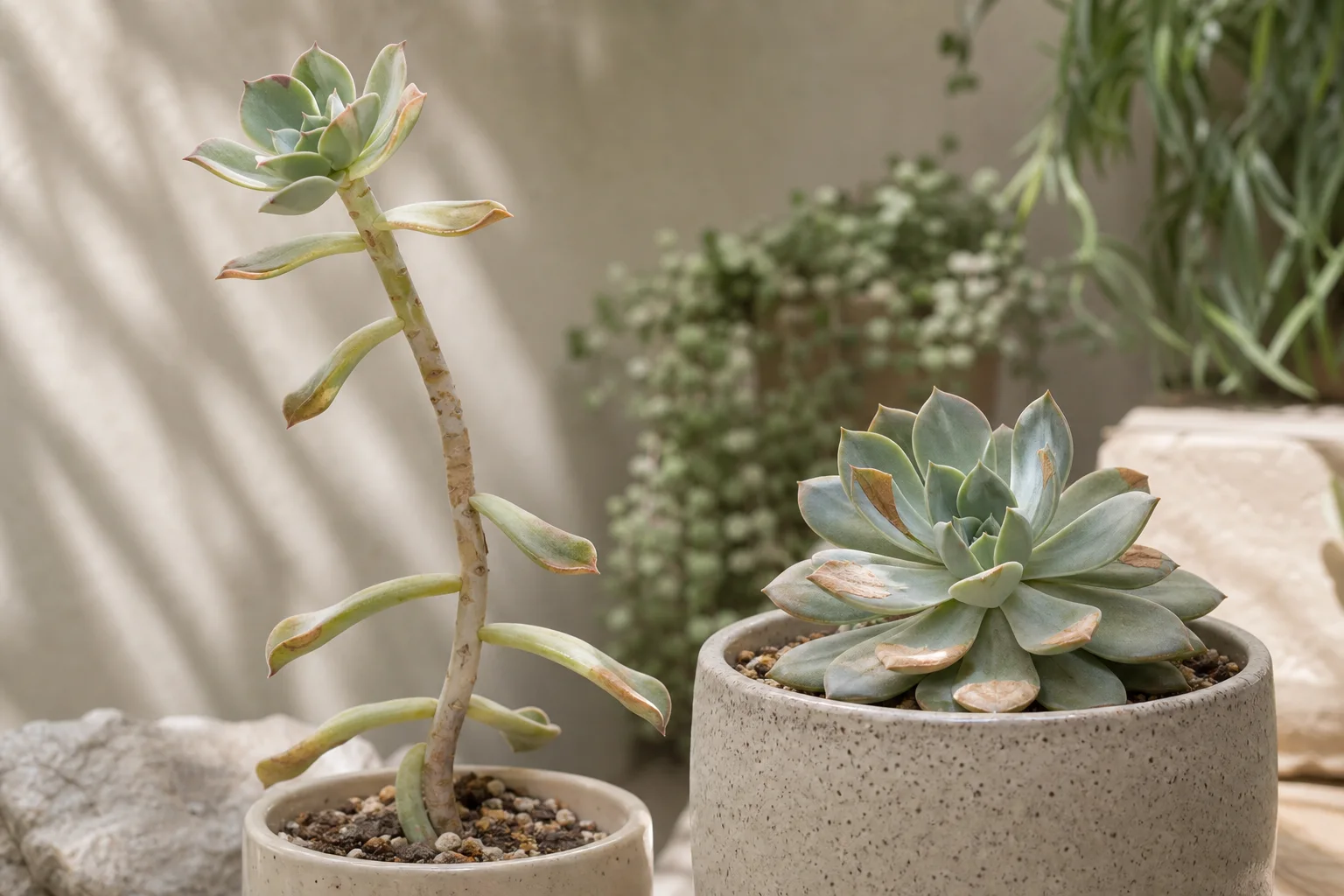
Too little light
Long gaps between leaves, a leaning stem, pale new growth, and a rosette that opens or stretches toward a window indicate insufficient light. Existing stretched growth is unlikely to become compact again. Move the plant closer to a bright window gradually, rotate it periodically, or use an appropriate grow light. Healthy new growth may emerge with shorter spacing.
Sun scorch
Bleached, tan, or brown patches concentrated on the window-facing or sun-facing side can appear after abrupt exposure to intense light. Move the plant to bright filtered light, then acclimate it in stages if its species tolerates direct sun. Scorched tissue may remain marked, so judge progress by the condition of new growth.
Cold or heat stress
Cold injury may cause sudden dark, water-soaked, or collapsed tissue, particularly after contact with a cold window or exposure during transport. Excessive heat can produce bleaching, crisp patches, and rapid dehydration. Place the plant away from heating and cooling vents, freezing glass, and intense reflected heat while checking species-specific temperature needs.
Check tight leaf joints for hidden pests
Pests are less frequent than watering or light problems, but mealybugs, scale insects, and mites can weaken succulents and distort new growth. Isolate a suspicious plant while you identify the problem.
- Mealybugs: Look for white, waxy or cotton-like clusters in the crown, beneath leaves, around spines, and near the soil line. Sticky honeydew or black sooty growth may accompany some infestations.
- Scale: Check for fixed brown, gray, or tan bumps on stems and leaves. Some types also leave sticky residue.
- Mites: Fine webbing, pale stippling, bronzed tissue, or distorted growth can indicate mites, although the pests may be difficult to see without magnification.
- Root mealybugs: Unexplained decline may occasionally involve waxy white deposits around roots or along the inside of the pot.
For a light, confirmed mealybug infestation, individual insects may be removed with a cotton swab lightly moistened with no more than 70% isopropyl alcohol. Test a small area first because some succulents can develop tissue damage. For broader infestations, use an insecticidal soap, horticultural oil, or registered houseplant product only when the label includes the plant and target pest. Follow label directions, improve ventilation during treatment, keep treated plants out of intense sun, and continue inspecting because repeat action may be needed.
Build a recovery plan around new growth
Once the likely cause is corrected, avoid making further major changes unless decline continues. Succulents often respond slowly, particularly in low winter light or during a species-specific resting period.
- Record the starting condition. Photograph the plant, soil surface, and damaged area in consistent lighting.
- Monitor firmness. Mark the edge of any stem discoloration and check whether it expands.
- Watch the growing point. Firm, normally shaped new leaves are more useful indicators than old damaged leaves.
- Check moisture before watering. Use pot weight, a wooden skewer, and the plant's appearance rather than a fixed weekly schedule.
- Hold fertilizer during active decline. Resume light feeding only when the plant is rooted and producing healthy growth, following the product label and species guidance.
Positive signs may include a stable firm stem, roots anchoring the plant, and compact new growth. Escalate the response if softness or blackening spreads, pests remain after repeated label-directed treatment, or the entire crown loosens from the base.
Avoid fixes that can make diagnosis harder
- Do not water solely because leaves are yellow. Yellowing occurs with both root damage and severe dryness.
- Do not rely on decorative stones for drainage. A drainage layer does not replace an open hole through which excess water can leave the container.
- Do not mist as a substitute for root watering. Most commonly grown arid succulents benefit more from thorough, appropriately timed watering and good airflow.
- Do not move a weak indoor plant directly into full outdoor sun. Acclimate it gradually after stabilizing its other care.
- Do not place a small root system in a much larger pot. Excess mix can remain wet longer than the roots can use it.
- Do not assume every dry lower leaf is a crisis. An occasional crisp lower leaf can be part of normal aging, especially when the stem and new growth remain firm.
Because “succulent” describes many unrelated plants, care advice should be adjusted after identification. A photo-based assessment can help organize visible clues, but checking soil moisture, roots, recent care, and species needs provides important context.
Compare your succulent's symptoms
Upload clear photos of the whole plant, damaged leaves, stem base, and soil surface to organize the visible clues. Include notes about soil moisture, drainage, recent watering, and light changes because images cannot reveal every root-zone problem.
Diagnose My SucculentFrequently Asked Questions
Can a dying succulent recover?
A succulent may recover when firm stems, viable roots, or healthy cutting material remain. The outlook is less favorable when decay has spread through the crown or main stem. Correct the likely cause, remove decayed tissue when appropriate, and monitor new growth rather than expecting damaged leaves to return to their former appearance.
Why are my succulent's leaves falling off when I touch them?
Soft or translucent leaves that detach easily often occur when the root zone has stayed wet for too long. Dry, crisp lower leaves may instead reflect dehydration or normal aging. Check soil moisture, drainage, stem firmness, and the texture of the fallen leaves before changing the watering routine.
Should I water a wrinkled succulent immediately?
First confirm that the potting mix is dry below the surface and that the stem is firm. If both checks support dehydration, water thoroughly and allow excess to drain. A wrinkled plant in wet soil may have damaged roots that cannot absorb water, in which case adding more water could worsen the conditions around them.
Should I cut the top off a rotting succulent?
If decay is moving up the stem but the upper growth remains firm, taking a cutting above the discolored tissue may preserve viable material. Use a cleaned blade, inspect the cut for internal discoloration, and let the wound callus before attempting to root it in a porous medium. Rooting success varies by species and the condition of the cutting.
How long should succulent soil take to dry?
There is no universal number of days. Drying time changes with the species, pot size and material, root mass, light, temperature, airflow, and potting mix. If a small indoor pot remains wet for an unusually long period, inspect its drainage and consider whether the mix is too dense or the container is oversized.
Why is my succulent stretching but not turning yellow?
Elongated stems, wide spaces between leaves, leaning, or an opened rosette commonly indicate inadequate light even when the plant remains green. Increase light gradually or add a suitable grow light. More compact new growth may develop, but the stretched section usually retains its existing shape.
Sources & Further Reading
- Cacti and Succulents University of Minnesota Extension
- How to Help a Poorly Houseplant Royal Horticultural Society
- Did You Forget to Water Your Plants? Try Low-Maintenance Succulents University of Illinois Extension
- Mealybugs University of California Statewide Integrated Pest Management Program
- Mealybugs on Indoor Plants University of Maryland Extension
- How to Water Indoor Plants Missouri Botanical Garden